
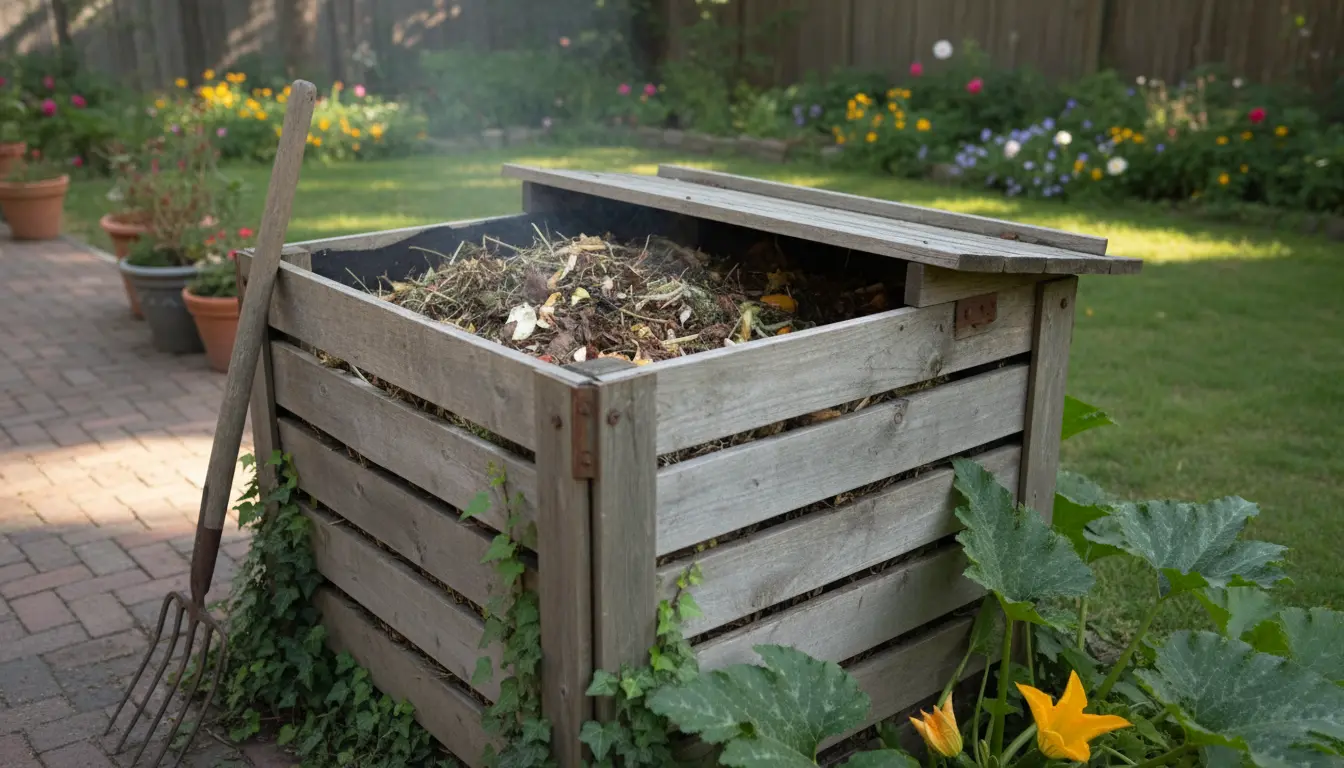
Home composting turns kitchen scraps and yard waste into rich soil amendment. This guide explains basic methods, the materials to use, and simple troubleshooting for beginners.
Why Home Composting Matters
Home composting reduces landfill waste and produces nutrient-rich compost for plants. It also lowers methane emissions from organic waste and saves money on soil amendments.
Getting Started With Home Composting
Choose a compost system that fits your space: a tumbler, a bin, or a simple heap in a corner of the yard. Each option works; the right one depends on available space, time, and how quickly you want finished compost.
Location and Container for Home Composting
Place bins on bare soil where possible to allow worms and microbes to migrate in. If you live in an apartment, use a small indoor compost bin for food scraps and consider a community compost drop-off for yard waste.
Materials to Use in Home Composting
Composting depends on a balance of carbon-rich and nitrogen-rich materials. Aim for roughly a 3:1 ratio of browns (carbon) to greens (nitrogen) by volume.
- Greens: vegetable scraps, coffee grounds, grass clippings.
- Browns: dry leaves, shredded paper, straw, cardboard.
- Avoid: meat, dairy, diseased plants, and oils to prevent pests and odors.
Managing the Compost Pile
Moisture, aeration, and particle size determine how fast compost breaks down. Keep the pile as damp as a wrung-out sponge and turn it every 1–2 weeks if possible.
How to Speed Up Composting
Shred or chop materials before adding them to the bin to increase surface area for microbes. Layering greens and browns helps maintain balance and reduces compacting.
Troubleshooting Common Problems in Home Composting
If the pile smells, it is usually too wet or has too many greens. Add more browns and turn the pile to introduce oxygen.

If decomposition is slow, add water if dry, chop materials finer, and mix in some garden soil or finished compost to introduce microbes.
Finished Compost and How to Use It
Compost is ready when it is dark, crumbly, and earthy-smelling. Use it as mulch, mix into potting soil, or top-dress vegetable beds to improve structure and nutrients.
- Seedlings: mix 10–20% compost into potting mix.
- Garden beds: spread 1–2 inches of finished compost and lightly incorporate into the topsoil.
- Lawn: thinly spread up to 1/4 inch to enrich the turf without smothering grass.
Adding coffee grounds to your compost provides nitrogen and helps balance carbon-heavy materials. Worms particularly like coffee grounds mixed into the pile.
Small Case Study: Urban Balcony Home Composting
Case: Sara lives in a two-bedroom apartment and started a small vermicompost bin on her balcony. She used food scraps and shredded cardboard as bedding.
Result: In six months she produced about 40 liters of compost. Her potted tomatoes showed stronger growth and a 20% increase in fruit over the season.
Tips for Apartment and Small-Space Home Composting
- Use a sealed indoor bin or vermicompost system to control odors and pests.
- Freeze food scraps until you have a batch to add, reducing smells and fruit fly attraction.
- Connect with community gardens or municipal composting programs for yard waste or excess material.
Common Questions About Home Composting
How long does home composting take?
Fast systems can produce finished compost in 2–3 months with active management. Simpler piles often take 6–12 months. Temperature, materials, and turning frequency affect timing.
Can I compost winter leaves?
Yes. Shred leaves to speed decomposition and mix with greens. If leaves are the dominant material, turn them with a pitchfork and add nitrogen sources like grass clippings.
Final Checklist for Successful Home Composting
- Choose the right bin for your space and goals.
- Maintain a balance of browns and greens.
- Keep the pile moist and aerated; turn regularly.
- Avoid problem materials and monitor for pests or odors.
- Use finished compost to enrich soil and reduce fertilizer needs.
Home composting is a low-cost, high-impact practice anyone can start. With a few simple habits, you can cut waste, support soil health, and grow healthier plants.