
How to Start a Vegetable Garden: First Steps
Starting a vegetable garden is a practical project that rewards planning and small consistent actions. This guide breaks the process into clear steps so you can begin with confidence.
Define Your Goals When You Start a Vegetable Garden
Decide what you want from the garden: fresh salad greens, year-round produce, or a few herbs. Your goals affect the size, layout, and plant choices.
Start small. A single 4×8 foot raised bed or a few containers can feed a household with routine care.
How to Start a Vegetable Garden: Choose the Right Site
Most vegetables need at least six hours of direct sun daily. Observe sunlight patterns in your yard for several days before picking the site.
Consider access to water, protection from strong winds, and proximity to your kitchen for easy harvesting.
Site Checklist
- Sunlight: 6–8 hours for most crops
- Water access: hose or drip irrigation nearby
- Drainage: avoid low spots that collect water
- Soil depth: at least 12 inches for many vegetables
How to Start a Vegetable Garden: Prepare the Soil
Healthy soil is the foundation of a productive garden. Test basic soil properties and improve soil structure before planting.
Simple Soil Tests and Amendments
Perform a soil test for pH and nutrients or use a DIY jar test to check soil texture. Most vegetables prefer slightly acidic to neutral soil (pH 6.0–7.0).
- Add compost to increase organic matter and water retention.
- Use aged manure or balanced organic fertilizer if nutrient tests show deficiencies.
- For heavy clay, add coarse sand and organic matter to improve drainage.
How to Start a Vegetable Garden: Decide on Containers or Beds
You can grow vegetables in in-ground beds, raised beds, or containers. Each method has trade-offs in cost, control, and labor.
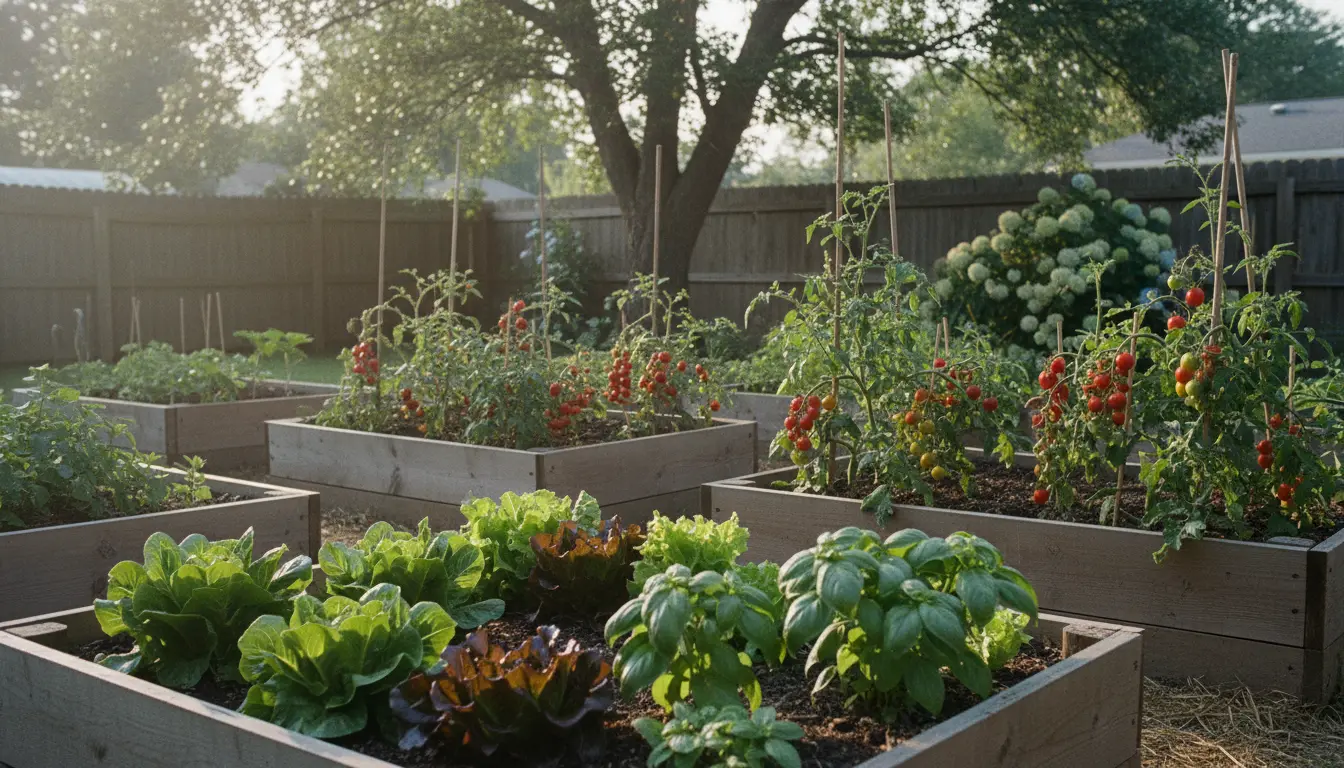
Raised beds warm earlier in spring, drain well, and simplify soil management. Containers are good for patios and tight spaces.
Design Tips for Raised Beds
- Width: 3–4 feet so you can reach the center from either side.
- Depth: 12–18 inches for shallow-rooted crops; 18–24 inches for carrots and potatoes.
- Pathways: 18–24 inches wide for comfort and maintenance.
How to Start a Vegetable Garden: Choose Plants and Timing
Select plants that match your climate, soil, and available sunlight. Start with easy, reliable crops to build experience.
Vegetables Good for Beginners
- Leafy greens: lettuce, spinach, chard
- Root crops: radishes, carrots, beets
- Bush beans and peas
- Tomatoes and peppers in containers or warm sites
Use your local frost dates to plan sowing and transplanting. Cold-hardy crops can go out earlier, while warm-season crops need soil temperatures to rise.
How to Start a Vegetable Garden: Planting and Care
Plant with attention to spacing and water requirements. Follow seed packet or plant tag instructions for depth and spacing.
Watering, Weeding, and Fertilizing
- Water at the base of plants in the morning to reduce disease risk.
- Mulch around plants to conserve moisture and suppress weeds.
- Side-dress with compost or balanced fertilizer during the growing season as plants mature.
Inspect plants weekly for pests and disease. Handpick pests or use targeted, low-toxicity controls when needed.
How to Start a Vegetable Garden: Harvesting and Succession Planting
Harvest crops at peak ripeness to encourage continuous production. Quick-maturing crops can be replaced by successive sowings.
Plan a rotation so beds produce across seasons—spring greens, summer tomatoes, fall brassicas.
Certain companion plants like marigolds and basil can reduce pest pressure while improving flavor and pollination for nearby vegetables.
Small Real-World Case Study
Case Study: A beginner in Portland started with one 4×8 raised bed and three containers. They chose lettuce, radishes, tomatoes, and basil. After testing the soil and adding two inches of compost, they planted in mid-April.
By July they were harvesting weekly salad greens and basil, and by late summer they had multiple tomato harvests. Pest management was limited to handpicking slugs and installing a simple drip irrigation system to save water.
Common Problems and Quick Fixes
- Yellowing leaves: check watering and soil nutrients; add compost or balanced fertilizer.
- Poor germination: increase seedbed warmth or start seeds indoors.
- Pest outbreaks: remove affected leaves, use row covers, or encourage beneficial insects.
Final Tips to Keep Your Garden Productive
Keep a short garden journal with planting dates, varieties, and yields. Small records help you improve choices each season.
Start small, observe, and expand as you gain experience. Consistent light maintenance yields better results than occasional large efforts.
With basic planning, soil preparation, and regular care, you can start a vegetable garden that provides fresh produce and enjoyment. Begin with a modest setup and grow your garden skills season by season.