
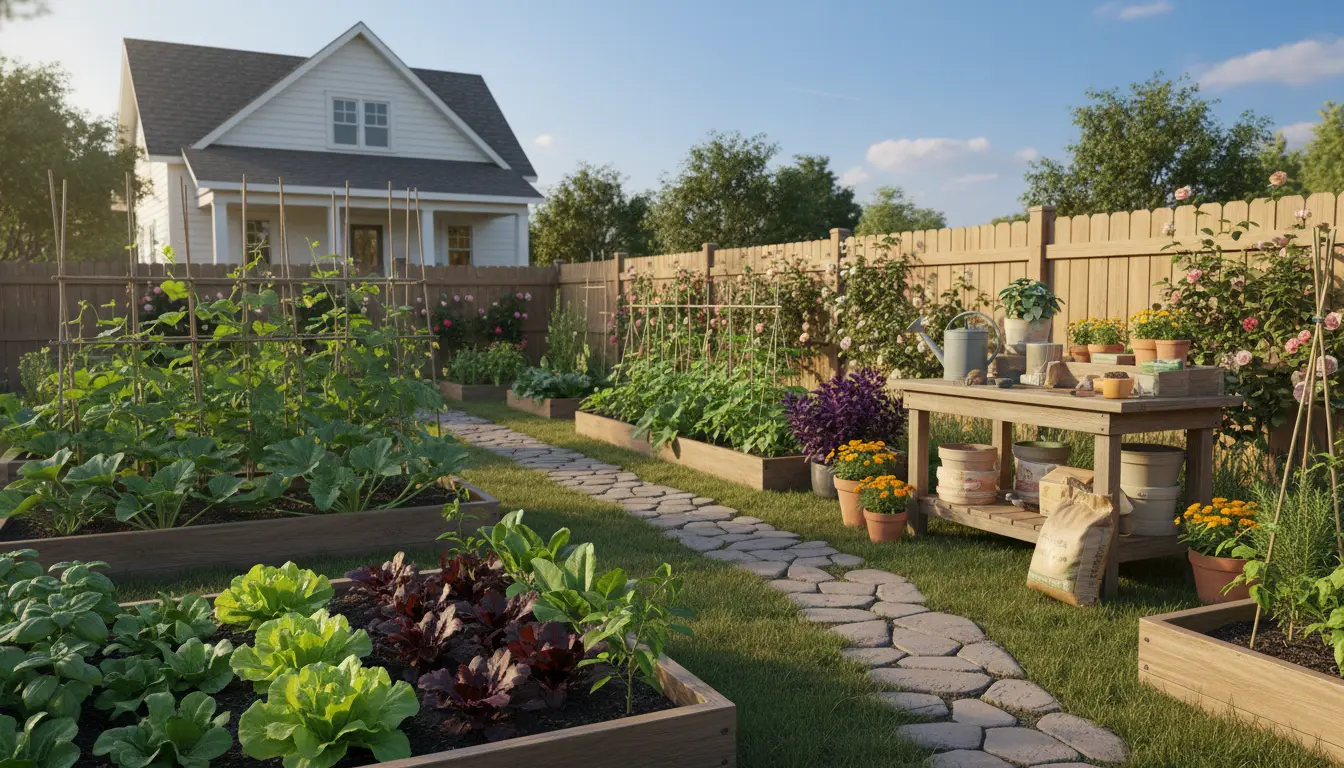
Preparing to Start a Vegetable Garden
Starting a vegetable garden is a step-by-step process that rewards planning and consistency. This guide covers the essential tasks you need to begin growing vegetables successfully.
Decide What You Want to Grow
Pick vegetables you and your household will eat and that suit your climate. Start with easy crops like lettuce, radishes, tomatoes, and beans to build confidence.
Choose a Location to Start a Vegetable Garden
Vegetables need sunlight, good drainage, and easy access to water. Aim for a spot with at least six hours of direct sunlight per day. Avoid low spots that collect water.
Soil and Bed Options When You Start a Vegetable Garden
Soil quality determines how well plants grow. You can use in-ground beds, raised beds, or containers depending on space and soil condition.
- In-ground beds: Best if you have good native soil and space.
- Raised beds: Warmer and better drained; easier to control soil quality.
- Containers: Ideal for small patios and balconies.
Test soil pH and texture if possible. Most vegetables prefer a slightly acidic to neutral pH (6.0 to 7.0). Improve poor soil with compost and organic matter.
Tools and Materials to Start a Vegetable Garden
Gather basic tools before you begin. You do not need expensive equipment to start small and expand later.
- Hand trowel and spade
- Garden fork or cultivator
- Watering can or hose with a gentle nozzle
- Compost or quality topsoil
- Seeds or starter plants
Simple Soil Preparation Steps
Clear weeds and loosen the soil to a depth of 8–12 inches. Mix in 2–3 inches of compost to improve fertility and drainage.
Planting: Seeds vs Starter Plants
Decide whether to start from seed or buy seedlings. Seeds are cheaper and offer more variety, while seedlings provide a faster harvest.
Follow seed packet or plant tag instructions for spacing, depth, and timing. Overcrowding reduces airflow and increases disease risk.
Planting Examples
- Lettuce: Sow every 2 weeks for continuous harvest; thin to 6–8 inches.
- Tomatoes: Space 18–36 inches; stake or cage early to support growth.
- Radishes: Sow in rows and harvest in 3–5 weeks; excellent for quick results.
Watering and Fertilizing When You Start a Vegetable Garden
Consistent watering is more important than frequent shallow watering. Aim for deep, infrequent watering to encourage strong root systems.
- Water in the morning to reduce evaporation and disease risk.
- Mulch around plants to conserve moisture and suppress weeds.
- Use a balanced organic fertilizer according to crop needs and soil test results.
Pest and Disease Basics
Monitor plants weekly for pests and symptoms of disease. Early detection makes control easier and reduces crop loss.
Use physical barriers, handpicking, and organic sprays as first responses. Rotate crops each season to reduce soil-borne problems.
Maintenance Schedule for a Healthy Vegetable Garden
Create simple routines to keep your garden productive. Consistency beats perfection for new gardeners.
- Daily: Check soil moisture and young seedlings.
- Weekly: Weed, prune, and inspect for pests.
- Seasonally: Amend soil with compost and rotate planting areas.
Small Case Study: A Practical Example
Sarah converted a 10 x 6 foot sunny patch near her house into two raised beds. She filled the beds with a mix of topsoil and compost and planted tomatoes, lettuce, and bush beans.
In the first season she harvested lettuce every two weeks and three medium tomato plants produced enough for fresh eating and a few jars of sauce. Her investment in compost and a simple drip hose paid off with reduced watering and steady yields.
Common Mistakes to Avoid When You Start a Vegetable Garden
- Planting too early in cold soil — wait until the soil warms for most crops.
- Overwatering young plants — keep soil moist but not waterlogged.
- Ignoring spacing — overcrowding increases disease and reduces yields.
Quick Start Checklist
- Pick 3–5 easy crops to begin with.
- Choose a sunny, well-drained location.
- Prepare soil with compost and test pH if possible.
- Decide on seeds or seedlings and follow planting instructions.
- Water deeply, mulch, and monitor weekly.
Starting a vegetable garden is manageable with small steps and reliable routines. Focus on soil health, consistent watering, and gradual learning. You will improve each season and enjoy fresh produce from your own yard.