
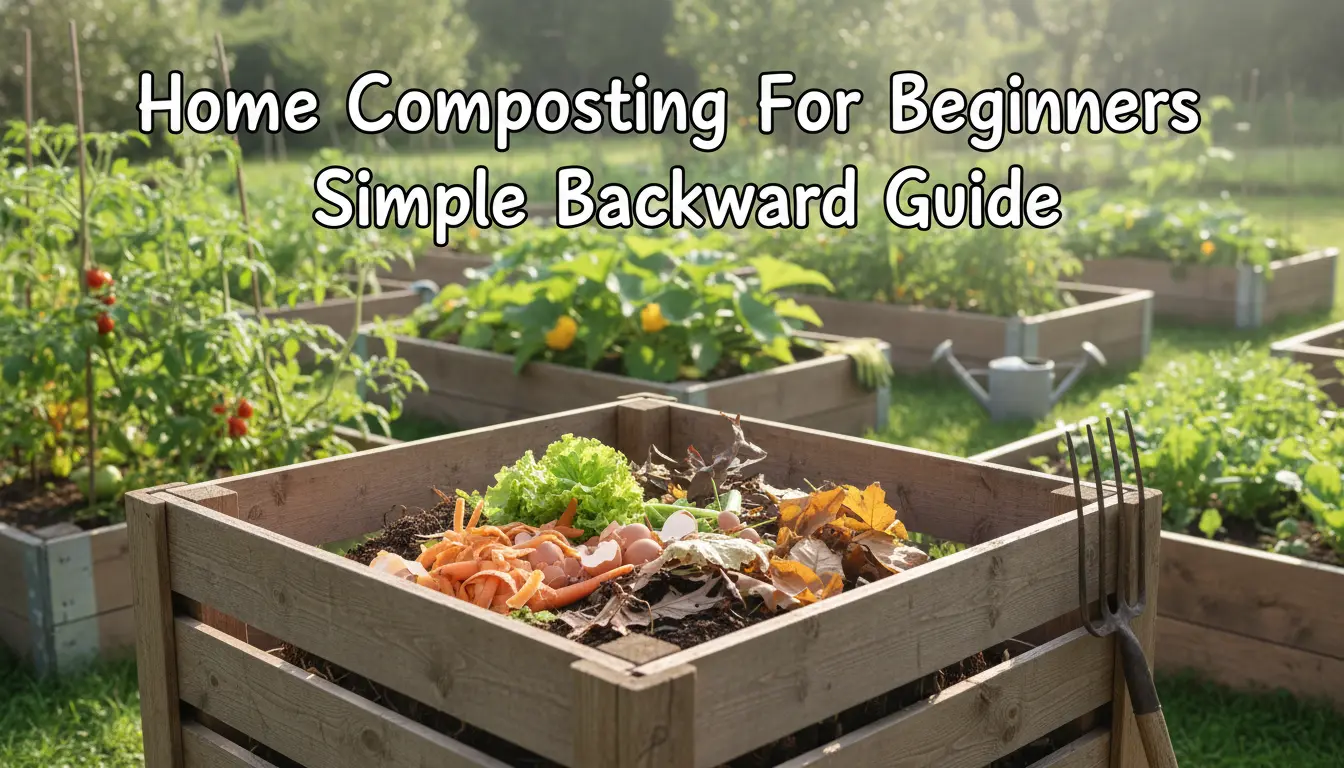
Why Home Composting Matters
Home composting reduces kitchen and yard waste while creating nutrient-rich soil for your garden. This practical method lowers household trash and improves soil structure without chemical fertilizers.
Composting is simple to start and scalable to any living situation, from apartments to large yards. The steps below focus on reliable methods that beginners can follow with minimal tools.
Home Composting Basics
At its core, composting is the controlled breakdown of organic materials by microbes, worms, and insects. The result is humus, a dark, crumbly material that feeds plants and retains moisture.
Key elements are carbon (browns), nitrogen (greens), moisture, and airflow. Balancing these elements speeds decomposition and reduces odors.
What to Add to Your Compost Bin
Use a mix of brown and green materials to keep the compost active and odor-free. Chop or shred larger items to accelerate breakdown.
- Greens (nitrogen): vegetable scraps, coffee grounds, tea bags, fresh grass clippings
- Browns (carbon): dry leaves, shredded paper, cardboard, straw
- Avoid: meat, dairy, oils, diseased plants, pet waste
Choosing a Compost Bin
Select a bin type that fits your space and commitment level. Options include tumblers, stationary bins, and simple open piles.
- Tumblers: easy turning, faster results, good for small yards
- Stationary bins: low cost, works well with layered turning
- Open pile: simplest for large gardens, may attract pests if unmanaged
How to Start a Compost Bin
Starting a compost bin takes a few straightforward steps and regular attention. A simple three-layer approach works well for beginners.
- Place the bin on bare soil to allow organisms and drainage. Keep it in partial shade to maintain steady moisture.
- Start with a coarse base layer (small branches or straw) to help airflow. Add alternating layers of greens and browns about 2–4 inches each.
- Maintain moisture like a wrung-out sponge: add water during dry spells and cover during heavy rain.
Turning and Monitoring
Turn the pile every 1–2 weeks to reintroduce oxygen and speed up decomposition. If using a tumbler, rotate it according to manufacturer guidance.
Monitor temperature and smell. A healthy compost heats to 120–140°F (49–60°C) during active breakdown. If it smells rotten, add more browns and increase aeration.
Common Problems and Solutions for Home Composting
Beginners often face a few typical issues: slow breakdown, bad odors, pests, and excess moisture. Each problem has simple fixes.
- Slow breakdown: chop materials smaller, add more greens, increase turning.
- Bad odors: add dry browns and improve airflow; avoid meat and dairy.
- Pests: use enclosed bins, bury food scraps under browns, avoid attracting wildlife.
- Too wet: add dry browns and turn pile to introduce air and dry it out.
Composting can reduce household waste by up to 30 percent and cut methane emissions from landfills. Even small-scale composting in apartments using worm bins (vermicomposting) can significantly lower your trash volume.
Maintenance Schedule for Home Composting
Create a simple routine to keep your compost functioning well. Consistency is more important than effort-intensive care.
- Weekly: add kitchen scraps and a handful of browns, turn or rotate if possible.
- Monthly: check moisture, chop large pieces, and mix layers if the pile is compacted.
- Seasonally: harvest finished compost and refresh with new materials. Protect the pile from prolonged freezing if needed.
Small Real-World Example
Case study: Sarah, a three-person household in a suburban home, started a 60-gallon stationary bin. She layered greens and browns, turned the pile every two weeks, and kept it moist.
After six months she harvested rich compost and reported reducing weekly trash by 40 percent. Her vegetable garden showed improved yields the following season.
Tips for Apartment Composting
Apartment dwellers can compost using a small worm bin or a bokashi system for fermented kitchen waste. Keep bins clean, use odor-absorbing materials, and empty finished compost to community gardens or potted plants.
Final Checklist: Start Home Composting Today
Use this checklist to begin composting with confidence. Start small and scale as you gain experience.
- Choose a bin type that fits your space.
- Collect greens and browns separately for easy layering.
- Maintain moisture and airflow; turn regularly.
- Monitor for pests and odors; adjust materials as needed.
- Harvest finished compost and apply to gardens or potted plants.
Home composting is a practical step toward sustainability and healthier soil. With a small time investment and simple materials, anyone can turn kitchen waste into a valuable resource for plants and the environment.