
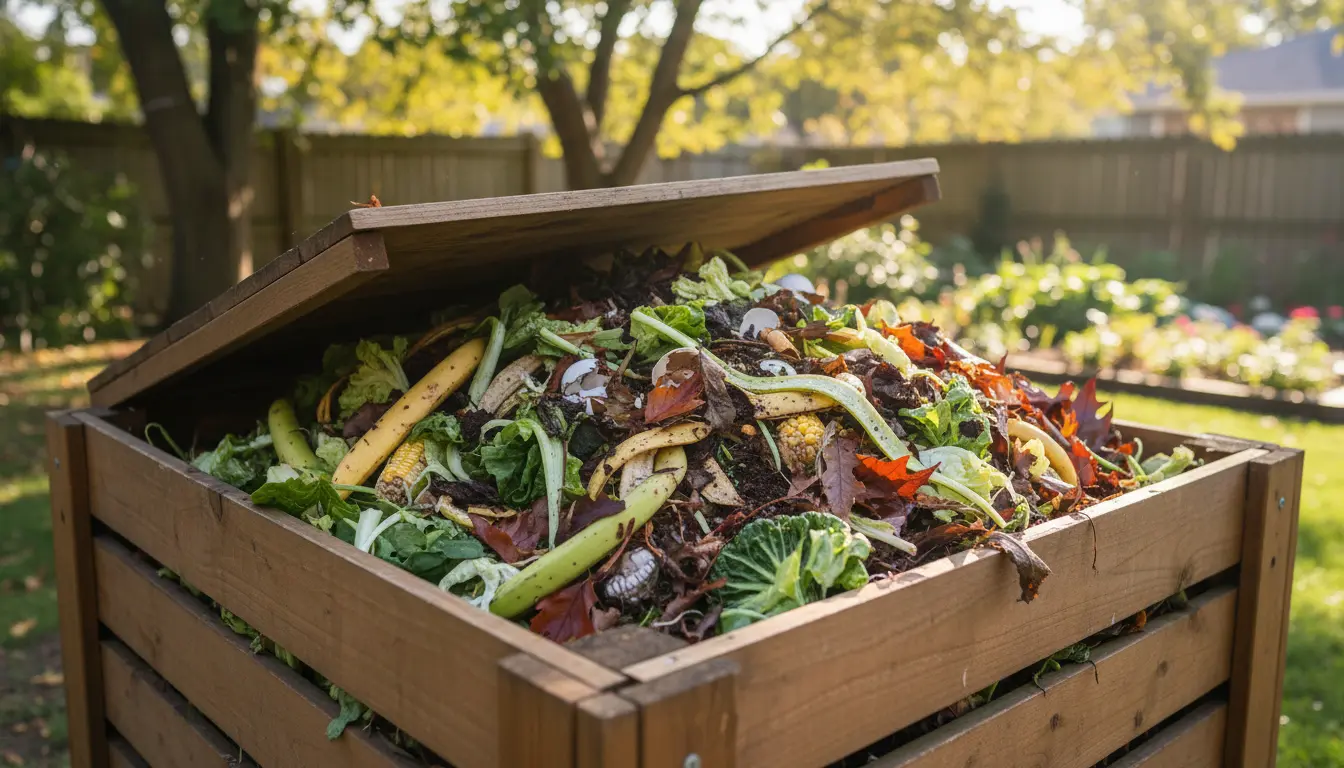
Why Choose Home Composting for Beginners
Home composting is a simple way to turn kitchen scraps and yard waste into nutrient-rich soil. It reduces landfill waste, lowers household odor risks from trash, and improves garden health.
This practical guide is designed for beginners who want clear steps, easy tools, and realistic expectations. Follow the steps below to set up a low-maintenance system that fits your space.
Getting Started: Essential Composting Basics
Composting relies on three elements: brown materials (carbon), green materials (nitrogen), and oxygen. Balancing these keeps decomposition steady and odor-free.
- Brown materials: dry leaves, shredded paper, straw.
- Green materials: vegetable scraps, coffee grounds, grass clippings.
- Oxygen: turn or aerate the pile every 1–2 weeks.
Choosing a Method: Bin, Pile, or Tumbler
Select a method based on space, budget, and effort. A compact bin suits apartments, a pile works for larger yards, and a tumbler speeds processing with less manual turning.
For beginners, a simple enclosed bin reduces pests and keeps the area tidy.
Where to Place Your Compost
Place a compost bin on well-drained soil or a hard surface with drainage. Partial shade prevents the pile from drying out and maintains microbial activity.
Keep it within easy reach of the kitchen to encourage regular use but not so close that odors become a nuisance.
Step-by-Step Setup for Home Composting for Beginners
Follow these steps to start composting in a small bin or container.
- Choose a container: 20–50 gallon bin for a household of 1–4 people.
- Start with a 2–3 inch layer of coarse brown materials to improve drainage.
- Add a balanced mix: aim for roughly 3 parts brown to 1 part green by volume.
- Keep the pile moist like a wrung-out sponge — not soaking wet.
- Turn or mix every 1–2 weeks to add oxygen and speed breakdown.
What to Compost and What to Avoid
Safe kitchen and yard items to compost include fruit and vegetable scraps, coffee grounds, eggshells, shredded cardboard, and leaves. Avoid meat, dairy, oily foods, and diseased plants unless you have a high-temperature system.
- Do compost: fruit peels, vegetable trimmings, tea bags (paper type), yard clippings.
- Don’t compost: meat, bones, dairy, pet waste, large amounts of citrus (can be acidic).
When properly managed, a home compost pile can break down most kitchen and yard waste into usable compost within 3–6 months. Higher temperatures and regular turning can reduce that to 6–8 weeks.
Maintaining Your Compost
Routine checks prevent common problems. A healthy compost smells earthy, is warm in the center, and is dark and crumbly over time.
If the pile smells rotten, add more brown materials and increase turning. If it doesn’t break down, add water and more greens to boost microbial activity.
Troubleshooting Common Issues
- Smelly compost: add dry browns and aerate immediately.
- Slow decomposition: chop materials smaller, maintain moisture, and turn regularly.
- Pests: avoid meat and fatty foods, use a sealed bin, and bury new scraps.
Using Finished Compost
Finished compost is dark, crumbly, and smells earthy. Use it as a soil amendment, potting mix component, or topdressing for lawns and gardens.
Apply a 1–2 inch layer around plants or mix 10–25% compost into potting soil for container plants.
Small Real-World Example
Case Study: Sarah, a 2-person household in a city apartment, started a 20-gallon tumbling composter on her balcony. She added vegetable scraps and shredded paper, turning the tumbler twice a week.
After four months she had enough finished compost to pot herbs and improve two large planters. Her household waste to landfill dropped by about 40 percent, and she reported healthier plants and less grocery waste.
Practical Tips and Quick Checklist
Keep these tips in mind as you start your composting routine.
- Chop scraps to speed breakdown.
- Balance browns and greens — think layers.
- Monitor moisture; aim for damp but not soggy.
- Turn regularly for faster results.
- Use finished compost within six months for best nutrient value.
Minimal Tools You Need
- Compost bin or tumbler
- Pitchfork or turning tool
- Kitchen scrap container with lid
- Shredder or scissors for chopping large pieces
Final Thoughts on Home Composting for Beginners
Home composting is a low-cost, high-impact way to reduce waste and enrich your soil. Start small, be consistent, and adjust based on what you observe in your bin.
With a few simple habits — layering, moisture checks, and occasional turning — beginners can produce useful compost in a few months and contribute to a more sustainable household routine.