
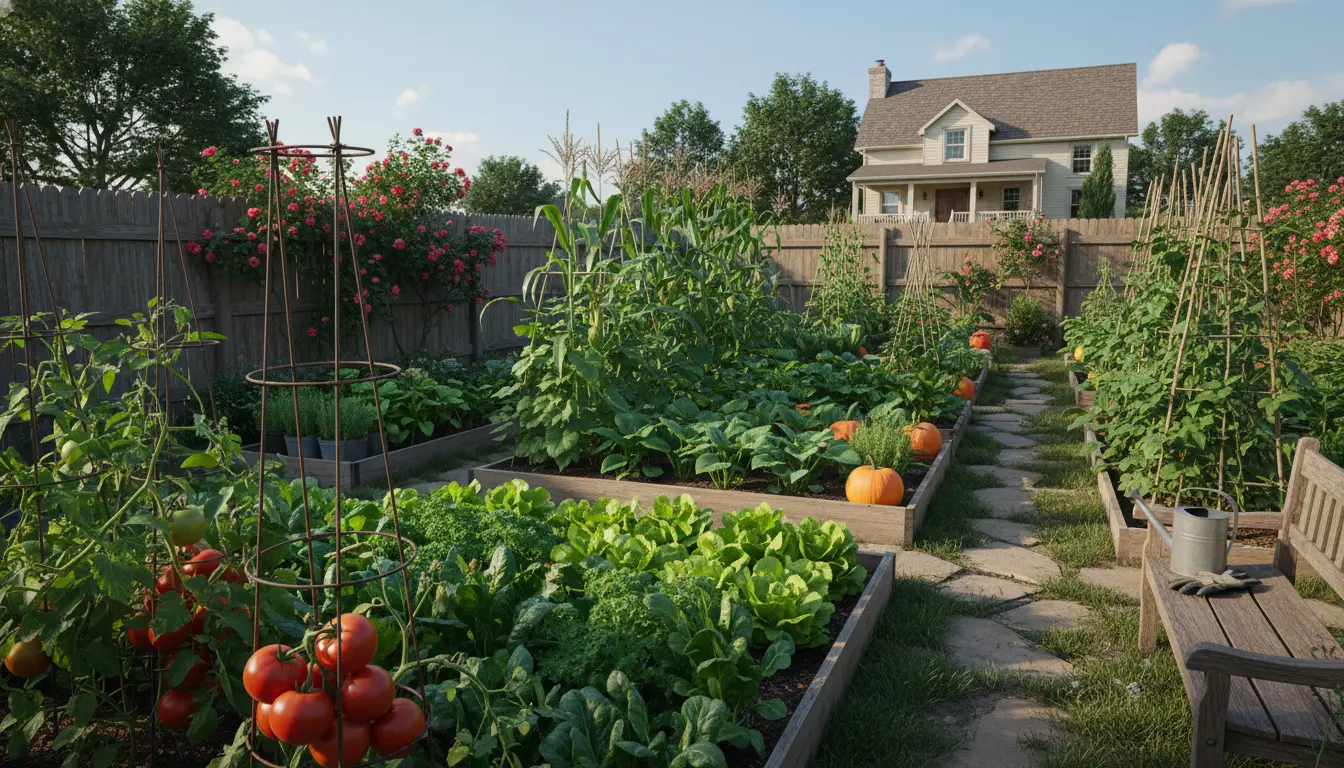
Starting a vegetable garden at home is approachable even for busy people. This guide gives clear steps you can follow in a single season to grow reliable crops from seed or seedlings.
Why start a vegetable garden at home
A home vegetable garden reduces grocery costs and improves access to fresh produce. It also gives control over growing practices, letting you avoid unwanted pesticides and select varieties for flavor and nutrition.
Choosing where to start a vegetable garden
Site selection is the first practical decision when you start a vegetable garden. Aim for a spot that gets at least six hours of direct sun daily for most crops.
Consider access to water and convenience. A garden near the kitchen or back door encourages regular care and harvesting.
Sun, soil, and space considerations
Check the soil drainage by digging a small hole and filling it with water. If water drains within an hour, drainage is good. If it pools all day, choose raised beds or amend the soil heavily.
Small spaces can still be productive with containers or vertical supports for vining plants.
What to plant first when you start a vegetable garden
Choose easy crops for your first season to build confidence. Fast, forgiving plants include lettuce, radishes, spinach, bush beans, and cherry tomatoes.
Match plant choices to your climate and the season. Cool-season crops suit spring and fall in most regions, while warm-season crops need frost-free conditions.
Seed vs seedlings when starting a vegetable garden
Seeds are cost-effective and offer more variety, while seedlings give a head start and faster harvests. Mix both depending on crop and time available.
Preparing soil to start a vegetable garden
Good soil boosts yields. Start by clearing weeds, loosening the soil to 8 to 12 inches, and mixing in organic matter like compost.
A simple soil mix for raised beds is one third compost, one third topsoil, and one third coarse material for drainage.
- Test the soil pH if possible; most vegetables prefer pH 6.0 to 7.0.
- Add lime to raise pH or sulfur to lower pH based on test results.
- Apply a balanced organic fertilizer or slow-release granular fertilizer following package rates.
Planting and care for your vegetable garden
Follow spacing and depth recommendations on seed packets or plant tags. Crowding reduces airflow and increases disease risk.
Mulch with straw or shredded leaves to retain moisture and suppress weeds. Mulch also moderates soil temperature in hot weather.
Watering, fertilizing, and pest control for a vegetable garden
Water deeply and less frequently to encourage strong roots. Most vegetables need about 1 inch of water per week during the growing season.
Use drip irrigation or soaker hoses to reduce leaf wetness and disease. Fertilize according to crop needs; heavy feeders like tomatoes benefit from additional side-dressing during fruiting.
For pests, prioritize physical controls: handpick larger pests, use row covers for early protection, and introduce beneficial insects. Use organic sprays as a last resort and follow label instructions.
Simple maintenance schedule when starting a vegetable garden
Keep tasks small and regular. A weekly check for watering, weeding, and inspecting plants lets you catch problems early.
- Weekly: Water deeply, remove obvious weeds, harvest ripe produce.
- Biweekly: Check for pests and fertilizer needs, prune if necessary.
- Monthly: Add compost or mulch, inspect soil moisture and drainage.
Many common herbs like basil and parsley can repel certain pests and improve the flavor of nearby vegetables when planted close by.
Small real world example: A beginner case study
Maria, a first time gardener in a small suburban backyard, started a 4×8 raised bed in April. She filled it with a mix of compost and topsoil, planted lettuce, radishes, bush beans, and two tomato seedlings.
She watered twice a week with a soaker hose, used mulch to cut down weeding time, and harvested baby lettuces in four weeks. By midsummer she had steady salads and a modest yield of tomatoes with minimal expense.
Troubleshooting common problems when you start a vegetable garden
Yellow leaves may indicate nutrient deficiency or overwatering. Check soil moisture first and adjust watering routines before adding fertilizer.
Slow growth often means compacted soil or poor fertility. Lightly loosen the top layer and add a thin layer of compost to stimulate activity.
Quick checklist to start a vegetable garden
- Pick a sunny, accessible site.
- Decide raised bed, container, or in-ground planting.
- Amend soil with compost and test pH if possible.
- Choose easy crops for your climate and season.
- Set up a simple watering system and mulch.
- Commit to a brief weekly maintenance routine.
By following these steps, you can start a vegetable garden at home that is productive and low stress. Begin small, learn from each season, and expand as you gain confidence.