
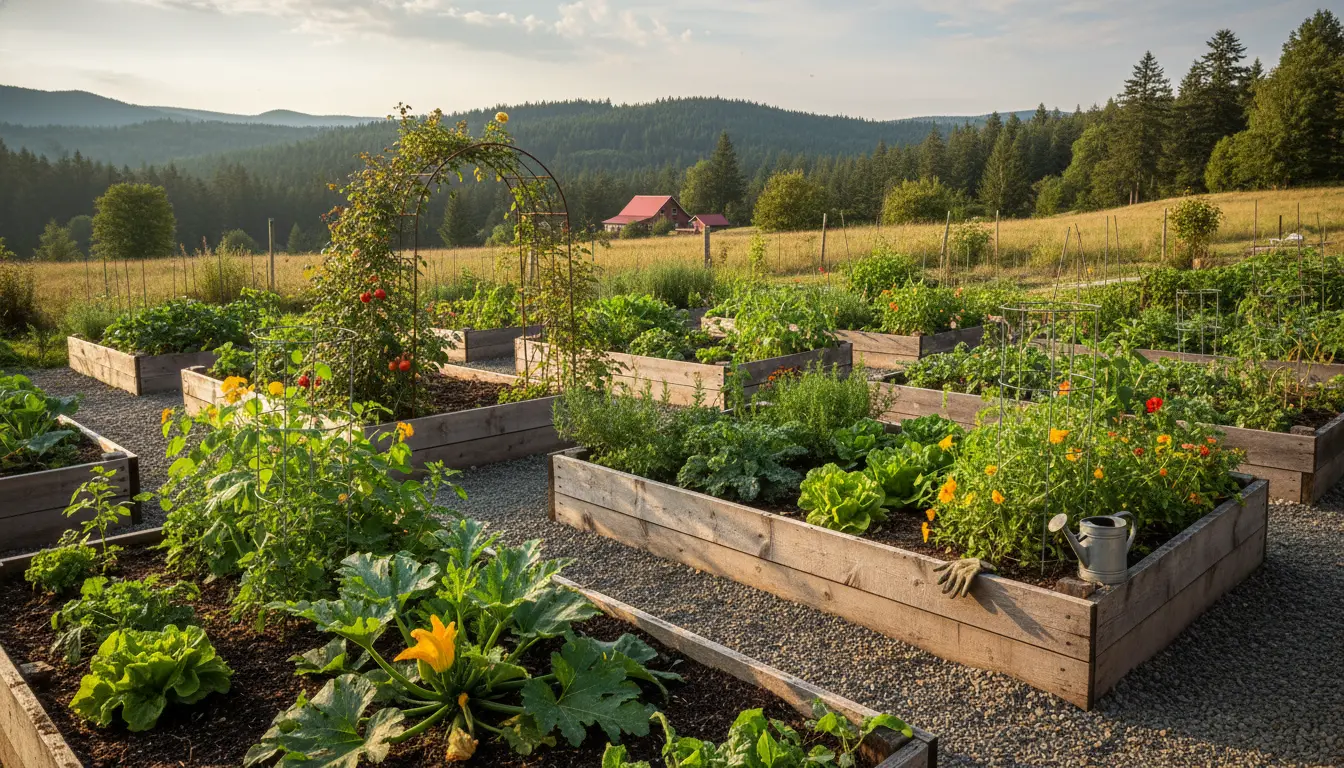
Starting a vegetable garden is a practical way to grow fresh food and learn basic horticulture. This guide walks you through the essential steps so you can plan, prepare, plant, and harvest with confidence.
Plan Before You Start a Vegetable Garden
Good results begin with a plan. Choose a site, decide which crops to grow, and set realistic goals for the space and time you can commit.
Choose a Location to Start a Vegetable Garden
Most vegetables need at least six hours of direct sunlight each day. Pick a spot with good drainage and easy access to water.
- Full sun areas for tomatoes, peppers, and squash.
- Part shade for leafy greens and herbs.
- Avoid low spots that collect cold air or water.
Pick Vegetables You Can Grow
Select crops suited to your climate and season. Start with easy-to-grow choices to build confidence and harvest quickly.
- Fast growers: radishes, lettuce, spinach.
- Reliable staples: tomatoes, beans, zucchini.
- Perennial herbs: rosemary, thyme, chives.
Soil and Bed Preparation for a Vegetable Garden
Soil health is the most important factor for success. Test and amend your soil before planting to ensure proper structure and nutrients.
Test Your Soil
Use a home soil test kit or send a sample to a local extension service. Key metrics are pH, nitrogen, phosphorus, and potassium.
Most vegetables prefer a slightly acidic to neutral pH (6.0–7.0). Amend based on test results rather than guessing.
Amend and Build Soil
Work in organic matter to improve drainage and fertility. Compost, well-rotted manure, and leaf mold are excellent amendments.
- Mix 2–4 inches of compost into the top 6–8 inches of soil.
- For heavy clay, add coarse sand and organic matter to improve texture.
- Raised beds are a good option if native soil is poor or compacted.
Planting and Care When You Start a Vegetable Garden
Pay attention to planting times, spacing, and early care. Proper initial steps reduce problems later in the season.
When and How to Plant
Check frost dates for your area and follow seed packet or plant tag instructions. Sow seeds at the recommended depth and thin seedlings to proper spacing.
- Direct-sow root crops and quick greens early (radish, carrot, lettuce).
- Transplant warm-season crops after the last frost (tomato, pepper).
- Use starter fertilizer when transplanting if soil tests show low nutrients.
Watering and Mulching
Consistent moisture is critical. Water deeply and less often to encourage strong roots. Mulch helps retain moisture and suppress weeds.
- Water at the soil level to reduce leaf diseases.
- Apply 2–3 inches of organic mulch around plants after they are established.
- Adjust watering for rainfall and plant stage; seedlings need more frequent checks.
Pest and Disease Management
Prevent issues with good cultural practices: crop rotation, proper spacing, and healthy soil. Scout weekly and use targeted controls when needed.
- Row covers protect seedlings from insects early in the season.
- Hand-pick slugs and caterpillars; use organic insecticidal soap for small infestations.
- Remove diseased plants promptly to limit spread.
Harvest and Seasonal Rotation for a Vegetable Garden
Harvest at peak ripeness for best flavor and nutrition. Plan to rotate crops each year to reduce pests and maintain soil fertility.
Harvesting Tips
Pick vegetables regularly to encourage continued production. Use a sharp knife or scissors to avoid damaging plants.
- Harvest tomatoes when they are fully colored but still firm.
- Pick lettuce leaves from the outside to prolong harvests.
- Store root crops in cool, dark conditions to extend shelf life.
Seasonal Rotation and Fall Care
After harvest, clear plant debris and add a layer of compost. Rotate crop families to new beds to reduce disease pressure.
- Follow heavy feeders (tomatoes, corn) with legumes to restore nitrogen.
- Cover crops like clover or rye improve soil over winter.
Small Case Study: A Balcony Garden
Maria started a compact vegetable garden on a 6-foot balcony using three 12-inch pots and one raised trough. She chose cherry tomatoes, basil, and leaf lettuce.
After amending potting mix with compost and using drip irrigation, she harvested fresh salad greens within five weeks and a steady supply of tomatoes through summer.
- Lesson: Even small spaces can produce a meaningful harvest with the right plants and consistent care.
- Tip: Use vertical supports and companion planting to maximize limited space.
Conclusion and First Steps
To start a vegetable garden, pick a sunny spot, test and improve your soil, and choose beginner-friendly crops. Keep a simple planting calendar and check your garden weekly.
Begin with one or two beds or containers. Learn from each season and adjust plant choices and timing as you gain experience.