
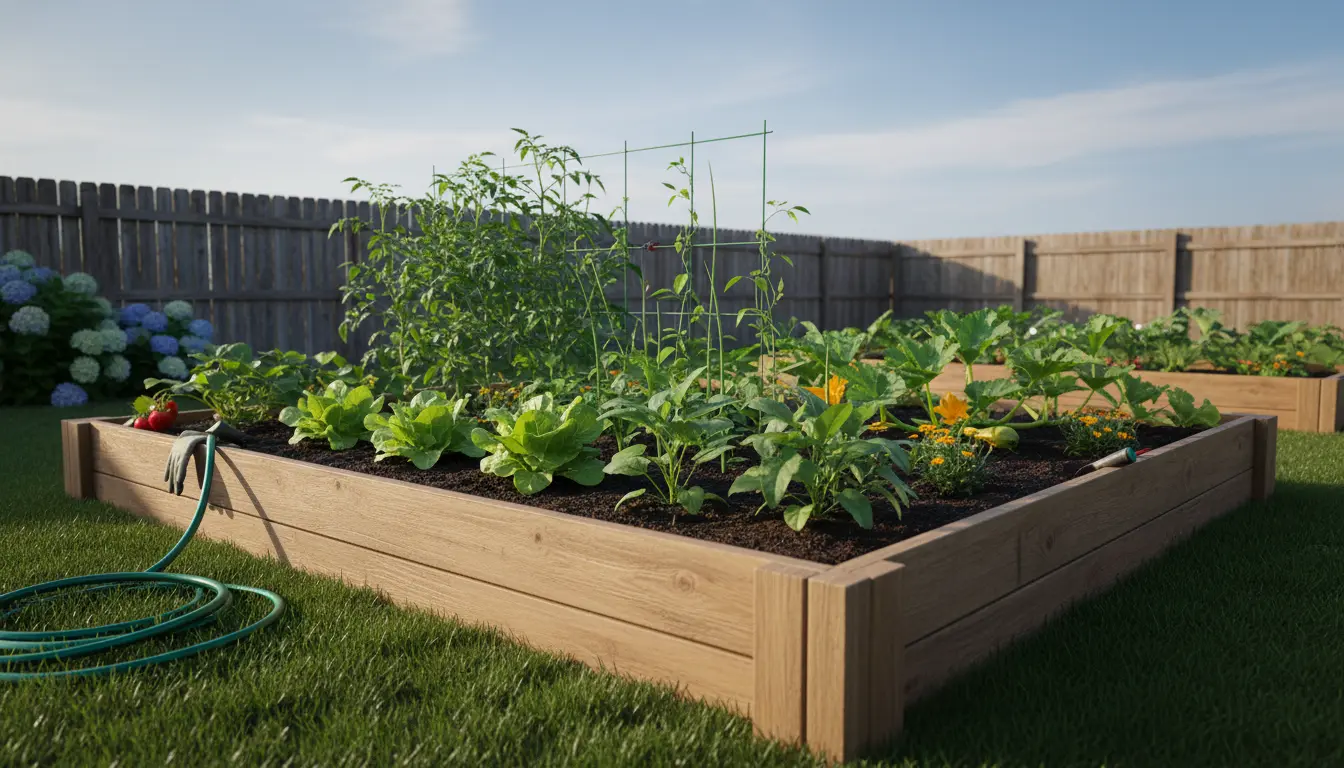
Getting started with a vegetable garden
Starting a vegetable garden can be simple and rewarding. This guide explains how to start a vegetable garden with clear steps you can follow at home.
How to Start a Vegetable Garden: Choose the Right Spot
Good location matters. Pick a spot that gets at least six hours of direct sunlight and is close to a water source.
Avoid low areas that stay soggy and places under large trees where roots steal moisture and nutrients.
Start a Vegetable Garden: Size and access considerations
- Start small: a 4×4 or 4×8 raised bed is manageable for one person.
- Leave space to walk between beds for easy maintenance.
- Consider containers if you have a balcony or patio.
How to Start a Vegetable Garden: Prepare the Soil
Healthy soil is the foundation of a productive garden. Test the soil or observe plant growth to gauge quality.
Improve heavy clay or poor soil by adding organic matter like compost or well-rotted manure.
Soil steps to follow
- Remove weeds and grass from the chosen area.
- Loosen the top 6 to 12 inches of soil with a fork or spade.
- Mix in 2 to 4 inches of compost and a handful of balanced organic fertilizer if needed.
How to Start a Vegetable Garden: Choose What to Plant
Pick vegetables suited to your climate and season. Beginners benefit from fast-growing, low-maintenance crops.
Try tomatoes, lettuce, radishes, beans, and herbs in your first season for quick wins.
Plant selection tips
- Group plants by water and sunlight needs.
- Use companion planting to reduce pests and boost growth.
- Start some plants from seed and buy others as seedlings to mix experience and speed.
How to Start a Vegetable Garden: Planting and Watering
Follow seed packet instructions for spacing and depth. Thin seedlings to prevent crowding and encourage airflow.
Water deeply at the base rather than shallow overhead watering. This encourages deeper root growth and reduces disease.
Watering schedule and tips
- New beds: water daily for the first week, then every 2 to 3 days depending on weather.
- Established beds: aim for 1 to 1.5 inches of water per week, from rain or irrigation.
- Use mulch to retain moisture and suppress weeds.
How to Start a Vegetable Garden: Routine Care and Pest Management
Regular tasks keep the garden productive. Monitor plants weekly for signs of stress, pests, or disease.
Handpick pests, use row covers, and employ organic treatments like insecticidal soap when necessary.
Seasonal maintenance checklist
- Weed 1-2 times per week in active growth periods.
- Side-dress heavy feeders like tomatoes with compost or balanced fertilizer mid-season.
- Rotate crops yearly to reduce soil-borne diseases.
How to Start a Vegetable Garden: Harvesting and Storage
Harvest early and often to encourage continued production. Pick vegetables at peak ripeness for best flavor and nutrition.
Store harvests properly: leafy greens refrigerate, root vegetables keep well in cool, dark spaces, and tomatoes are best at room temperature.
Simple harvesting rules
- Leafy greens: harvest outer leaves when 4-6 inches long.
- Tomatoes: pick when fully colored and slightly soft to the touch.
- Beans: harvest when pods are firm but before seeds bulge.
Small real-world example
Case study: A small urban gardener used a 4×8 raised bed in a sunny backyard. They mixed native soil with 3 inches of compost and planted tomatoes, lettuce, and bush beans.
Result: In the first season they harvested weekly salads, three tomato harvests over summer, and steady bean yields. Mulch and drip irrigation cut watering time by half.
How to Start a Vegetable Garden: Common beginner mistakes
Avoid these frequent errors to speed success. Overplanting, poor soil prep, and irregular watering are top mistakes.
- Don’t crowd plants; give roots and leaves space to grow.
- Avoid planting in full shade — yield will be low.
- Don’t wait to amend soil; good compost early saves work later.
Final tips to start a vegetable garden
Begin small, keep a simple schedule, and learn by doing. Track planting dates and note what varieties performed well.
With basic planning and regular care you can build a reliable supply of fresh vegetables and improve each season.