
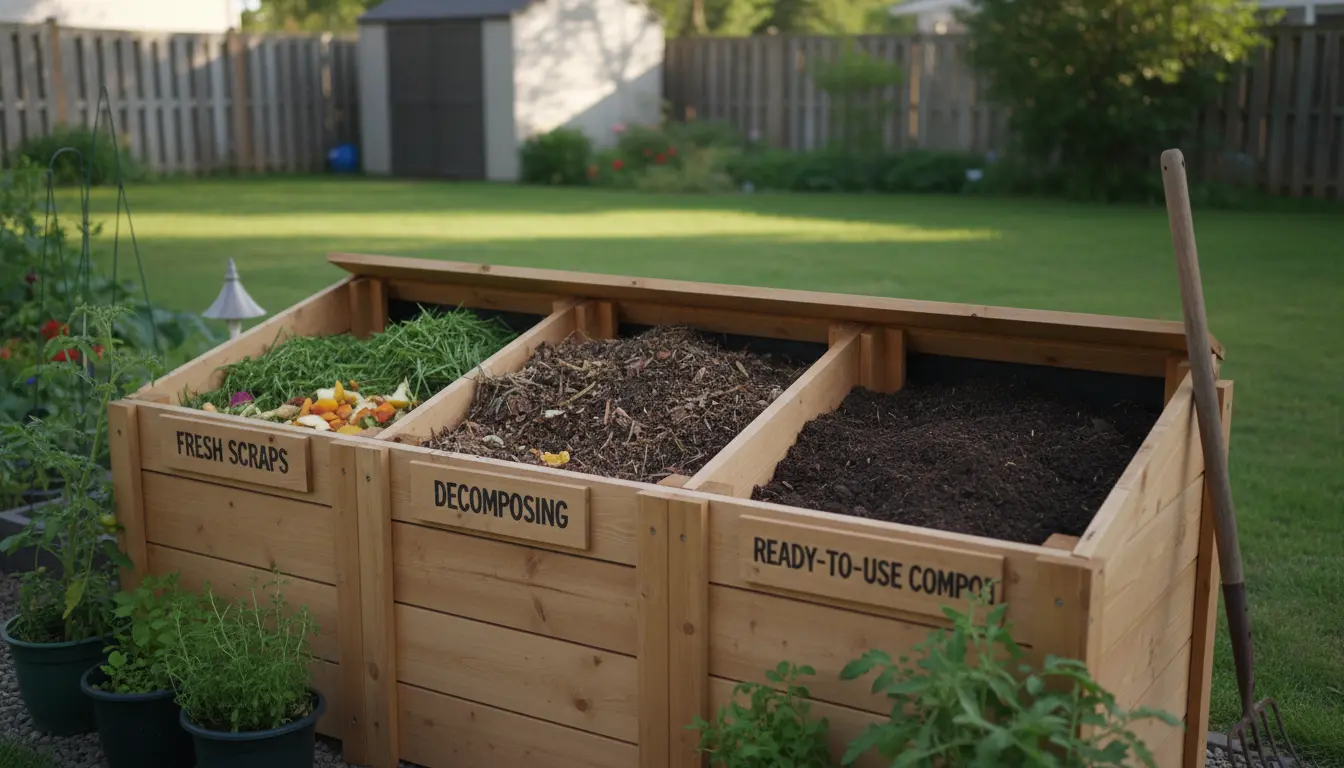
Home Composting Basics
Home composting turns kitchen scraps and yard waste into nutrient-rich soil. It reduces waste and improves garden soil without specialized equipment.
This guide covers simple, practical steps for beginners to start and maintain a home compost system. Read on for materials, methods, troubleshooting, and a short case study.
How to Start Home Composting
Choose a composting method that matches your space and time. Options include a backyard pile, a bin, a tumbler, or an indoor worm bin (vermicompost).
Placement matters. Put your compost in a well-drained spot with some shade to retain moisture but avoid complete exposure to hot sun.
Materials to Compost (What to Add)
Balance carbon-rich and nitrogen-rich materials for effective decomposition. Aim for a mix rather than single-type inputs.
- Greens (nitrogen): fruit and vegetable scraps, coffee grounds, fresh grass clippings.
- Browns (carbon): dry leaves, straw, shredded paper, cardboard.
- Other: small amounts of finely chopped woody material help aeration.
Materials to Avoid
Certain items can attract pests, slow decomposition, or add pathogens. Keep these out of a home compost pile.
- Meat, fish, dairy, and oily foods (unless you have a hot compost system).
- Diseased plants, invasive weeds with seeds, and pet waste from carnivores.
- Large woody branches that take too long to break down.
Step-by-Step Composting Process
Follow these simple steps to establish a reliable compost system at home. The process is forgiving if you stick to the basics.
- Layer: Start with coarse browns to create airflow. Alternate greens and browns in 4-6 inch layers.
- Moisture: Keep the pile as moist as a wrung-out sponge. Water if dry, cover if too wet.
- Aeration: Turn or mix the pile every 1–2 weeks to add oxygen and speed breakdown.
- Temperature: A hot pile (130–160°F) decomposes faster, but cool composting still works over a longer time.
Troubleshooting Home Composting
Common problems are simple to fix with small adjustments to balance, moisture, and airflow.
If it smells bad
Bad smells usually mean too much moisture or too many greens. Add dry browns and turn the pile to restore airflow.
If it attracts pests
Avoid adding meat, dairy, and oily foods. Use a closed bin or bury food scraps within the pile. Maintain a top layer of browns.
If it stays cold and slow
Increase pile size, add more greens, and turn regularly. Insulate with straw or a tarp in cooler weather.
Maintenance Tips for Home Composting
Consistent, light maintenance keeps compost healthy and productive. Small routines save time later.
- Collect scraps in a covered kitchen caddy and empty daily to prevent odors.
- Chop or shred large materials to speed decomposition.
- Check moisture weekly and turn every 1–2 weeks if possible.
- Use finished compost to improve potting mixes, garden beds, and lawn soil.
Composting one pound of food waste prevents roughly one pound of CO2 equivalent from entering the atmosphere. Home composting reduces landfill methane and returns nutrients to soil.
Small Real-World Example: Apartment Case Study
Case study: Sarah lives in a two-bedroom apartment and wanted to compost but had limited space. She started a small worm bin on a balcony.
She used shredded cardboard and vegetable scraps as bedding and fed the worms daily. In six months, she produced enough castings to feed her herb pots and reduce grocery costs for seedlings.
Key takeaways: choose a method that matches your space, keep the system tidy, and scale slowly to match your waste volume.
Using Your Finished Compost
Finished compost looks dark, crumbly, and smells earthy. It can be used immediately or blended into potting mixes.
- Top-dress houseplants and garden beds with a 1-inch layer.
- Mix into potting soil at 10–30% by volume for seedlings and container plants.
- Work into vegetable beds in spring to boost soil structure and fertility.
Quick Checklist to Start Home Composting
- Choose a method: bin, pile, tumbler, or worm box.
- Collect a mix of greens and browns.
- Monitor moisture and aerate regularly.
- Use finished compost in pots and beds.
Home composting is a practical way to cut waste and enrich your soil. Start small, be consistent, and adjust as you learn. Within a few months, you can produce valuable compost with minimal effort.