
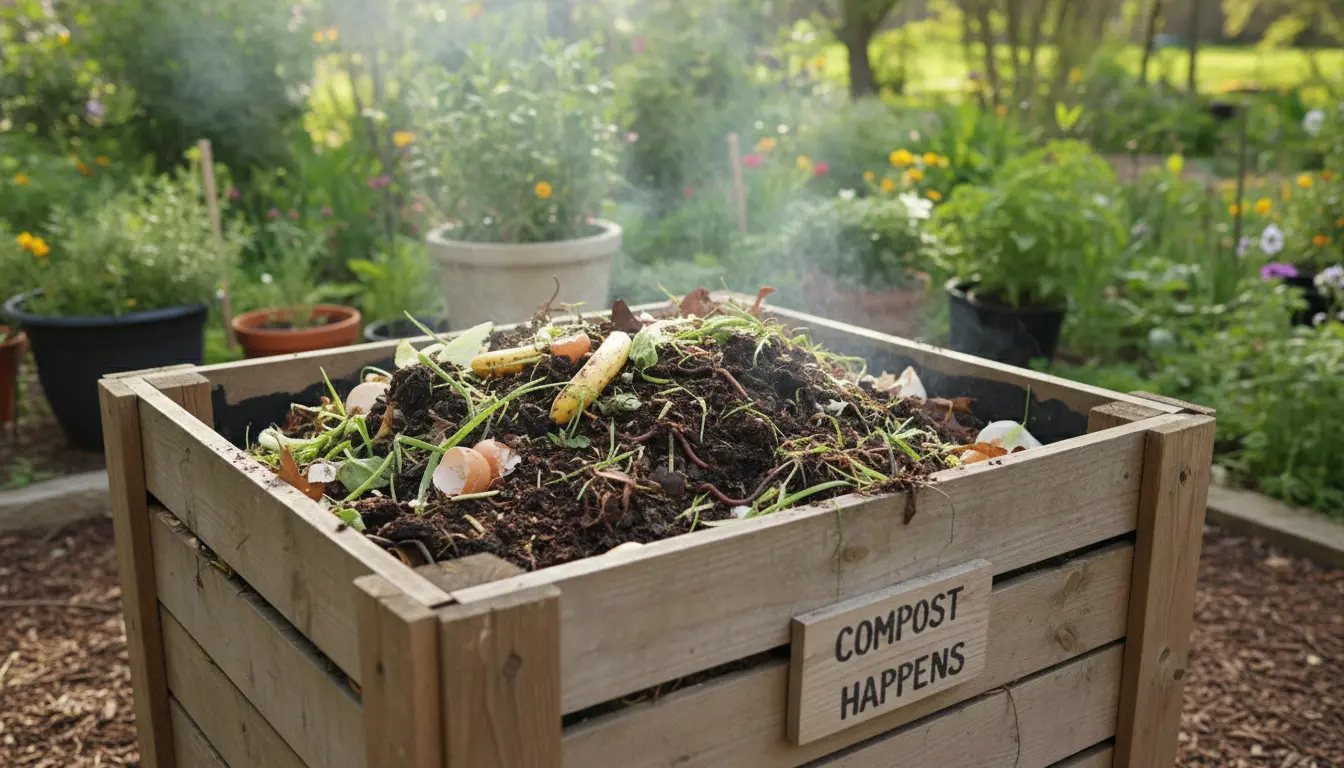
Why Composting at Home Matters
Composting at home reduces waste and creates nutrient-rich soil for gardens and houseplants. It is a low-cost way to improve soil structure and support healthy plant growth.
This guide explains how to start a simple, effective compost system whether you have a backyard, balcony, or small kitchen.
Choose the Right System for Composting at Home
Select a compost system that fits your space and needs. Options range from open piles to tumblers and worm bins.
- Open pile: Best for large yards, low cost, needs turning.
- Tumbler: Enclosed, easy to turn, good for fast results.
- Worm bin (vermicompost): Ideal for apartments and kitchens; produces rich castings.
- Bokashi: Fermentation method for apartments; handles meat and dairy after fermentation.
Placement and Setup
Put a compost bin in a convenient, well-drained spot with partial sun. A location near the kitchen reduces the effort of carrying scraps.
Ensure good airflow and easy access for turning or harvesting finished compost.
What to Add: Greens and Browns
Compost needs a mix of nitrogen-rich “greens” and carbon-rich “browns.” Balance speeds decomposition and reduces odor.
- Greens (nitrogen): Fruit and vegetable scraps, coffee grounds, fresh grass clippings.
- Browns (carbon): Dry leaves, shredded paper, cardboard, straw, small wood chips.
A general target ratio is about 1 part greens to 2–3 parts browns by volume. Adjust if the pile is too wet or smells bad.
What Not to Compost
Avoid adding meat, bones, greasy food, diseased plants, and pet waste to standard bins. These items can attract pests or spread pathogens.
Use bokashi or industrial composting services for meat and dairy, or exclude them entirely.
How to Maintain a Home Compost Pile
Good maintenance keeps composting efficient and odor-free. Focus on turning, moisture, and particle size.
- Turning: Aerate the pile every 1–2 weeks with a pitchfork or by rotating a tumbler.
- Moisture: Keep the pile damp like a wrung-out sponge. Add water in dry weather and more browns if it is soggy.
- Particle size: Chop or shred materials to increase surface area and speed decomposition.
Temperature and Time
Most backyard compost piles heat up to 120–160°F (50–70°C) when working well. High temperatures kill many weed seeds and pathogens.
Small bins and worm composting work at lower temperatures and take longer—usually several months to a year for finished compost.
Household food scraps make up about 20–30% of municipal solid waste by weight. Composting those scraps can significantly reduce landfill waste and methane emissions.
Troubleshooting Common Problems in Home Composting
Problems are often easy to fix once you identify the cause. Here are common issues and quick solutions.
- Bad smell: Add more browns and turn the pile to add air.
- Pests: Bury food scraps deeper, use a closed bin, or add wire mesh around the bin base.
- Slow decomposition: Increase turning, add greens, or chop materials smaller.
- Pile too dry: Add water and some fresh greens to rehydrate materials.
Using Finished Compost
Finished compost is dark, crumbly, and smells earthy. Use it to enrich garden beds, potting mixes, and as a mulch layer.
Apply a 1–2 inch layer to garden beds in spring or mix compost into potting soil to improve water retention and nutrients.
Small Real-World Example
Case study: A small urban gardener converted kitchen scraps into usable compost in six months using a worm bin. They started with 10 liters of scraps per week, added shredded cardboard as bedding, and maintained a balanced feed schedule.
After harvesting, they mixed the worm castings into potting soil for tomatoes and peppers. The plants showed stronger growth and higher yields the following season.
Practical Tips to Keep Composting at Home Simple
- Keep a small countertop bin for kitchen scraps to reduce trips outside.
- Record additions and turns in a simple notebook to track progress.
- Collect seasonal leaves in fall to stockpile browns for the year.
- Start small and expand as you learn what works for your climate and space.
Composting at home is a hands-on habit that becomes easier with practice. Focus on balance and regular maintenance to produce high-quality compost for healthier plants and reduced household waste.