
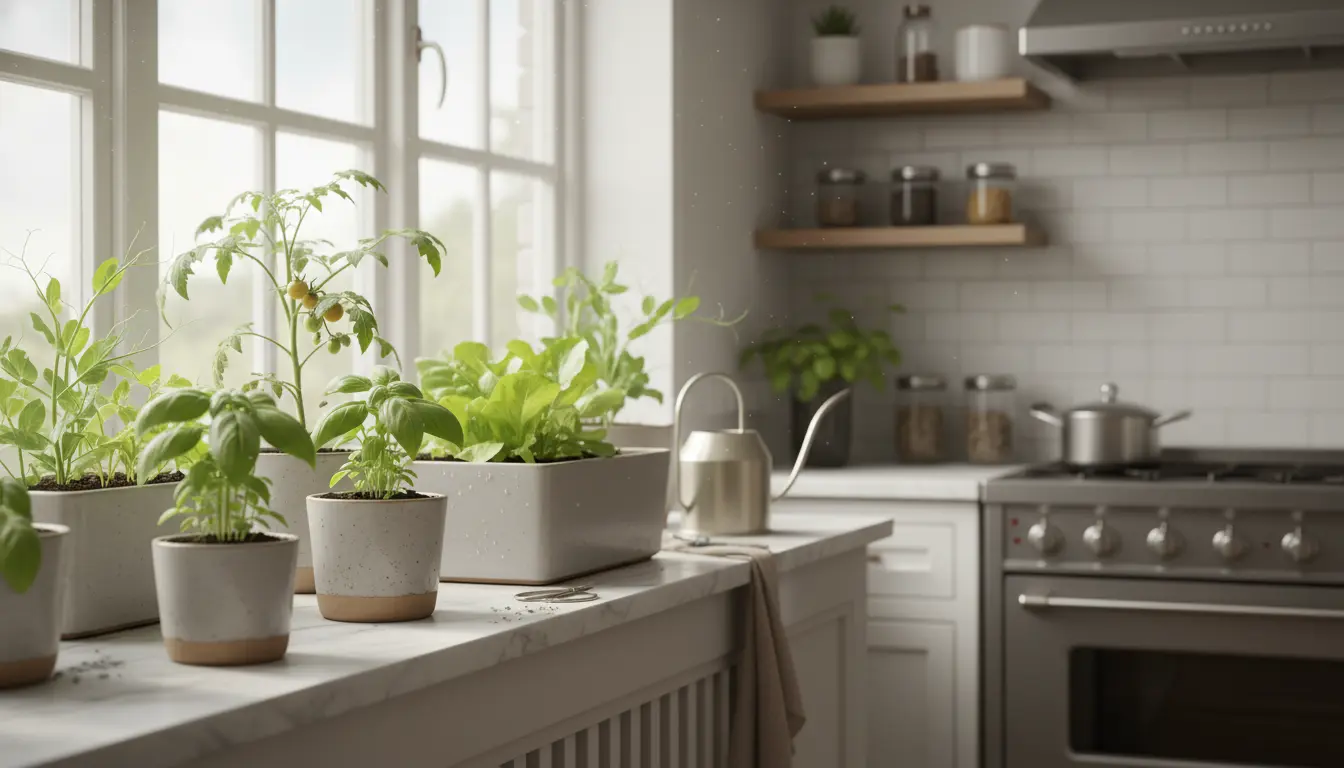
Growing vegetables indoors is a practical way to enjoy fresh produce year-round. This guide covers the essentials: location, lighting, containers, soil, watering, and plant choices. Follow these steps to get reliable results in small spaces.
Why Start an Indoor Vegetable Garden
Indoor gardens reduce grocery trips and let you control growing conditions. They also make fresh greens accessible in apartments and cold climates.
Starting small keeps risk low and learning fast. You can scale up as you gain experience and success.
Choose the Right Location and Light for an Indoor Vegetable Garden
Light is the most important factor for an indoor vegetable garden. Most vegetables need 10–14 hours of bright light every day.
Place containers near south- or west-facing windows whenever possible. If natural light is limited, use grow lights designed for edible plants.
Grow Light Options
- Full-spectrum LED grow lights: energy efficient and low heat.
- Fluorescent T5 fixtures: good for leafy greens and herbs.
- Compact fluorescent bulbs: budget option for small setups.
Pick Suitable Containers and Soil
Container choice affects root health and watering frequency. Use pots with drainage holes and sizes appropriate for each crop.
Use a good-quality potting mix, not garden soil. Potting mixes retain water while providing airflow for roots.
Container and Soil Checklist
- Drainage: pots must have holes and a saucer to catch runoff.
- Size: 6–8 inch pots for herbs; 12–18 inch for tomatoes and peppers.
- Soil: lightweight potting mix with added perlite for drainage.
Best Vegetables for an Indoor Vegetable Garden
Start with fast-growing, low-maintenance crops to build confidence. Leafy greens and herbs are forgiving and productive in small spaces.
- Lettuce and mixed salad greens — quick harvests and low light needs.
- Spinach and Swiss chard — tolerate lower light and grow well in pots.
- Herbs like basil, parsley, and chives — compact and useful in the kitchen.
- Cherry tomatoes and small pepper varieties — need more light but reward with fruit.
Watering, Feeding, and Routine Care
Indoor plants often need more frequent, lighter watering than outdoor plants. Check soil moisture with your finger; water when the top 1 inch feels dry.
Feed plants with a balanced liquid fertilizer every 2–4 weeks. Reduce feeding for herbs if you prefer stronger flavor from slightly leaner soil.
Pest and Pollination Tips
Indoor pests are less common but watch for aphids and spider mites. Treat early with insecticidal soap or wipe leaves with a damp cloth.
For fruiting plants like tomatoes, hand-pollinate by gently shaking flowers or using a small brush to move pollen between blooms.
Simple Layouts and Systems for an Indoor Vegetable Garden
Choose a layout that matches your space and time. A windowsill herb row, a tiered shelf with LED lights, or a single container with mixed salad greens are all effective.
- Windowsill: best for herbs and microgreens.
- Shelf system: adds multiple layers of lighted growing space.
- Single large container: grow several salad heads together.
Microgreens can be harvested in as little as 7–14 days and pack more nutrients per gram than mature leaves. They are ideal for fast indoor yields.
Case Study: Small Apartment, Big Yield
Marcos lives in a two-room apartment and started an indoor vegetable garden on a single sun-facing shelf. He used three tiers of LED lighting and three 10-inch pots.
In his first season he harvested continuous salad greens, basil, and two potted cherry tomato plants that produced enough fruit for weekly meals. He spent about 30 minutes per week on watering and trimming.
Key success factors were proper lighting, quick-draining potting mix, and routine harvests to encourage growth.
Common Mistakes and How to Avoid Them
Beginners often overwater or choose plants that need too much light. Address these issues early to prevent setbacks.
- Overwatering: use pots with drainage and check soil before watering.
- Poor light: invest in affordable LED grow lights if window light is insufficient.
- Wrong plant size: avoid full-size vegetables like standard tomatoes unless you have enough space.
Step-by-Step Starter Plan for an Indoor Vegetable Garden
- Choose a bright location or purchase a grow light.
- Select 2–4 easy crops (e.g., lettuce, basil, chives, cherry tomato).
- Buy quality potting mix and containers with drainage.
- Plant seeds or seedlings and label each pot.
- Establish a watering and feeding schedule; inspect plants weekly for pests.
Final Tips for Ongoing Success
Keep a small notebook or photo log to track growth and changes. Adjust light duration, watering frequency, and fertilizer based on plant response.
Experiment with one new crop each season to expand your skills. Indoor gardening is iterative — small changes lead to better yields over time.
Starting an indoor vegetable garden is accessible and rewarding. With the right light, soil, and routine care, you can enjoy fresh, homegrown vegetables year-round, even in compact living spaces.