
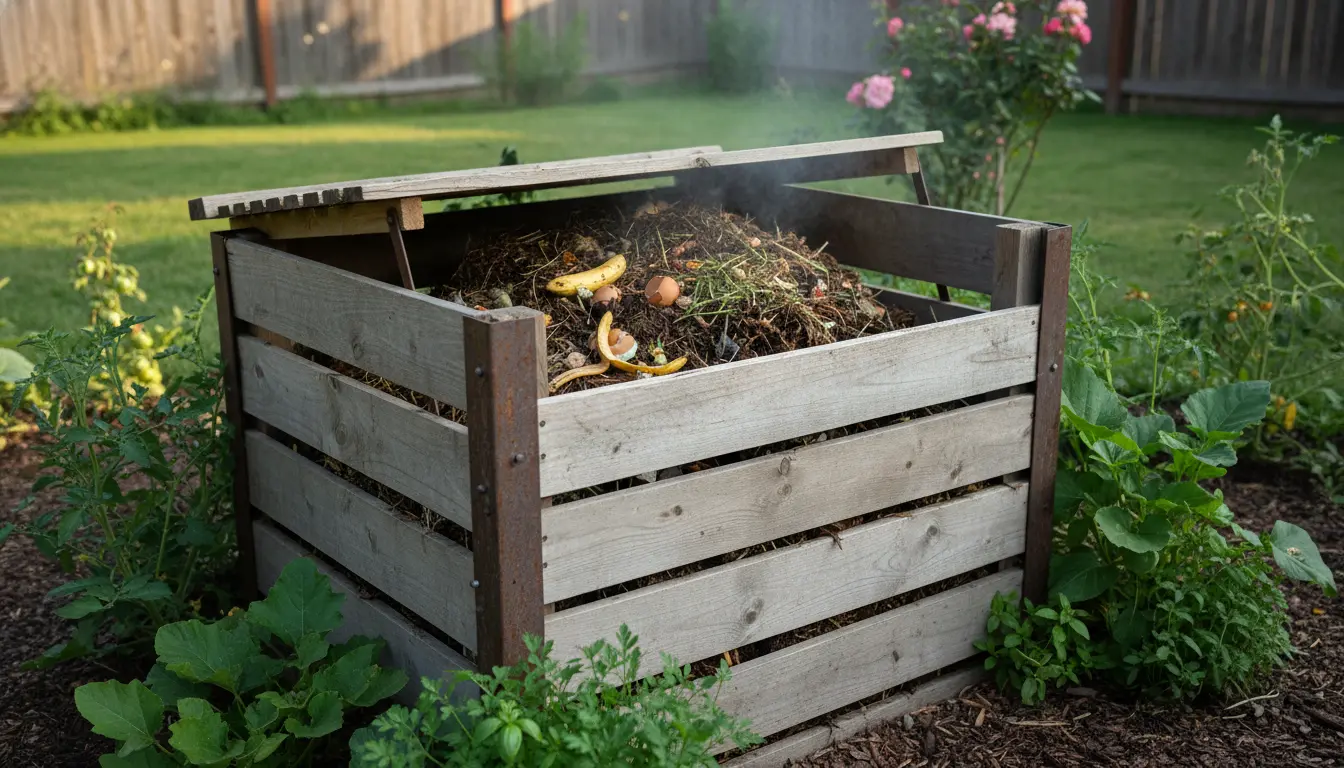
Why Start Composting at Home
Composting at home turns kitchen and yard waste into a valuable soil amendment. It reduces landfill waste, lowers household trash volume, and improves garden health.
This guide gives clear, practical steps to set up a home compost system, maintain it, and use finished compost effectively.
Choose the Right Home Composting System
Select a composting method that fits your space, time, and comfort level. Common options are backyard bins, tumblers, worm bins, and simple piles.
- Backyard bin: Good for yards and larger volumes. Low maintenance but slower.
- Tumbler: Faster mixing and less odor. Ideal if you want quicker results.
- Worm bin (vermicompost): Best for indoor composting and food scraps. Produces rich castings.
- Open pile: Cheapest option for large gardens but needs space and pest management.
Quick Setup Checklist for Home Composting
- Pick a bin or bin site with partial sun and good drainage.
- Gather browns (carbon) and greens (nitrogen) materials.
- Keep a small pitchfork or turning tool nearby.
- Have a kitchen scrap container for daily collection.
Balance Materials: Browns vs Greens
Compost needs a balance of carbon-rich “browns” and nitrogen-rich “greens”. Proper balance speeds decomposition and minimizes odors.
Aim for roughly a 25–30:1 carbon-to-nitrogen ratio by weight. In practice, that means more browns than greens.
- Greens: fruit and vegetable scraps, coffee grounds, fresh grass clippings.
- Browns: dry leaves, shredded paper, straw, cardboard.
Practical Mixing Guidelines
Layer materials as you add them. Start with coarse browns on the bottom for airflow, then alternate thin green and brown layers.
- Add greens in small amounts to avoid compaction.
- Cover fresh green additions with a brown layer to reduce flies and odor.
- Turn or tumble the pile every 1–2 weeks for faster results.
Water, Air, and Temperature
Compost needs moisture, oxygen, and moderate heat. Think of it as a living system you need to keep in balance.
- Moisture: Keep compost like a damp sponge. Add water in dry weather and add more browns if it gets too wet.
- Air: Turn the pile to introduce oxygen and prevent anaerobic conditions and bad smells.
- Temperature: Active piles heat to 120–160°F (50–70°C). This speeds decomposition and kills some weed seeds.
Troubleshooting Common Issues
If your compost smells rotten, it is too wet or lacks air—turn it and add dry browns. If it is dry and slow, add water and greens.
Fruit flies: bury food scraps, keep a lid on a bin, or use a worm bin indoors. Slow decomposition often needs more nitrogen or smaller particle sizes.
Composting can reduce household waste by up to 30 percent and returns nutrients to your garden in 2 to 12 months depending on the method.
How to Know When Compost Is Ready
Finished compost is dark, crumbly, and smells earthy. You should not easily recognize original materials.
Smaller systems and cooler climates take longer. Use finished compost as a soil amendment, top dressing, or potting mix ingredient.
Using Finished Compost
- Top-dress vegetable beds with a 1–2 inch layer to add nutrients and improve moisture retention.
- Work compost into garden soil in spring or fall, mixing at roughly 10–20% by volume.
- Mix with potting soil at 10–25% for container plants to boost fertility and structure.
Small Real-World Case Study
Case: A suburban family of four started with a 60-gallon tumbler. They collected kitchen scraps in a small counter caddy and added dry leaves each week.
Results: After three months of regular tumbling, they produced a 50% reduction in household food waste and applied compost to vegetable beds, which showed improved yields the following season.
Practical Tips to Keep Composting Simple
- Keep a sealed kitchen container to avoid pests and make daily collection easy.
- Shred or chop large pieces to speed decomposition.
- Save a small section of finished compost to inoculate new piles and jump-start microbial activity.
- Label bins and keep a simple log: additions, turns, and moisture checks.
Final Checklist for Successful Home Composting
- Choose a compost system that fits your space and lifestyle.
- Maintain a good brown/green balance and proper moisture level.
- Turn the pile regularly and monitor temperature if possible.
- Use finished compost to enrich garden soil and reduce fertilizer needs.
Composting at home is practical and rewarding. With a simple system and regular attention, anyone can turn waste into a resource that benefits plants and the planet.