
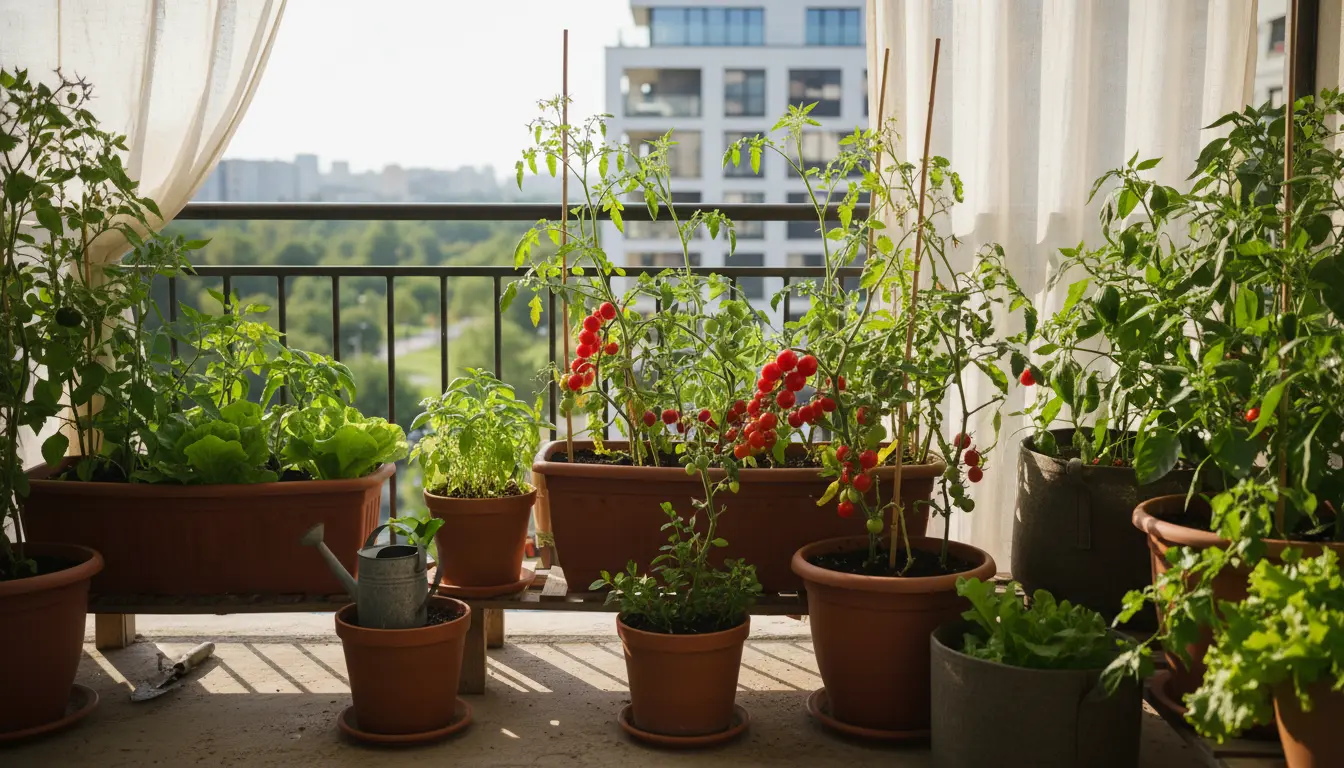
Why Choose a Container Vegetable Garden?
Container vegetable gardens let you grow fresh produce in small spaces like balconies, patios, or windowsills. They are easier to manage than in-ground beds and reduce many common soil problems.
This guide explains practical steps to start a successful container vegetable garden, from selecting containers to harvesting.
Choose the Right Location and Containers for a Container Vegetable Garden
Pick a spot that receives at least six hours of direct sunlight for most vegetable crops. South or west-facing balconies usually work best.
Containers should have drainage holes and be large enough for root growth. Common options include plastic pots, fabric grow bags, and wooden planters.
Container size guidelines
- Leafy greens: 6–8 inch pots or shallow troughs
- Herbs: 6–10 inch pots
- Tomatoes and peppers: 5–10 gallon containers
- Bush beans and small peppers: 3–5 gallon containers
Use the Right Soil and Amendments
Use a high-quality potting mix labeled for containers. These mixes are lighter and drain better than garden soil.
Amend with compost and a balanced slow-release fertilizer to provide steady nutrients over the season.
Potting mix components
- Peat or coconut coir for water retention
- Perlite or vermiculite for drainage
- Compost for nutrients and microbial life
Plant Selection and Spacing for a Container Vegetable Garden
Choose compact or dwarf varieties labeled for containers when possible. Determinate tomatoes, patio peppers, and salad mixes are good choices.
Follow spacing recommendations on seed packets, but remember containers limit root space so avoid overcrowding.
Best beginner vegetables for containers
- Lettuce and spinach
- Cherry tomatoes
- Basil, parsley, and cilantro
- Radishes and carrots (small varieties)
- Peppers and bush beans
Watering and Fertilizing Your Container Vegetable Garden
Containers dry out faster than garden beds. Water deeply until excess drains from the bottom, then check moisture daily in hot weather.
Fertilize regularly: use a water-soluble fertilizer every two weeks or follow a slow-release fertilizer schedule on the label.
Watering tips
- Water in the morning to reduce evaporation and disease risk
- Use mulch on the soil surface to retain moisture
- Consider self-watering containers or drip systems for convenience
Pest Management and Common Problems
Inspect plants weekly for pests like aphids, spider mites, and slugs. Early detection prevents infestations from spreading.
Use physical controls first: handpick pests, spray with water, or apply insecticidal soap when needed.
Common issues and fixes
- Yellow leaves: check for overwatering or nutrient deficiency
- Wilting: caused by underwatering or root problems
- Poor fruit set: ensure sufficient sunlight and pollinators
Harvesting and Seasonal Care for a Container Vegetable Garden
Harvest frequently to encourage new growth. Pick leafy greens before they bolt and harvest tomatoes when fully colored.
At season end, clean containers, compost spent plants, and refresh potting mix for next year.
Plants in containers often need 25–50% more frequent watering than those in the ground because pots lose moisture faster through their sides and drainage holes.
Small Case Study: Balcony Success with a Container Vegetable Garden
Sara had a 6-foot-wide south-facing balcony and wanted fresh tomatoes and herbs. She used three 10-inch pots for basil and parsley and two 5-gallon containers for determinate cherry tomatoes.
She placed the pots in full sun, used a premium potting mix with compost, and set a simple drip timer for twice-daily short waterings in summer. By late July she harvested continuous basil and a steady supply of cherry tomatoes until the first frost.
Practical Weekly Checklist for a Container Vegetable Garden
- Check soil moisture and water as needed
- Inspect for pests and remove affected foliage
- Pinch or prune to encourage compact growth
- Fertilize every 2–4 weeks with a balanced formula
- Harvest regularly to promote continued production
Final Tips for a Thriving Container Vegetable Garden
Start small to learn what works in your microclimate and adjust over time. Keep records of varieties, watering schedules, and yields to improve next season.
Container vegetable gardening is flexible and rewarding. With the right containers, soil, and care, you can grow a meaningful portion of your vegetables even in tiny spaces.