
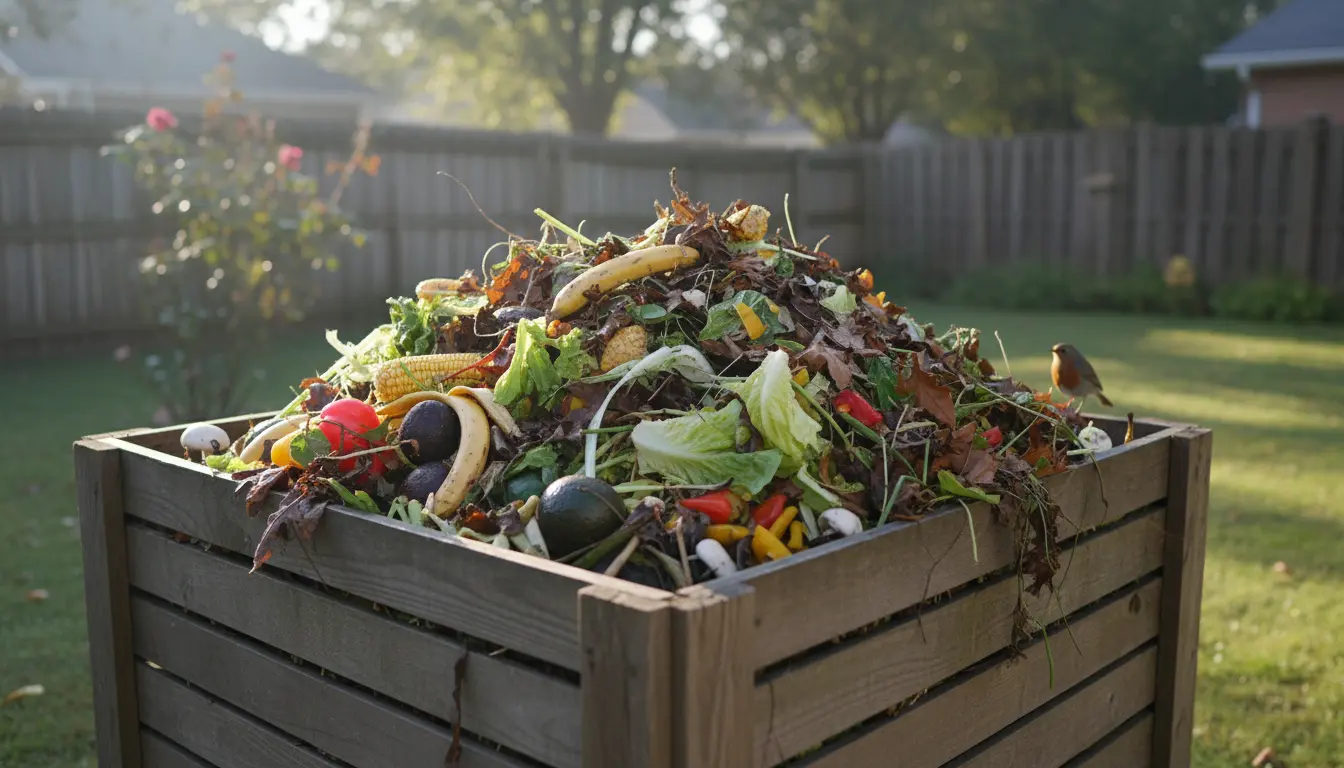
Why Start Composting at Home
Composting at home turns kitchen and yard waste into rich soil amendment. It reduces garbage, lowers methane from landfills, and improves plant health.
This guide explains practical steps to start composting at home, whether you have a small balcony or a large yard.
What You Need to Start Composting at Home
Begin with basic tools and a consistent routine. You do not need expensive equipment or special skills.
- Compost container: bin, tumbler, or a simple pile
- Garden fork or shovel for turning
- Kitchen collection container for scraps
- Water source to maintain moisture
Choosing a Compost System for Composting at Home
Select a system that fits your available space and how much effort you want to invest.
- Closed bin: tidy and good for small yards.
- Tumbler: easier turning and faster results but costlier.
- Open pile: lowest cost, suitable for larger spaces.
- Worm bin (vermicomposting): ideal for apartments and producing fast, nutrient-rich castings.
How to Start Composting at Home: Step-by-Step
Follow these steps to build a balanced compost that breaks down efficiently.
- Pick a location: a shaded, well-drained spot close to your kitchen for convenience.
- Layer materials: aim for a mix of brown (carbon) and green (nitrogen) materials.
- Maintain moisture: compost should feel like a wrung-out sponge.
- Turn regularly: aerate to speed decomposition and prevent odors.
- Harvest: after a few months to a year, use dark, crumbly compost in your beds or pots.
Balanced Materials for Composting at Home
Good composting relies on the right mix. Aim for roughly 25–30 parts carbon to 1 part nitrogen by volume.
- Greens (nitrogen): vegetable peels, coffee grounds, tea leaves, fresh grass clippings
- Browns (carbon): dry leaves, shredded paper, straw, cardboard
Examples of items to avoid: meat, dairy, oils, diseased plants, and pet waste from carnivores.
Maintaining Your Home Compost
Maintenance keeps composting at home efficient and trouble-free. Regular checks save time later.
- Turn every 1–2 weeks for faster results.
- Keep moisture even; add water or dry materials as needed.
- Chop large pieces to speed decomposition.
- Cover fresh additions with browns to reduce flies and smells.
Troubleshooting When Composting at Home
Common issues are easy to fix when you know what to look for.
- Bad smell: add more browns and turn to introduce air.
- Too dry: add water and some greens.
- Slow breakdown: chop materials and increase turning frequency.
- Pests: use a closed bin or bury fresh scraps under a layer of browns.
Using Finished Compost from Composting at Home
Finished compost is dark, crumbly, and smells earthy. Use it to improve soil structure and water retention.
- Mix into garden beds at a rate of 1–2 inches over the soil each season.
- Blend with potting soil for containers to boost fertility and moisture holding.
- Top-dress lawns sparingly to add nutrients and organic matter.
Case Study: One Family Starting Composting at Home
Sara, a suburban homeowner, wanted to reduce waste and improve her vegetable garden. She bought a $60 tumbling composter and started collecting kitchen scraps in a countertop pail.
Following the basic steps—layering greens and browns, turning weekly, and monitoring moisture—Sara produced usable compost in five months. Her tomato yields improved, and she cut trash volume by about one bag per week.
Key lessons from her experience: consistency matters, a simple system can work well, and small changes produce measurable benefits.
Tips for Successful Composting at Home
Small habits make composting at home easier and more effective.
- Keep a small kitchen bin to avoid accidental trash disposal.
- Store dry browns near the compost area for quick layering.
- Record when you start a bin to track progress and harvest time.
- Experiment with different systems to find what fits your routine.
Final Thoughts on Composting at Home
Composting at home is a practical way to reduce waste and nourish your garden. It requires simple supplies, a bit of time, and attention to balance.
Start small, be consistent, and adjust based on what your compost needs. Over time you will develop a reliable system that benefits both your household and the environment.