
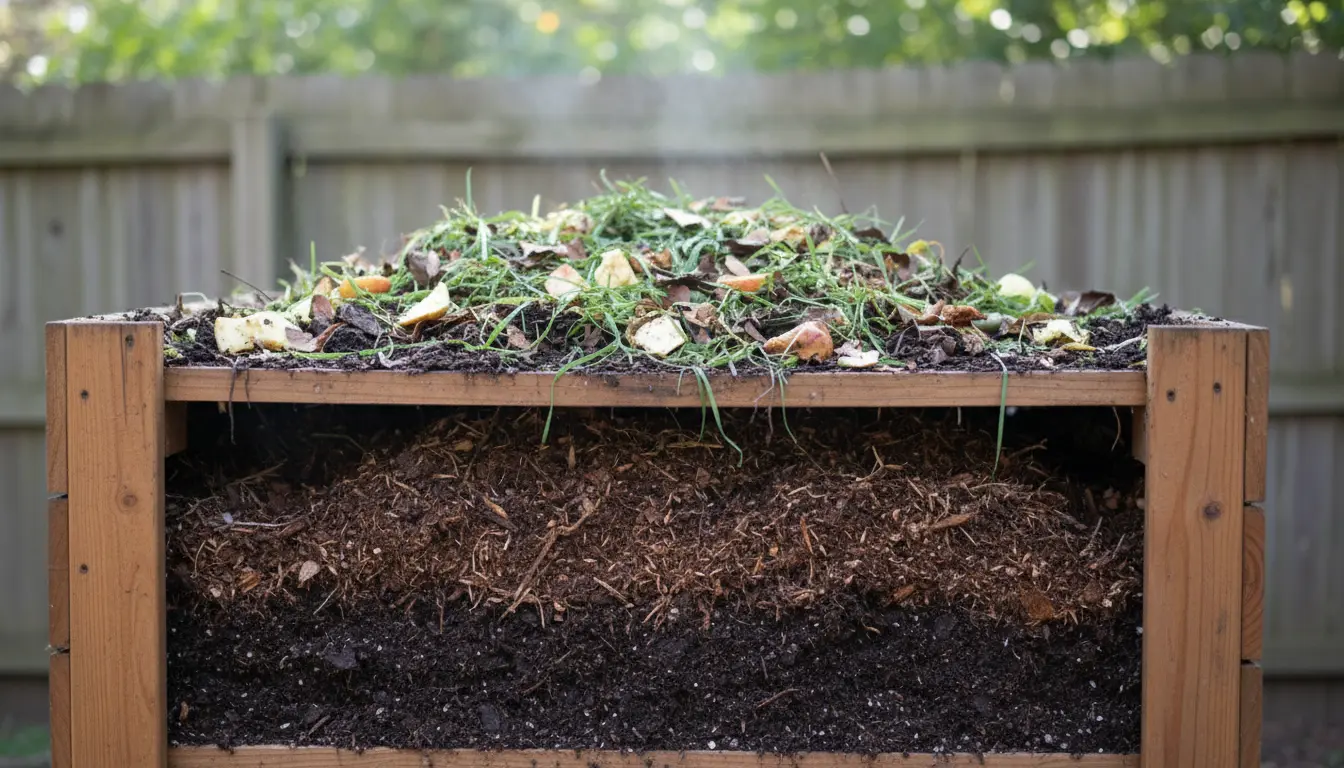
Home composting turns kitchen and yard waste into rich soil that improves plant growth and reduces household trash. This guide gives step-by-step instructions you can follow whether you have a backyard, balcony, or small apartment.
Home Composting Basics
Composting is the controlled breakdown of organic materials by microorganisms. The result is humus, a nutrient-rich material gardeners value for soil health.
Three main elements make composting work: carbon (browns), nitrogen (greens), and oxygen. Balance these to speed up decomposition and avoid odors.
What You Need for Home Composting
- A container: a bin, tumbler, or simple pile works.
- Source materials: kitchen scraps, yard trimmings, paper.
- Tools: a pitchfork or garden fork for turning, and a small shovel.
- Water nearby or a watering can for moisture control.
Choosing a Compost Bin
Choose a bin that fits your space and budget. Tumblers speed up composting and reduce pests. Open bins are low-cost but need more turning.
For apartments, use a small indoor compost pail and a larger shared bin, or try worm composting (vermicomposting) for small spaces.
How to Start a Compost Bin at Home
Starting compost is simple when you follow a few clear steps. Begin with a good foundation layer and add materials in the right order.
- Pick a spot: Choose a level, well-drained area with some shade. For balconies, keep the bin on a tray to protect surfaces.
- Layer the base: Start with 2–4 inches of coarse material like small twigs to improve air flow.
- Add alternating layers: Alternate browns and greens. Aim for roughly 3 parts browns to 1 part greens by volume.
- Moisten: Keep the pile about as damp as a wrung-out sponge. Add water if too dry, or more dry browns if too wet.
- Turn: Every 1–2 weeks turn the pile to introduce oxygen and speed decomposition. If using a tumbler, rotate it weekly.
Examples of Browns and Greens
- Browns (carbon): dry leaves, shredded newspaper, cardboard, straw.
- Greens (nitrogen): vegetable scraps, coffee grounds, fresh grass clippings, plant trimmings.
What to Add and What to Avoid in Home Composting
Adding the right materials keeps your compost healthy. Some items should never go in a home compost bin because they attract pests or slow down decomposition.
Safe to Compost
- Fruit and vegetable scraps (no oils).
- Eggshells, coffee grounds, tea bags (remove staples).
- Yard waste: grass clippings, leaves, small branches.
- Shredded paper and cardboard (small amounts).
Avoid Adding
- Meat, fish, dairy, and greasy foods (pests and odors).
- Diseased plants, invasive weeds with seeds, and treated wood.
- Coal ash or pet feces from meat-eating animals.
Maintaining Your Home Compost
Maintenance is low effort if you check moisture and turn the pile occasionally. Proper balance prevents odors and speeds up composting.
Common issues have simple fixes. If the pile smells, add more browns and turn to add air. If it is dry and slow, add greens and water.
Troubleshooting Common Problems
- Bad smell: Too much nitrogen or not enough air. Add dry browns and turn the pile.
- Pests: Cover food scraps with browns and use a closed bin or tumbler.
- Slow breakdown: Materials too large or too dry. Chop or shred items and moisten the pile.
Compost can reduce household waste by up to 30 percent and can return nutrients to soil faster than many commercial fertilizers.
Case Study: Small-Scale Apartment Composting
Maria lives in a two-bedroom apartment and started a worm bin on her balcony. She used a 10-gallon plastic bin with ventilation holes and bedding made of shredded paper.
After six months she produced enough compost to feed three potted herbs and a tomato plant. Her weekly kitchen scraps dropped from a full bag to a small jar of unusable waste.
Key steps she followed: collect scraps in a sealed counter caddy, chop larger pieces, maintain bedding moisture, and harvest compost every 2–3 months.
Quick Tips for Successful Home Composting
- Chop or shred materials to speed decomposition.
- Keep a balance: mostly browns with regular greens added.
- Turn regularly to maintain oxygen levels.
- Use a kitchen caddy with a tight lid to collect scraps and reduce odors.
- Harvest finished compost when it is dark, crumbly, and smells earthy.
Home composting is a practical way to recycle organic waste and improve your garden soil. Start small, watch the balance of materials, and adjust as you go. With a little attention, you can turn everyday scraps into valuable soil amendment.