
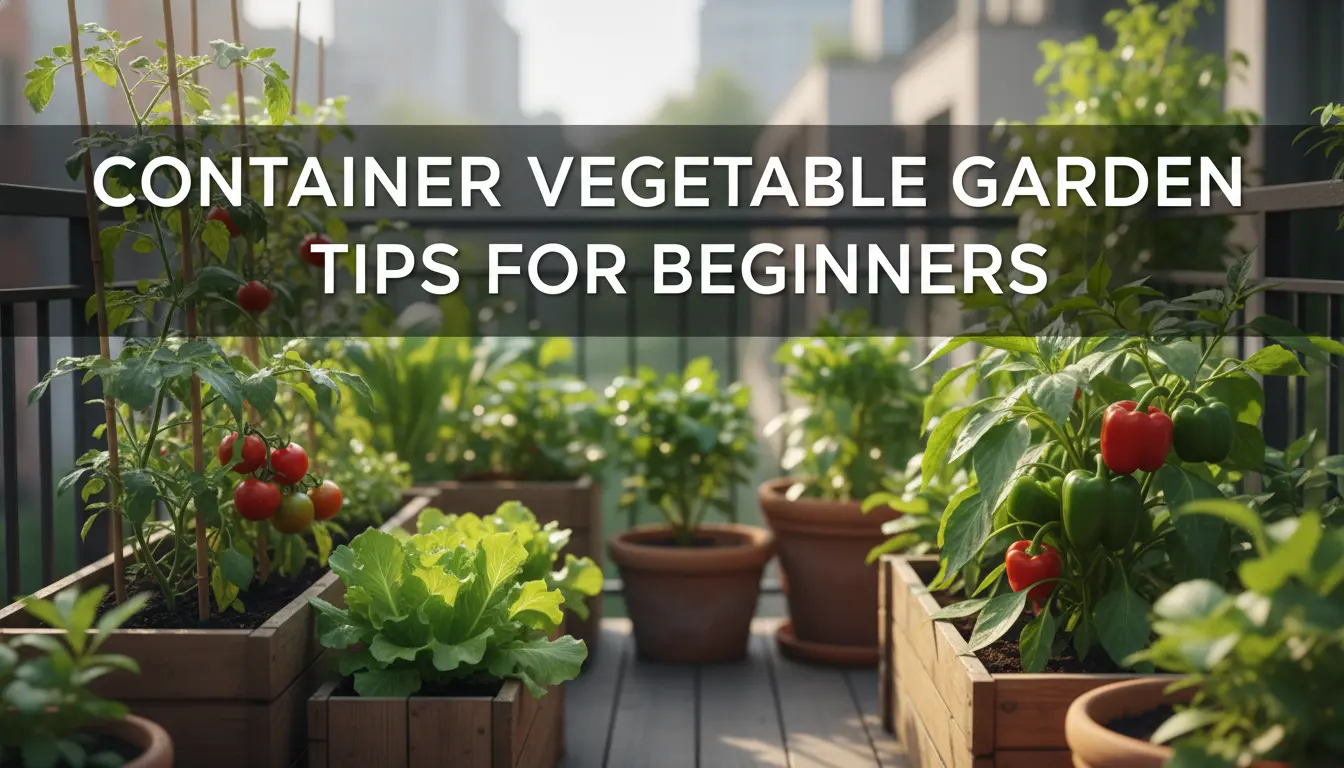
Why choose a container vegetable garden
Container vegetable gardens are ideal for small spaces, renters, and beginners. They let you grow fresh food on a balcony, patio, or even a sunny windowsill.
This guide explains the steps, materials, and best plants for a successful container vegetable garden. Follow practical tips to avoid common mistakes and get faster results.
Planning your container vegetable garden
Start by assessing light, space, and goals. Most vegetables need 6–8 hours of direct sunlight, so measure available sun during the day.
Decide what you want to grow: salads, herbs, peppers, or tomatoes. Choose plants that match your light and space.
Choosing the right location for a container vegetable garden
Select a spot with stable wind protection and easy access to water. Group containers so watering and harvests are simpler.
Consider mobility: use wheels or plant stands if you need to move pots for shelter or extra sun.
Choosing containers for your container vegetable garden
Container materials include plastic, terracotta, wood, and fabric. Each has trade-offs in weight, insulation, and breathability.
- Small herbs: 6–8 inch pots
- Lettuce and greens: 8–12 inch wider containers
- Peppers and dwarf tomatoes: 5–7 gallon pots
- Indeterminate tomatoes and large crops: 15–20 gallon containers
Soil and drainage for a container vegetable garden
Use a quality potting mix designed for containers rather than garden soil. Potting mixes hold air and drain reliably.
Ensure each container has drainage holes and a saucer or tray beneath to catch excess water. Add a thin layer of gravel only if you plan proper drainage; otherwise the potting mix is enough.
Amending potting mix for a container vegetable garden
Mix in slow-release granular fertilizer or use a balanced liquid feed every 2–3 weeks during the growing season. Organic compost or worm castings help water retention and nutrition.
A suggested blend: quality potting mix, 10–20% compost, and a slow-release fertilizer at label rates.
Watering and maintenance for a container vegetable garden
Containers dry out faster than ground beds, so check moisture daily in hot weather. Insert your finger into the soil; water when the top inch feels dry.
Water deeply until it runs from the drainage holes to encourage strong root systems. Avoid light, frequent spraying that wets foliage more than roots.
Pests, diseases, and pruning in a container vegetable garden
Monitor plants for aphids, whiteflies, and fungal leaf spots. Use insecticidal soap, neem oil, or manual removal as first responses.
Remove yellowing leaves, pinch early blossoms on some crops to concentrate energy, and stake tall plants like tomatoes to prevent breakage.
Best vegetables for a container vegetable garden
Pick crops with compact root systems or varieties bred for containers. Many common vegetables adapt well to pots.
- Lettuce, arugula, and spinach — quick harvests and shallow roots
- Cherry tomatoes and patio tomato varieties — compact and high-yield
- Peppers — need warmth and a medium-sized pot
- Herbs like basil, parsley, and chives — ideal for small containers
- Dwarf beans and bush cucumbers — choose compact varieties
Planting schedule and crop rotation in a container vegetable garden
Plan for succession planting: harvest lettuce, then sow radishes or a fast-maturing crop in the same pot. This maximizes yield from limited space.
Rotate plant families between seasons if possible to reduce disease buildup. Move containers or replace potting mix every season when practical.
Quick checklist to start a container vegetable garden
- Assess light and choose location
- Select containers with drainage
- Buy quality potting mix and fertilizer
- Pick plant varieties suited to containers
- Set up watering routine and supports
Real-world example: a balcony container vegetable garden case study
Case study: Maria, a city renter with a small south-facing balcony, wanted fresh salad greens and tomatoes. She used five containers: two 5-gallon pots for cherry tomatoes, two 3-gallon pots for mixed peppers, and a long trough for lettuce and herbs.
She used an all-purpose potting mix with compost and fed plants every two weeks. By mid-July she harvested continuous lettuce and multiple batches of cherry tomatoes, saving money and reducing store trips.
Troubleshooting common problems in a container vegetable garden
Yellow leaves often signal overwatering or nutrient deficiency. Adjust watering and add a balanced fertilizer if needed.
Slow growth can result from root-bound plants. If roots circle the pot, repot into a larger container or prune roots and refresh the potting mix.
Final tips for a thriving container vegetable garden
Start small and expand as you gain experience. Keep a simple journal of planting dates, varieties, and harvests to learn what works in your microclimate.
Use lightweight containers if mobility is important, and consider self-watering pots to reduce daily maintenance. With consistent care, container vegetable gardens can deliver fresh produce year after year.