
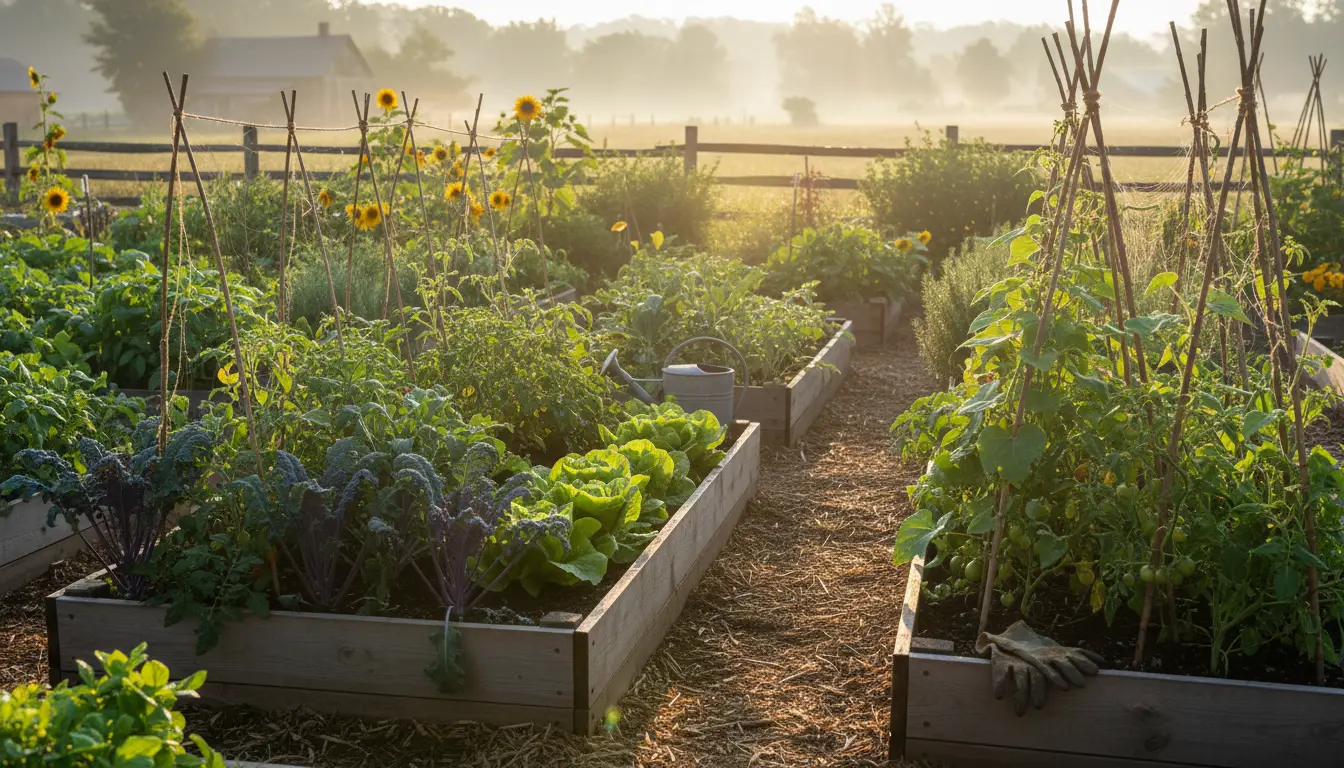
Why Start a Vegetable Garden
Growing your own vegetables saves money and gives you fresher food. A small, well-planned garden can supply weekly produce and reduce trips to the store.
How to Start a Vegetable Garden: Choose the Right Spot
Pick a location with at least six hours of sunlight per day for most vegetables. Sunlight affects yield more than any other single factor.
Consider access to water, level ground, and good drainage. Avoid low spots that collect cold air or water.
Site selection checklist
- At least 6 hours of direct sun
- Close to a water source
- Protected from strong winds
- Easy access for maintenance
How to Start a Vegetable Garden: Prepare the Soil
Healthy soil is the foundation of a productive garden. Test the soil pH and structure with a simple kit or local extension service.
Most vegetables prefer a slightly acidic to neutral pH (6.0–7.0). Amend soil with compost to improve fertility and texture.
Basic soil preparation steps
- Remove grass and weeds from the bed area.
- Loosen the soil to 8–12 inches using a garden fork or tiller.
- Mix in 2–3 inches of compost and a balanced organic fertilizer if needed.
- Rake the surface smooth and water to settle the soil.
How to Start a Vegetable Garden: Plan What to Grow
Choose vegetables that match your climate, season, and space. Start with easy crops like lettuce, radishes, tomatoes, and beans.
Group plants by water and sunlight needs to simplify care. Use succession planting to extend harvests over the season.
Beginner-friendly vegetable list
- Leafy greens: lettuce, spinach
- Root crops: radishes, carrots
- Vining plants: bush beans, peas
- Warm-season: tomatoes, peppers (start after frost)
How to Start a Vegetable Garden: Planting and Spacing
Follow seed packet or plant tag spacing recommendations to avoid overcrowding. Overcrowded plants lead to poor airflow and disease.
Plant in rows, blocks, or raised beds depending on space. Raised beds warm earlier and drain better in cool climates.
Spacing tips
- Use wider rows for vining crops to reduce shading.
- Thin seedlings to recommended spacing to promote healthy growth.
- Interplant fast and slow growers to maximize space.
How to Start a Vegetable Garden: Watering and Maintenance
Consistent watering is key, especially during establishment and fruit set. Aim for deep, infrequent watering rather than frequent shallow watering.
Mulch around plants to conserve moisture and reduce weeds. Check plants daily for pests and remove damaged leaves promptly.
Watering schedule guide
- Seedlings: keep soil consistently moist until established
- Mature plants: 1–2 inches of water per week, adjusted for weather
- Use drip irrigation or soaker hoses to reduce leaf wetness and water waste
Compost can improve soil water retention and structure, reducing the need for frequent watering by up to 25% in many garden soils.
How to Start a Vegetable Garden: Pest and Disease Management
Start with prevention: crop rotation, clean tools, and healthy soil reduce pest pressure. Encourage beneficial insects with flowers like marigolds and alyssum.
Use physical controls such as row covers for early season pests. Apply organic or chemical controls only when necessary and follow label instructions.
Quick pest control checklist
- Inspect leaves and stems weekly
- Handpick large pests like caterpillars
- Use insecticidal soap for soft-bodied insects
- Rotate crops yearly to reduce soil-borne disease
Small Case Study: Sarah’s First Backyard Garden
Sarah converted a 6×8 ft patch of lawn into a raised bed garden in spring. She tested the soil, added compost, and planted tomatoes, lettuce, and bush beans.
By mid-summer she harvested weekly salads and three dozen tomatoes. Her key success factors were consistent watering, mulching, and starting with easy crops.
Seasonal Tips and Troubleshooting
Adjust planting times to your local frost dates. Use a local planting calendar to know when to start seeds indoors or sow outdoors.
If plants show yellow leaves, check for nutrient deficiencies or overwatering. Slow growth often points to compacted soil or insufficient sunlight.
Common problems and fixes
- Poor germination: check seed depth and soil moisture
- Blossom end rot on tomatoes: ensure consistent calcium and watering
- Root-bound seedlings: transplant to larger containers before planting out
Wrap-Up: How to Start a Vegetable Garden Successfully
Start small, focus on soil health, and choose crops suited to your conditions. Regular maintenance and observation will reward you with fresh produce and steady improvement.
Keep notes each season about what worked and what didn’t. Over two or three seasons you can scale up and refine your garden for reliable harvests.