
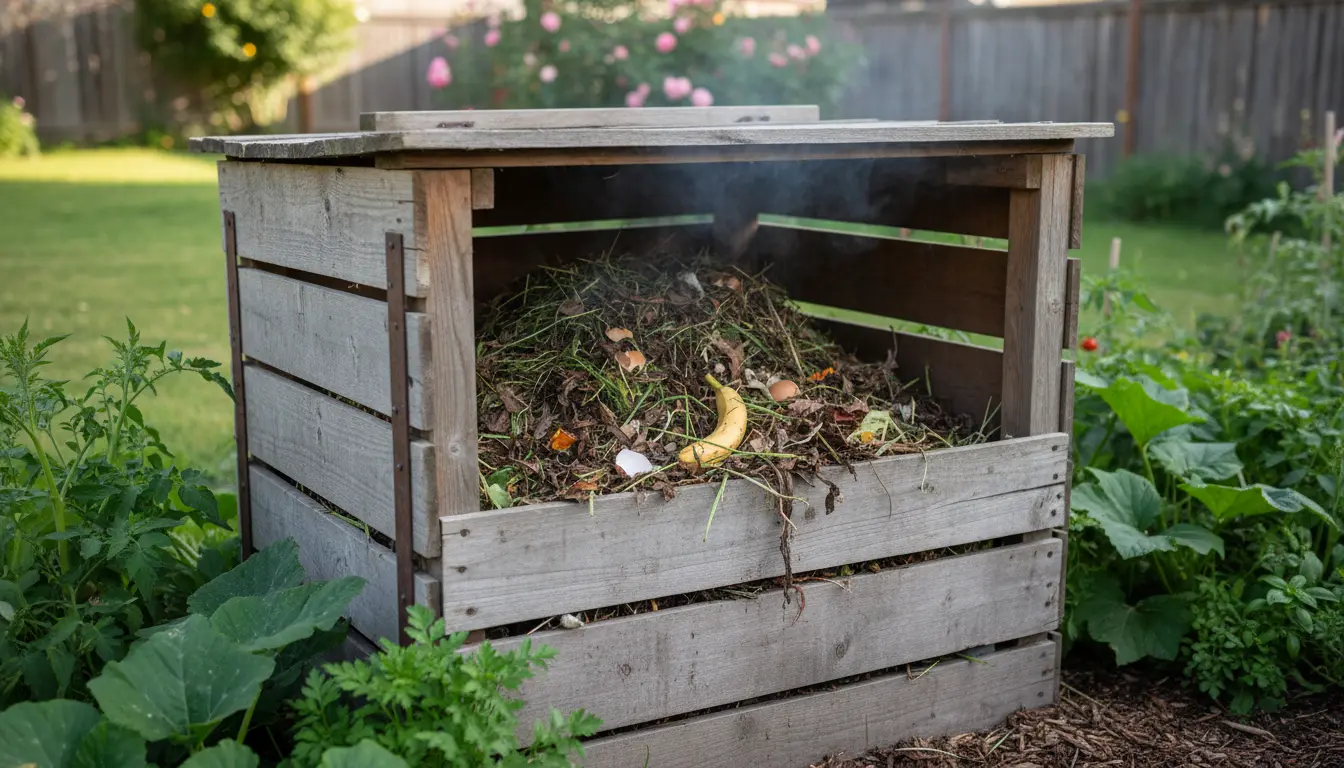
Home composting turns food scraps and yard waste into rich soil amendment. This guide gives clear, practical steps for beginners to start composting at home and keep a healthy compost pile.
Why Home Composting Matters
Composting reduces household waste and cuts methane from landfills. It also produces nutrient-rich compost that improves soil structure and plant health.
Small changes at home can lower waste costs and support a garden without chemical fertilizers.
How to Start Home Composting
Starting composting requires three basics: a container or space, the right mix of materials, and simple maintenance. You can compost in a backyard bin, a tumbler, or a small indoor setup for apartments.
Choosing a Composting Method for Home Composting
Select a method that matches your space and lifestyle. Each method has trade-offs in time, effort, and space.
- Open pile: Low cost and simple, best for large yards.
- Compost bin: Tidy and keeps pests out; good for most homes.
- Tumbler: Faster turning and faster results; higher initial cost.
- Vermicomposting: Uses worms for indoor composting; ideal for apartments or kitchens.
What to Compost: Greens and Browns
Compost works best with a balance of nitrogen-rich “greens” and carbon-rich “browns.” Aim for roughly 2 to 3 parts browns to 1 part greens by volume.
- Greens: vegetable and fruit scraps, coffee grounds, fresh grass clippings.
- Browns: dry leaves, shredded paper, straw, small wood chips.
- Do not add: meat, dairy, oily foods, diseased plants, or pet waste from carnivores.
Layering and Turning for Healthy Home Composting
Layer greens and browns as you add material. A simple pattern is a thin layer of browns, then greens, then cover with browns. This reduces odors and speeds decomposition.
Turn the pile every 1–2 weeks with a pitchfork or by rotating a tumbler. Turning adds oxygen and helps break down materials evenly.
Temperature and Moisture
A well-working compost pile heats to 100–140°F (38–60°C). Heat indicates microbial activity and speeds up breakdown. If the pile stays cool, add more greens or turn it to introduce oxygen.
Moisture should feel like a wrung-out sponge. If too dry, sprinkle water. If too wet and smelly, add more browns and turn the pile to aerate.
Troubleshooting Common Problems
- Bad smell: Often from too much wet green material or lack of air. Turn pile and add dry browns.
- Slow breakdown: Add smaller pieces, increase greens, or maintain moisture and heat.
- Pests: Avoid adding meat or oily food and use a closed bin or secure tumbler.
- Fruit flies: Cover fresh kitchen scraps with a layer of browns or use a sealed indoor container.
Composting one ton of organic waste can reduce greenhouse gas emissions by about one ton of CO2 equivalent compared to landfilling. Home composting contributes directly to that reduction.
Using Finished Compost
Finished compost is dark, crumbly, and earthy-smelling. Use it as mulch, mix it into potting soil, or spread it in garden beds to improve fertility and water retention.
Top-dress lawns with a thin layer to feed grass, or blend with native soil when planting trees and shrubs.
How to Know Compost Is Ready
- Material looks uniform and dark brown.
- Original items like food scraps are no longer recognizable.
- Pile no longer heats up after turning.
Small Real-World Case Study
Case: A two-person household in Portland used a 50-gallon tumbling composter for 12 months. They collected kitchen scraps in a sealed container and emptied it into the tumbler twice a week.
After 4 months, they started harvesting finished compost for houseplants and a small vegetable bed. Their weekly landfill bin volume dropped by half, and tomato yields increased after adding compost to soil.
Practical Tips for Busy Beginners
- Start small: A single bin or a worm bin reduces upfront work.
- Keep a small countertop pail with a tight lid for kitchen scraps to avoid trips to the outdoor bin.
- Shred or chop larger items to speed decomposition.
- Compost in batches: Fill one bin while another matures if space allows.
Conclusion: Make Composting a Habit
Home composting is low-tech and accessible. With the right balance of materials, routine turning, and basic troubleshooting, most households can turn waste into a valuable resource.
Start with simple steps, observe your pile, and adjust over time. Composting pays off with healthier soil and less household waste.