
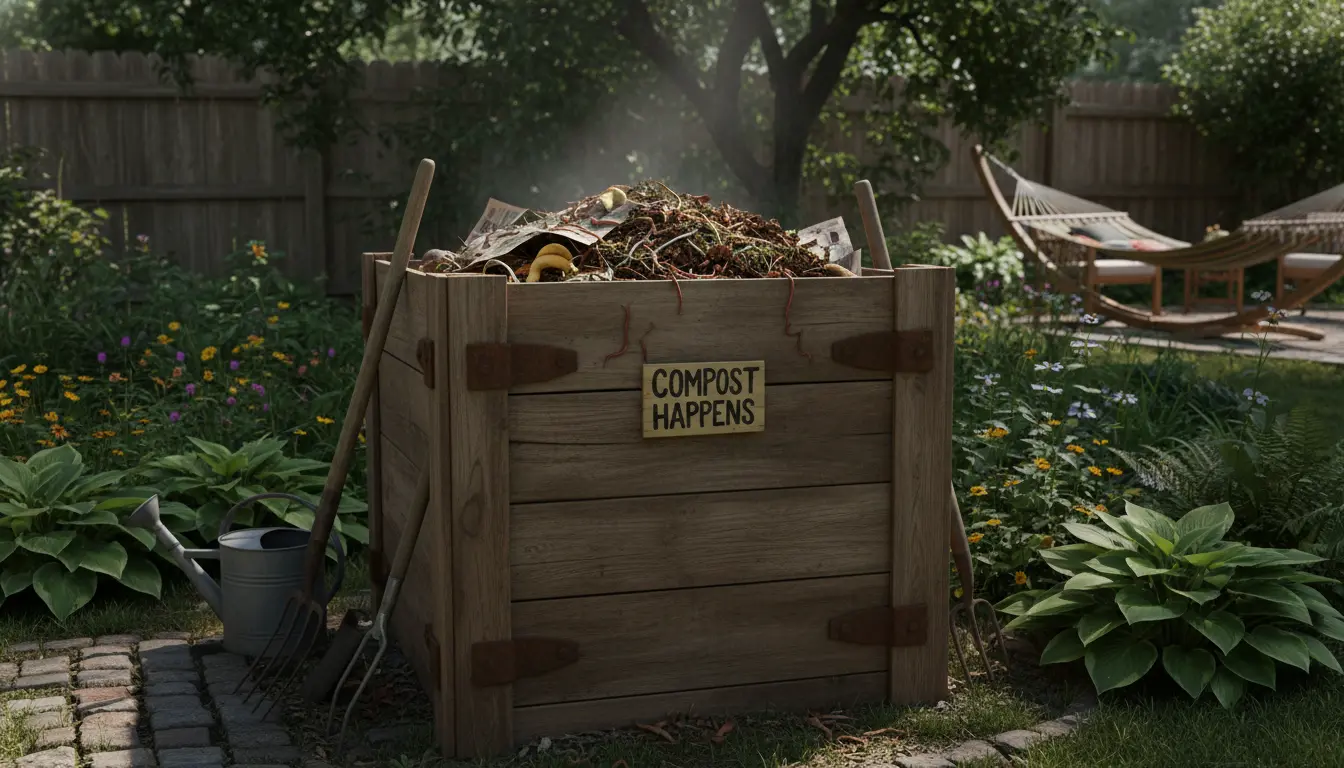
What is Home Composting and Why Start
Home composting turns kitchen scraps and yard waste into nutrient-rich soil. It reduces landfill trash, lowers greenhouse gas emissions, and improves garden soil without chemical fertilizers.
This guide explains simple, practical steps to start composting at home. It focuses on manageable methods and common problems for beginners.
Basic Principles of Home Composting
Composting is a biological process where microorganisms break down organic matter. To succeed you balance carbon, nitrogen, moisture, and air.
Remember the simple ratio: brown materials (carbon) to green materials (nitrogen). A common target is roughly 25–30 parts carbon to 1 part nitrogen by mass for active composting.
Key Elements to Monitor
- Carbon (browns): Dry leaves, straw, shredded paper.
- Nitrogen (greens): Vegetable scraps, coffee grounds, fresh grass clippings.
- Moisture: Damp like a wrung-out sponge.
- Oxygen: Turn the pile to keep it aerobic and prevent odor.
Choosing a Composting Method
Select a method that fits your space and time. Each method meets different needs.
Methods for Home Composting
- Compost bin: Simple, contained, good for small yards.
- Tumbler: Faster, easy to turn, ideal for limited space.
- Bokashi: Fermentation method for kitchens and apartments.
- Cold pile: Low maintenance, slower decomposition.
Step-by-Step: How to Start Composting at Home
Follow these actionable steps to build and maintain a healthy compost pile.
- Pick a location: A level, well-drained spot with partial shade works well.
- Choose a container: Buy or build a bin that fits your space and volume of waste.
- Layer materials: Start with coarse browns for drainage, then add greens and browns in alternating layers.
- Keep it moist: Water lightly if dry; cover during heavy rain to prevent saturation.
- Turn regularly: Use a pitchfork or tumbler every 1–2 weeks for faster composting.
- Harvest: Finished compost is dark, crumbly, and earthy-smelling. Use it in pots, beds, and lawns.
What to Compost and What to Avoid
Knowing what to include and exclude prevents pests and odor problems. Use this practical list.
Safe to Compost
- Vegetable and fruit scraps (no citrus in excess)
- Coffee grounds and tea bags
- Eggshells (crushed)
- Leaves, straw, shredded paper, cardboard
- Grass clippings in thin layers
Avoid or Use Carefully
- Meat, dairy, fish, and oily foods (attract pests)
- Diseased plants or weeds with seeds
- Coal ash or treated wood
- Pet waste from carnivores
Composting can cut household waste volume by up to 30 percent. Even small-scale composting diverts large amounts of organic waste from landfills over a year.
Troubleshooting Common Compost Problems
Simple fixes usually restore balance. Check these common symptoms and solutions.
- Smells bad: Add dry browns, turn the pile, reduce wet food layers.
- Too dry: Add water and greens, then turn to distribute moisture.
- Attracts pests: Bury food scraps under browns, use a closed bin, avoid meat and dairy.
- Pile not heating: Add more greens and increase pile size (aim for at least 1m3 for hot composting).
Small Real-World Case Study
Maria, a city homeowner, started using a 200-liter tumbling composter. She added her weekly kitchen scraps and alternating layers of shredded cardboard.
Within four months, Maria produced about 60 liters of finished compost. She used it to top-dress container plants and noticed healthier foliage and improved moisture retention.
Key actions that worked: regular tumbling, shredding browns, and reducing citrus and onion waste.
How to Use Finished Compost in Your Garden
Finished compost can be used in many ways to improve soil and plants.
- Mix 10–30% compost into potting mixes for nutrient boost.
- Top-dress lawns with a thin layer to improve soil structure.
- Work compost into garden beds before planting to increase organic matter.
Practical Tips to Keep Going
Composting becomes easier with simple routines. Keep these tips in mind to stay consistent.
- Keep a small countertop pail for scraps to avoid trips outside.
- Chop or shred larger items to speed decomposition.
- Balance batches: if greens are high one week, add extra browns the next.
- Join local community groups for swaps of leaf litter or technical tips.
Final Checklist for Home Composting Success
- Choose a method that fits your space and time.
- Balance greens and browns and maintain moisture.
- Turn the pile periodically to keep it aerobic.
- Harvest and use compost to close the nutrient loop.
Starting small and staying consistent is the key. Home composting is a practical, low-cost way to reduce waste and improve garden health.