
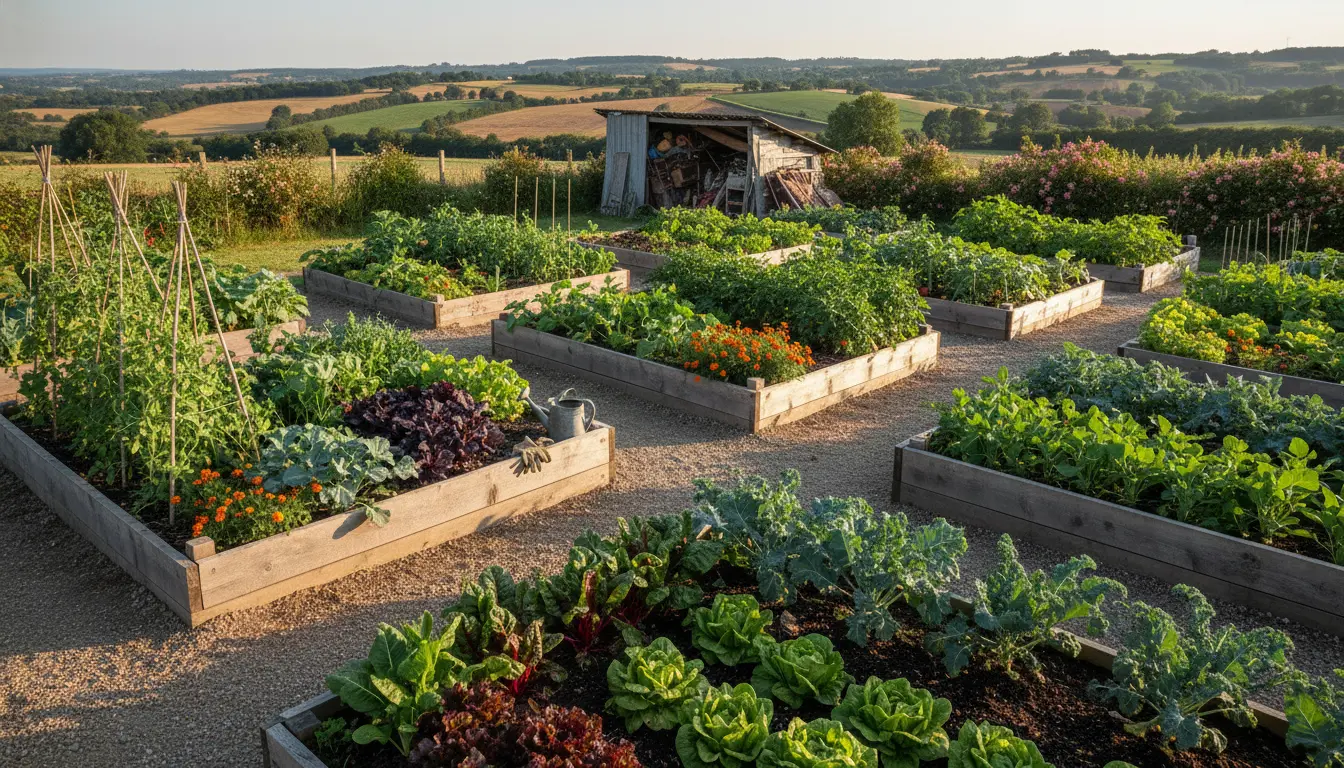
Starting a vegetable garden is a manageable project for most homes and apartments with some outdoor space. This guide walks you through clear, practical steps to plan, plant, and maintain a productive garden.
Why start a vegetable garden
A home vegetable garden saves money, delivers fresh produce, and gives hands-on control of what you grow. You also gain the satisfaction of harvesting food you planted and cared for yourself.
Before planting, set realistic goals about scale, time commitment, and what you want to grow. Start small; a few beds or containers can provide a surprising amount of produce.
How to start a vegetable garden: Choose the right spot
Location is the most important decision when you start a vegetable garden. Most vegetables need full sun—at least six to eight hours per day.
Pick a spot with good drainage, easy access to water, and protection from strong winds. Consider convenience: the closer to your kitchen, the likelier you are to harvest often.
How to start a vegetable garden: Sunlight, soil, and water
Test sunlight by observing the site across a clear day. Note shaded hours and consider seasonal changes. Avoid areas shaded by trees or buildings for most of the day.
Check soil texture by digging a small hole. Good garden soil is crumbly and drains well. If water pools, choose raised beds or amend soil with organic matter.
Plan what to plant when you start a vegetable garden
Select crops that match your climate, season, and appetite. Beginners succeed with easy, productive vegetables like tomatoes, lettuce, radishes, beans, and peppers.
- Pick fast-growing crops (lettuce, radishes) to keep interest high.
- Choose disease-resistant varieties if you have common garden pests or humidity issues.
- Start herbs and greens in containers if space is tight.
Soil preparation and compost when you start a vegetable garden
Healthy soil is the backbone of a productive vegetable garden. Improve poor soil by adding compost and well-rotted manure to increase fertility and structure.
Work organic matter into the top 6 to 8 inches of soil. For new beds, a 2- to 4-inch layer of compost spread across the bed is a good start.
Soil testing and amendment
Conduct a simple soil test to check pH and nutrient levels. Many local extension services offer affordable testing with clear recommendations.
Adjust pH as recommended: lime raises pH, sulfur lowers it. Balance nutrients by adding compost, balanced slow-release fertilizer, or specific amendments as needed.
Planting tips when you start a vegetable garden
Follow seed packet or plant tag instructions for spacing, depth, and timing. Incorrect depth or crowding is a common early mistake that reduces yields.
- Sow seeds at the recommended depth and thin seedlings to the suggested spacing.
- Transplant seedlings after the last frost date for your area or as advised by seed instructions.
- Mulch around plants to conserve moisture and suppress weeds.
Watering and maintenance after you start a vegetable garden
Consistent watering is crucial, especially during establishment and fruiting. Aim for deep, infrequent watering rather than light, frequent sprays.
Inspect plants weekly for pests and disease. Remove affected leaves promptly and use non-chemical controls first, such as handpicking pests or soap sprays for insects.
Crop rotation and simple pest control
Rotate families of vegetables yearly to reduce disease and nutrient-depletion problems. Avoid planting tomatoes, peppers, potatoes, and eggplants in the same spot two years in a row.
Companion planting can deter pests and attract beneficial insects. For example, marigolds can reduce certain nematode issues and attract pollinators.
Many common vegetables can be harvested multiple times. Leafy greens and herbs regrow after cutting, and beans and peas produce over several weeks with regular harvesting.
Small case study: A simple raised bed success
Case Study: Maria used a single 4×8 raised bed in her backyard to start a vegetable garden. She filled the bed with a 50/50 mix of topsoil and compost and planted determinate tomatoes, basil, and leaf lettuce.
By following consistent watering, mulching, and staking for tomatoes, Maria harvested fresh salad greens within four weeks and tomatoes by mid-summer. The small bed produced enough for family salads and shared surplus with neighbors.
Seasonal checklist when you start a vegetable garden
- Spring: Prepare beds, sow cool-season crops, transplant seedlings after frost.
- Summer: Maintain watering, stake tall plants, harvest regularly.
- Fall: Sow fall greens, clear spent plants, add compost to beds.
Starting a vegetable garden is a steady learning process. Expect some failures, but focus on small wins: a healthy lettuce harvest, a few ripe tomatoes, or the first basil clipping.
Use this guide as a practical checklist. With a good spot, improved soil, and consistent care, you can grow rewarding vegetables even in compact spaces.