
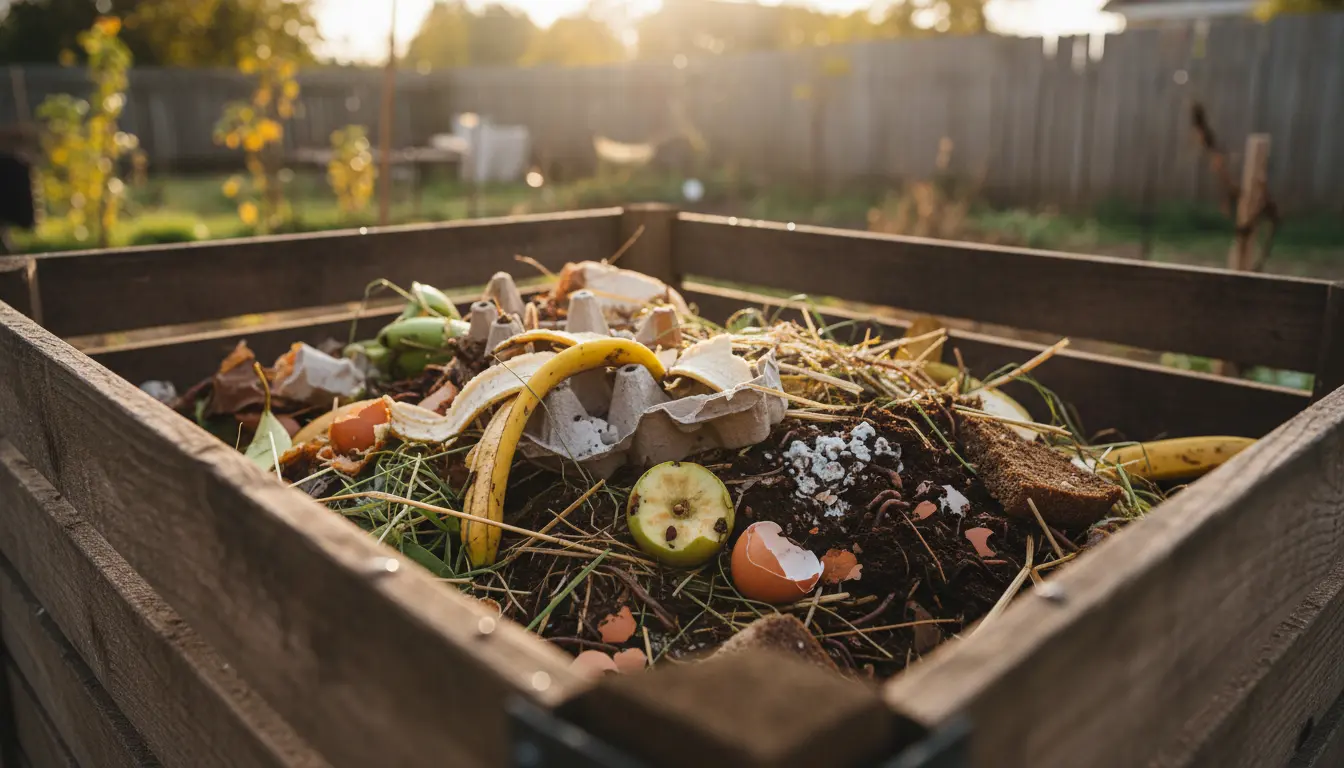
Composting at home turns kitchen scraps and garden waste into rich soil for plants. This guide shows practical steps you can use right away to start composting at home, whether you have a backyard or a small balcony.
What Is Home Composting?
Home composting is the controlled breakdown of organic materials by microbes, worms, and time. The end product, compost, is a nutrient-rich soil amendment that improves structure, moisture retention, and fertility.
Why composting at home matters
Composting cuts household waste, reduces methane from landfills, and lowers the need for chemical fertilizers. It also gives you free, high-quality material to improve lawns and garden beds.
Choose a Composting Method for Your Space
Pick a method that fits your living situation, time, and goals. Each option has pros and cons depending on space and effort.
Backyard pile (simple and low cost)
- Good for homeowners with yard space.
- Requires turning to speed up decomposition.
- Works well for large amounts of yard waste.
Compost bin (tidy and contained)
- Available in many sizes and shapes for medium effort.
- Helps retain heat and moisture for faster composting.
- Better for neatness and pest control than an open pile.
Vermicomposting (worm composting for small spaces)
- Ideal for apartments or balconies.
- Uses red worms to break down food scraps quickly.
- Produces liquid fertilizer (worm tea) and fine compost.
Step-by-Step Guide to Composting at Home
Follow these simple steps to start and maintain a healthy compost system.
1. Pick a spot and container
Choose a partially shaded spot outdoors or a ventilated bin for small spaces. Keep the bin off direct concrete if possible to allow drainage and aeration.
2. Build a proper mix of materials
Balance green and brown materials to feed microbes and absorb moisture. A good rule is roughly 2 to 3 parts brown to 1 part green.
- Greens (nitrogen): vegetable scraps, fruit peels, coffee grounds, grass clippings.
- Browns (carbon): dry leaves, shredded paper, cardboard, straw.
3. Layer, moisten, and aerate
Start with a layer of coarse materials to help airflow. Alternate greens and browns, moisten each layer so it feels like a wrung-out sponge, and turn the pile every 1–2 weeks to add oxygen.
4. Monitor and adjust
Check temperature and smell. A hot pile (between 120–150°F or 49–66°C) breaks down material faster. If it smells, add more browns and turn more frequently.
Materials to Avoid in Home Composting
- Meat, dairy, and oily foods (attract pests and cause odors)
- Diseased plants or weeds with seed heads (may survive)
- Pet waste from carnivores (can carry pathogens)
Troubleshooting Common Problems with Composting at Home
Many issues are simple to fix with a quick change in moisture, aeration, or material mix.
My pile smells bad
Add dry browns like shredded cardboard and turn the pile to introduce air. Reduce fresh food scraps until odor improves.
My compost is dry and slow
Moisten the pile and add more green materials. Covering with a lid or tarp helps retain moisture during dry weather.
Pests are getting into the compost
Use a sealed bin, bury food scraps under browns, and avoid meats and oily foods. For worm bins, keep the surface layer dry and covered.
Proper home composting can reduce household waste volume by up to 30 percent and return nutrients to your garden within 3 to 12 months depending on method and conditions.
Small Real-World Example: A Balcony Vermicompost Case
Case: Maria lives in a two-bedroom apartment and started vermicomposting in a 10-liter bin. She added shredded paper, kitchen scraps, and 1,000 red worms.
Result: Within three months she produced usable compost and liquid fertilizer for her potted herbs. Food waste dropped by half, and her plants grew noticeably healthier.
Final Tips for Successful Home Composting
- Chop larger items to speed decomposition.
- Keep a kitchen scrap container to collect greens before taking them to the bin.
- Use finished compost to top-dress beds, mix into potting soil, or make compost tea for liquid feeding.
Composting at home is practical and adaptable. Start small, monitor your system, and adjust materials and aeration as you learn. With a bit of routine, you can turn everyday waste into valuable soil that benefits plants and the environment.