
Why Home Composting Matters
Home composting turns kitchen scraps and yard waste into nutrient-rich soil. It reduces household waste and supports healthier plants without chemical fertilizers.
This guide focuses on simple, practical steps you can use whether you have a backyard, a balcony, or a small indoor space.
Basic Principles of Home Composting
Composting relies on the balance of carbon (browns), nitrogen (greens), air, and moisture. Microorganisms break down organic matter into compost.
Keeping the right balance speeds decomposition and prevents odors or pests.
Key Materials for Composting at Home
- Browns (carbon): dry leaves, shredded paper, cardboard, straw.
- Greens (nitrogen): vegetable scraps, coffee grounds, fresh grass clippings.
- Avoid: meat, dairy, oily foods, diseased plants, and pet waste.
Choosing a Compost System
Select a system that matches your space and effort level. Common options include bins, tumblers, and worm composting (vermicomposting).
- Outdoor bin: Good for yards; low cost and low maintenance.
- Tumbler: Faster decomposition with easy turning; good for small yards.
- Worm bin: Ideal for apartments; produces rich worm castings and minimal odors.
Where to Place Your Compost
Place the bin on soil or grass to allow organisms and drainage. Pick a partially shaded spot to keep the pile from drying out in hot weather.
For indoor or balcony systems, keep them near your kitchen for convenience and monitor moisture carefully.
Step-by-Step: Starting Your First Compost Pile
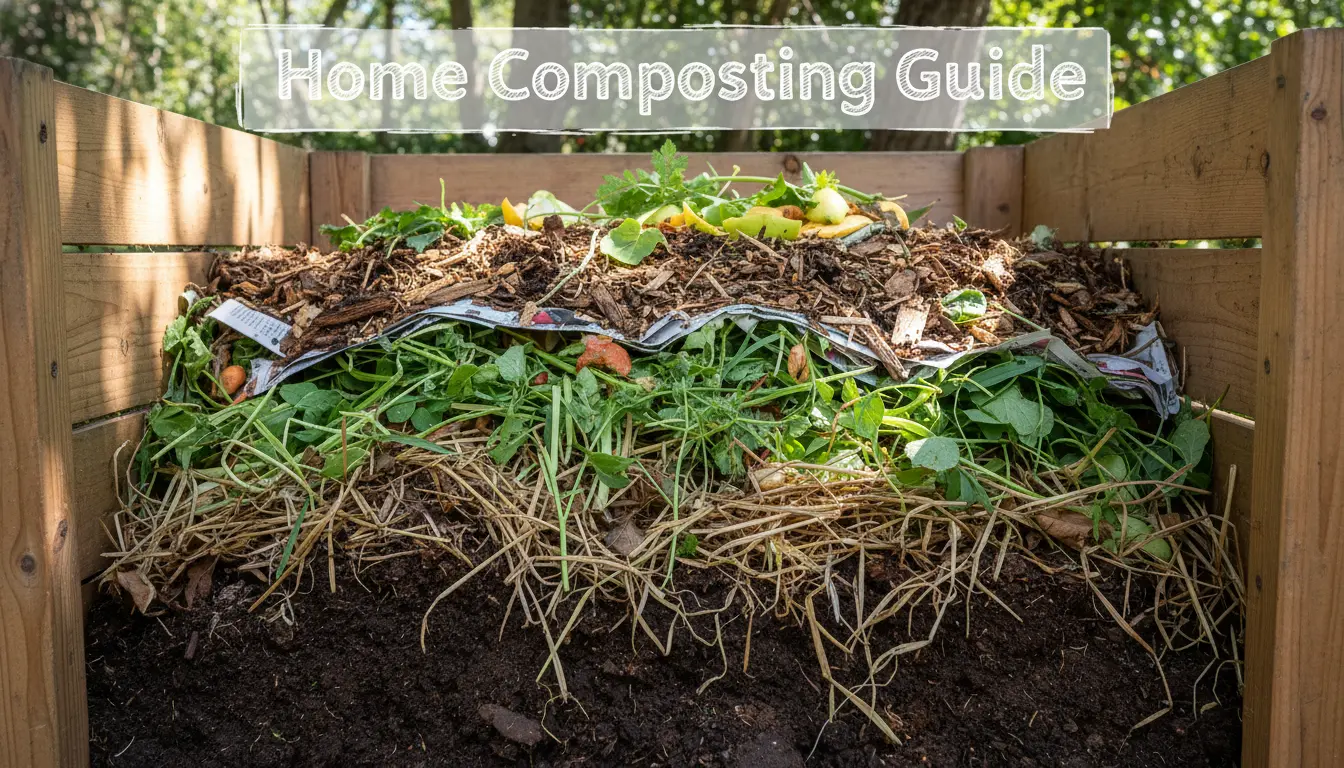
- Prepare the base: Lay coarse materials (twigs or straw) for drainage in an outdoor bin.
- Add layers: Alternate 3–4 inches of browns with 1–2 inches of greens.
- Moisten: Keep the pile damp like a wrung-out sponge — not soaking wet.
- Turn: Aerate the pile every 1–2 weeks by turning with a pitchfork or rotating the tumbler.
- Wait and monitor: Temperature should rise if balanced correctly. Finished compost is dark, crumbly, and earthy-smelling.
Speeding Up Composting at Home
- Chop or shred materials to increase surface area.
- Maintain a carbon-to-nitrogen ratio near 25–30:1. A quick rule: add more browns if the pile smells, more greens if it is not heating.
- Turn more often to increase oxygen and decomposition rate.
Troubleshooting Common Problems
Compost can be easy to manage if you watch for a few common issues.
- Bad smells: Usually from too much green or excess moisture. Add browns and turn the pile.
- Pests: Avoid meat and dairy. Use a closed bin or bury food scraps under browns.
- Pile not heating: Add more greens, moisture, and turn the pile to add oxygen.
Using Finished Compost
Finished compost improves soil structure, retains moisture, and adds nutrients. Use it as a top dressing, mix it into potting soil, or add it to vegetable beds.
Typical application rates: mix 1–3 inches into garden beds or add 10–20% compost to potting mixes for seedlings.
Simple Uses for Home Compost
- Mulch around shrubs and trees to conserve moisture.
- Mix with garden soil when planting vegetables and flowers.
- Top-dress lawns in spring to improve soil health.
Small Real-World Case Study
Case study: A two-person household in a rowhouse used a 20-gallon worm bin for one year. They diverted about 200 kg (440 lbs) of food scraps from the trash and produced 15 liters of worm castings.
They used the castings to feed balcony vegetable containers and reported healthier growth and reduced need for purchased fertilizer. The worm bin required weekly feeding and occasional moisture checks.
Quick Checklist for Successful Composting at Home
- Choose the right bin for your space (outdoor bin, tumbler, or worm bin).
- Balance greens and browns; aim for varied materials.
- Keep the pile moist and aerated by turning regularly.
- Monitor for pests and odors; adjust materials as needed.
- Harvest finished compost when dark and crumbly.
Home composting is a practical way to reduce waste and improve your soil. Start small, learn from the pile, and adjust your approach as you gain experience.