
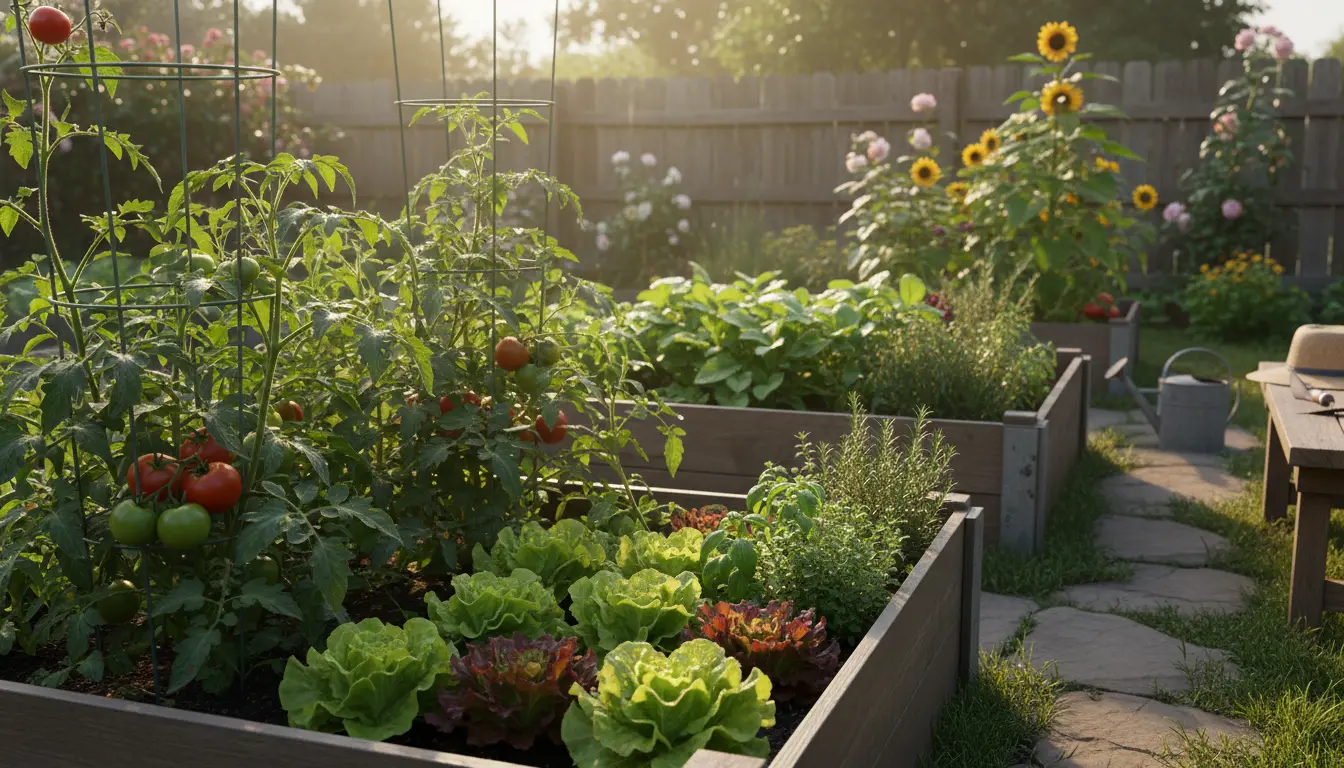
Why start a vegetable garden
Growing your own vegetables saves money and gives you fresh produce with better flavor. A small garden can fit in a backyard, balcony, or even containers.
This guide shows simple, practical steps to start a productive vegetable garden with reliable results.
Choose the Best Location for Your Vegetable Garden
Location matters. Most vegetables need at least 6 hours of direct sunlight each day.
Look for a level spot with good drainage and easy access to water.
Sun and Space for a Vegetable Garden
Observe sunlight patterns for a week before deciding where to plant. Mark morning and afternoon sun areas.
Consider spacing: small root crops need less room than sprawling plants like tomatoes or squash.
Prepare Soil for a Healthy Vegetable Garden
Good soil is the foundation of success. Loamy, well-drained soil rich in organic matter grows healthier plants.
Start by removing weeds and loosening the top 8–12 inches of soil.
Soil Testing for a Vegetable Garden
Test soil pH and fertility with a home kit or local extension service. Most vegetables prefer pH 6.0–7.0.
Amend soil based on test results: add lime to raise pH or sulfur to lower it, and compost to improve structure.
Select Vegetables and Plan Planting
Pick vegetables you and your family will eat. Start with easy crops like lettuce, radishes, bush beans, and tomatoes.
Group plants by their water and light needs to make care simpler.
- Easy beginners crops: lettuce, spinach, radishes
- Containers friendly: tomatoes, peppers, herbs
- Succession planting: sow fast crops every 2–3 weeks
Seed vs. Transplants for Your Vegetable Garden
Seeds are cheaper and offer more variety, while transplants give a head start for long-season crops.
Use transplants for tomatoes and peppers; start lettuce and carrots from seed directly in the bed.
Watering and Mulching Your Vegetable Garden
Consistent moisture matters. Water deeply and less often to encourage strong roots.
Mulch reduces evaporation, suppresses weeds, and moderates soil temperature.
- Watering tips: water at the base early morning
- Mulch options: straw, shredded leaves, composted bark
- Install a soaker hose or drip irrigation for efficiency
Pest Control and Maintenance for Vegetable Garden
Monitor plants weekly. Catching problems early reduces losses and limits pesticide needs.
Use a combination of cultural controls, barriers, and natural predators for effective pest management.
- Rotate crops yearly to prevent disease buildup
- Use row covers to protect young plants from insects
- Introduce beneficial insects like ladybugs and lacewings
Organic Pest Tips for a Vegetable Garden
Hand-pick larger pests and use insecticidal soap for soft-bodied insects.
Encourage birds and pollinators by adding flowering plants nearby.
Harvesting and Storing Vegetables from Your Garden
Harvest at peak ripeness for best flavor and nutrition. Frequent picking often encourages more production.
Store root vegetables in a cool, dark place and use delicate greens quickly for best quality.
- Tomatoes: harvest when fully colored and firm
- Lettuce: harvest outer leaves or cut-and-come-again
- Beans: pick when pods are firm and before seeds bulge
Small Tools and Supplies for a Vegetable Garden
Start simple and add tools over time. A trowel, hand fork, watering can, and pruning shears are enough at first.
Raised beds and containers are helpful if soil quality or space is limited.
Case Study: Balcony Vegetable Garden
Example: A city dweller turned a 6-ft balcony into a productive vegetable garden using containers.
They used three 18-inch planters, grew cherry tomatoes, basil, and leaf lettuce, and installed a small drip line.
After three months, the balcony produced weekly salads and saved money on greens. Care time averaged 15 minutes a day.
Adding one inch of compost to your garden each year can improve soil structure and fertility dramatically.
Common Mistakes to Avoid in a Vegetable Garden
Beginners often overwater, overcrowd plants, or start with poor soil. Correct these early to avoid bigger problems.
Plan your garden layout and follow seed packet spacing to prevent disease and shading.
Final Checklist to Start Your Vegetable Garden
- Pick a sunny site and test the soil
- Amend soil with compost and adjust pH if needed
- Choose beginner-friendly vegetables and plan spacing
- Set up watering, mulch, and simple pest controls
- Harvest regularly and enjoy fresh produce
Starting a vegetable garden is a manageable project with big rewards. Use small steps, observe your plants, and adjust as you learn.
With basic planning and weekly care, you can build a reliable source of fresh vegetables for your table.