
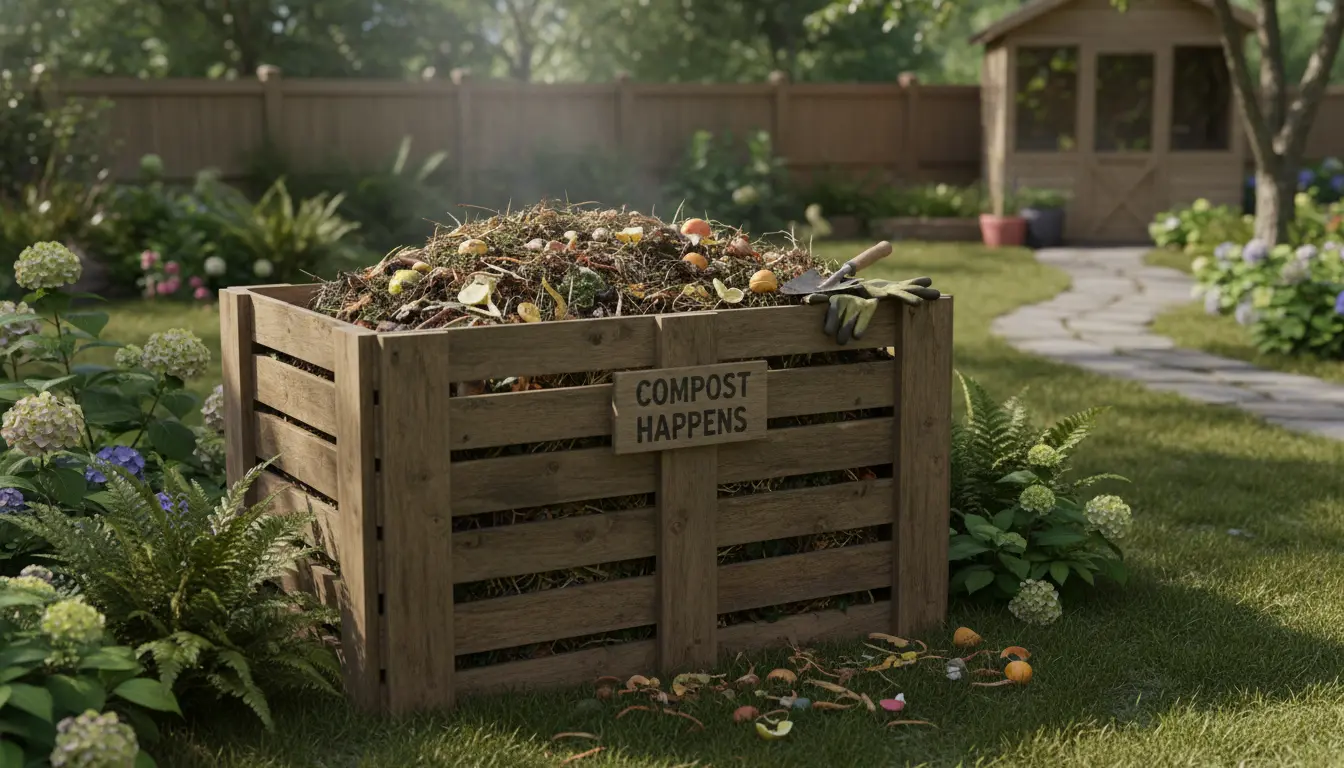
Why Compost at Home
Composting at home turns kitchen scraps and yard waste into valuable soil amendment. It reduces landfill waste and improves garden health with minimal cost.
This guide explains easy, practical steps to get started and maintain a healthy compost system.
Choose a Compost System for Home Composting
Select a method that fits your space, time, and needs. Common home systems include bins, tumblers, and simple piles.
Each system has pros and cons. Bins are low-maintenance; tumblers speed up turning; piles are flexible for large yards.
Compost Bin
Bins keep material tidy and help retain heat. They work well for small to medium households.
Compost Tumbler
Tumblers make turning easy and speed up decomposition. They are ideal if you want faster results and less manual labor.
Compost Pile
Piles suit larger properties and can handle high volumes. They require occasional turning and monitoring.
What to Add When You Compost at Home
Balance green and brown materials to ensure proper decomposition. Greens provide nitrogen; browns add carbon and structure.
- Greens: fruit and vegetable scraps, coffee grounds, fresh grass clippings
- Browns: dry leaves, straw, shredded paper, cardboard
- Avoid: meat, dairy, oily foods, diseased plants, pet waste
How to Build a Compost Pile at Home
Start with a layer of coarse material for airflow, such as small branches or straw. Layer greens and browns in roughly equal volumes.
Keep the pile moist like a wrung-out sponge and turn it every 1–2 weeks for faster composting.
Step-by-Step: Simple Home Composting
- Choose a location with partial sun and good drainage.
- Place a 4–6 inch base of coarse material for airflow.
- Add alternating layers of greens and browns, aiming for a 1:1 or 2:1 ratio by volume.
- Moisten each layer if dry; avoid soaking the pile.
- Turn the pile regularly to introduce oxygen and speed up decomposition.
- Harvest finished compost when dark, crumbly, and earthy smelling—usually 2–6 months.
Maintaining Your Home Compost
Regular attention keeps the process healthy. Monitor moisture, temperature, and odor to prevent problems.
If the pile smells sour, add more browns and turn it. If decomposition is slow, add greens, water, and increase turning frequency.
Using Finished Compost from Home Composting
Finished compost improves soil structure, water retention, and nutrient content. Use it as a mulch, soil amendment, or potting mix ingredient.
Apply a layer of compost around plants, mix into garden beds, or blend with potting soil at a 1:3 ratio for container plants.
Compost can reduce your household waste volume by up to 30 percent and returns nutrients to your garden that synthetic fertilizers do not provide.
Common Troubleshooting When You Compost at Home
Simple fixes solve most issues quickly. Here are common problems and solutions to keep compost healthy.
- Smelly pile: add brown material, turn more often, and check moisture.
- Dry pile: water evenly and add greens or cover to retain moisture.
- Pile not heating: add fresh greens, increase size to at least 1 cubic meter, or insulate sides.
Case Study: Small Home Compost Success
Sarah, a city renter with a small backyard, started a 65-gallon bin. She followed a simple 2:1 mix of dry leaves to kitchen scraps and turned the bin every week.
Within four months she had rich compost, reduced her trash by one bag per week, and used the material to boost her vegetable beds. Her tomatoes yielded earlier and larger fruit after adding compost.
Tips to Make Home Composting Easier
- Keep a small countertop container with a lid for kitchen scraps to reduce trips outside.
- Chop or shred materials to speed decomposition.
- Use a compost thermometer if you want to track temperature and speed up hot composting.
- Mix materials regularly to maintain oxygen levels.
Final Checklist for Composting at Home
- Choose the right system for your space (bin, tumbler, pile).
- Balance greens and browns and maintain moisture.
- Turn the pile regularly and troubleshoot odors or dryness.
- Harvest finished compost and use it to feed your garden.
Composting at home is a practical way to reduce waste and improve your soil. Start small, learn as you go, and adjust methods to fit your schedule and space.