
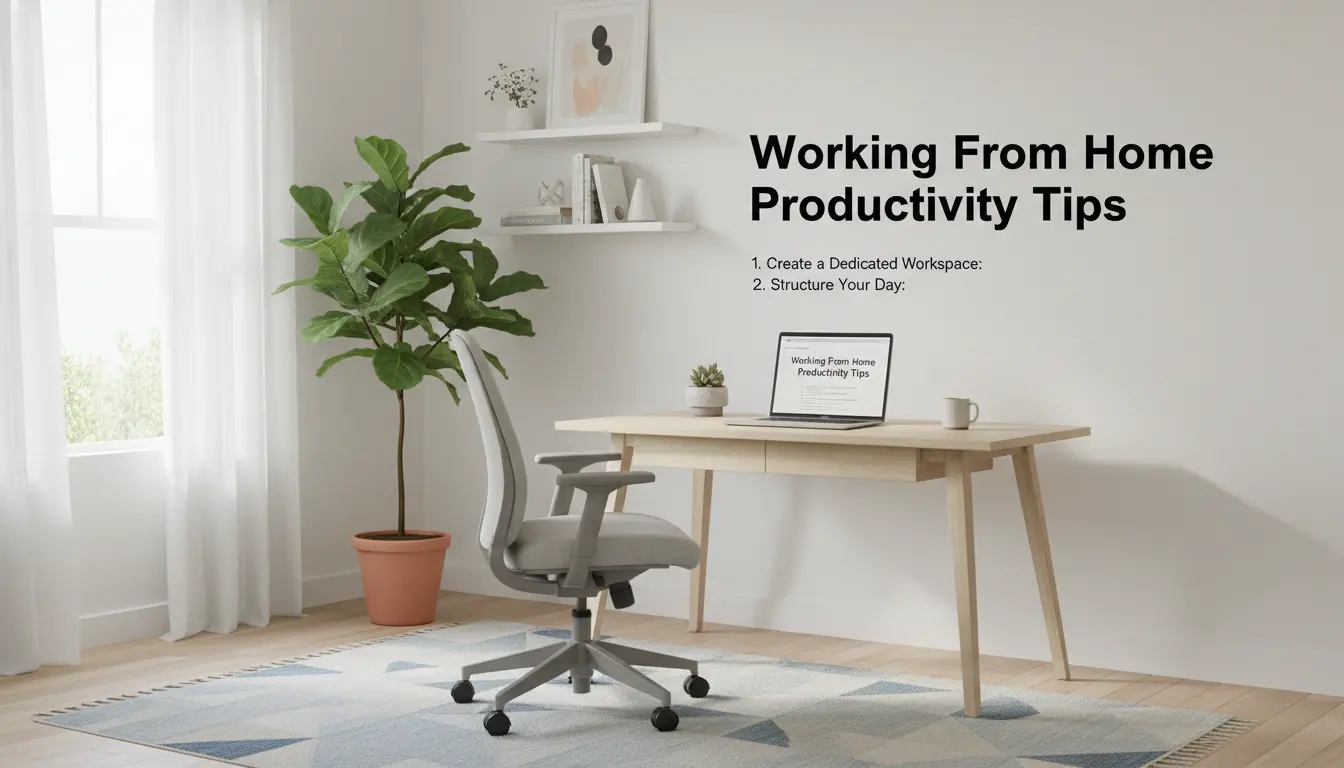
Working From Home Productivity: Quick Principles
Working from home productivity depends on predictable routines and intentional boundaries. Small, consistent changes often yield larger gains than dramatic overhauls.
This guide gives practical, instructional steps you can use right away. Each section addresses common obstacles and offers examples you can copy.
Set Up a Productive Home Workspace
Your workspace affects focus and comfort. Choose a dedicated spot, even if it is a corner of a room, and keep it consistent for work hours.
Key elements include a comfortable chair, appropriate screen height, and minimal visual clutter. Poor ergonomics lead to fatigue and lost focus.
Workspace Checklist for Productivity
- Desk at elbow height and monitor at eye level
- Good natural or task lighting to reduce eye strain
- Noise control: headphones or soft furnishings
- Essential tools close by: charger, notepad, pen
Create a Clear Daily Routine
A routine signals to your brain when to start and stop working. Routines reduce decision fatigue and increase consistent output.
Design a start ritual, core work blocks, and a shutdown ritual. A shutdown ritual helps separate work from personal time.
Sample Daily Routine
- 8:00 AM — Start ritual: light stretch, refill water, review top 3 tasks
- 8:15–10:30 AM — Deep work block (single task focus)
- 10:30–10:45 AM — Break: short walk or coffee
- 10:45 AM–12:30 PM — Secondary tasks and meetings
- 12:30–1:15 PM — Lunch break away from desk
- 1:15–3:30 PM — Focused work block or calls
- 3:30–4:00 PM — Admin tasks and plan next day
- 4:00 PM — Shutdown ritual: close laptop, note tomorrow’s priorities
Time Blocking and Priorities
Time blocking means assigning specific tasks to fixed slots. It reduces context switching and makes progress visible.
Block your calendar for deep work and label slots with the actual task, not a vague description. Treat blocks as appointments with yourself.
How to Prioritize During Blocks
- Use the 3 Most Important Tasks (MITs) method each morning
- Start with the highest-value task in your first block
- Limit meeting time by preparing agendas and clear outcomes
Minimize Distractions While Working From Home
Distractions are the biggest drain on home productivity. Identify common triggers and create quick rules to avoid them.
Common fixes include do-not-disturb modes, a visible sign for housemates, and scheduling household tasks outside work blocks.
Practical Anti-Distraction Tips
- Use website blockers for social media during deep work
- Silence non-essential notifications and batch email checks
- Communicate work hours to family or roommates
Breaking work into 90-minute cycles aligns with natural ultradian rhythms and can improve focus and creativity. Try 90-minute work blocks followed by 15–20 minute breaks.
Tools and Tech to Boost Working From Home Productivity
The right tools streamline communication and task tracking. Choose a small set of reliable apps and avoid switching tools frequently.
Essential categories are task management, calendar, focus timer, and a reliable video conferencing app.
Recommended Tools (Examples)
- Task manager: Todoist, Trello, or a simple paper list
- Calendar: Google Calendar with time blocks visible
- Focus timer: Pomodoro apps or a 90-minute timer
- Communication: Slack or Microsoft Teams with notification rules
Measure and Improve Your Routine
Productivity improves when you measure outcomes rather than hours. Track the results of work blocks and adjust the routine monthly.
Keep a simple log of tasks completed, blockers encountered, and energy levels. Use that data to refine your schedule and workspace.
Small Case Study: Real-World Example
Maria is a freelance designer who struggled with late afternoons of low energy. She applied time blocking and moved her most demanding design work to a morning 90-minute block.
Within two weeks her output increased and client revisions dropped because work was completed when she was most focused. She also added a 20-minute walk midday to reset her energy.
Common Pitfalls and How to Fix Them
Many people make the same mistakes when working from home: vague schedules, poor boundaries, and tool overload. Each can be fixed with a single rule.
- Vague schedule: Define and label calendar blocks with tasks
- Poor boundaries: Communicate office hours and set visual signals
- Tool overload: Limit yourself to 3 core apps and commit for 30 days
Action Plan: Start Today
Choose one thing to change this week: set a morning deep work block, rearrange your desk for ergonomics, or install a website blocker.
Create a 7-day experiment, record your results, and decide whether to keep the change. Small experiments help build sustainable improvements without burnout.
Implementing these approaches consistently will improve working from home productivity. Focus on tiny, measurable changes and refine them based on real feedback from your day-to-day work.