
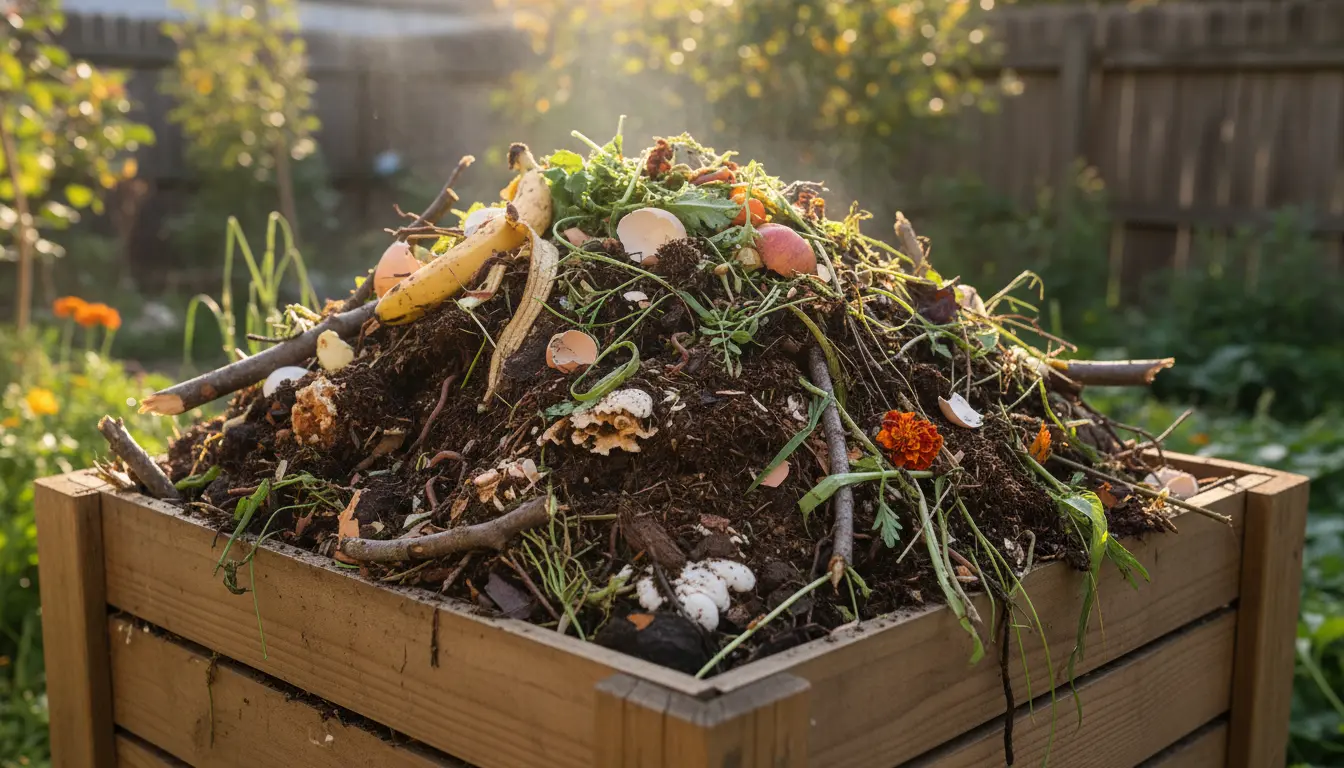
What is home composting?
Home composting is the controlled breakdown of organic kitchen and garden waste into a nutrient-rich soil amendment. It uses microbes, oxygen, moisture, and a balance of materials to create compost you can use in pots, garden beds, or lawns.
Compost reduces landfill waste and returns nutrients to soil. For beginners, the process can be simple and flexible to fit small spaces.
Why choose home composting for beginners?
Home composting saves money on soil amendments and lowers household waste. It also improves soil structure and plant health when used correctly.
Beginners benefit from low-cost options and easy systems that fit apartments or backyards.
Getting started with home composting
Start by choosing a method that fits your space and commitment level. Common beginner methods include a simple bin, tumblers, worm composting (vermicomposting), and bokashi for small kitchens.
Choose the right container
Options vary by space and odor tolerance:
- Open bin or pile — good for yards and low cost.
- Compost tumbler — faster mixing, cleaner handling.
- Worm bin — ideal for apartments and produces nutrient-rich worm castings.
- Bokashi bucket — ferments food waste, works indoors and with meat or dairy.
Select materials: Browns and greens
Balance carbon-rich “browns” and nitrogen-rich “greens.” Browns include dry leaves, shredded paper, and straw. Greens include fruit and vegetable scraps, coffee grounds, and grass clippings.
A good target is roughly 2–3 parts browns to 1 part greens by volume. This ratio helps control odor and keeps decomposition steady.
Setting up your first home compost pile
Follow these practical setup steps to start composting at home:
- Pick a level, shaded spot with good drainage.
- Place a layer of coarse material like twigs to aid airflow.
- Add alternating layers of greens and browns, keeping each layer a few inches thick.
- Keep the pile moist like a wrung-out sponge; water if too dry.
- Turn or mix the pile every 1–2 weeks to add oxygen and speed decomposition.
Maintaining home composting for beginners
Regular maintenance keeps the process efficient. Check moisture, aerate, and rebalance materials when needed.
Moisture and aeration
Too dry: decomposition slows. Add water and more greens. Too wet: pile becomes smelly. Add more browns and turn the pile for airflow.
Aeration is important; turning the pile every 1–2 weeks prevents anaerobic pockets and odor.
Temperature and timing
Active piles heat up to 40–70°C (104–158°F) if large enough. Small home piles or worm bins remain cooler but still produce good compost.
Compost can take 2 months to a year depending on method, materials, and care.
Common problems and solutions
- Bad smell — add more browns, increase turning, reduce wet materials.
- Fruit flies — cover fresh food scraps with a layer of brown material or bury them deeper.
- Pile not heating — add more greens, increase size, or insulate the bin.
- Slow breakdown — chop or shred materials, maintain moisture and aeration.
Using finished compost
Finished compost is dark, crumbly, and earthy-smelling. It’s ready when original materials are no longer recognizable.
Use it as a top dressing, mix into potting soil at 10–30%, or work into garden beds to improve soil structure and nutrient content.
Case study: Small apartment worm bin success
A two-person apartment tested a 40-liter worm bin for six months. They added average kitchen scraps daily and shredded cardboard for bedding. After six months they produced about 18 liters of worm castings and reduced their kitchen waste by 40%.
Results: healthier potted herbs, less trash, and reusable compost tea made from worm leachate for weekly plant feeding.
Quick tips for home composting for beginners
- Start small and expand as you learn what materials work for you.
- Chop larger items to speed decomposition.
- Keep a covered container in the kitchen for scraps to avoid flies and smells.
- Label layers or keep a simple log to track additions and turning dates.
Home composting is practical and adaptable. With basic balance and simple maintenance, beginners can turn kitchen waste into valuable compost, improve soil health, and reduce household trash. Start with a method that fits your space, and adjust as you observe how your compost responds.