
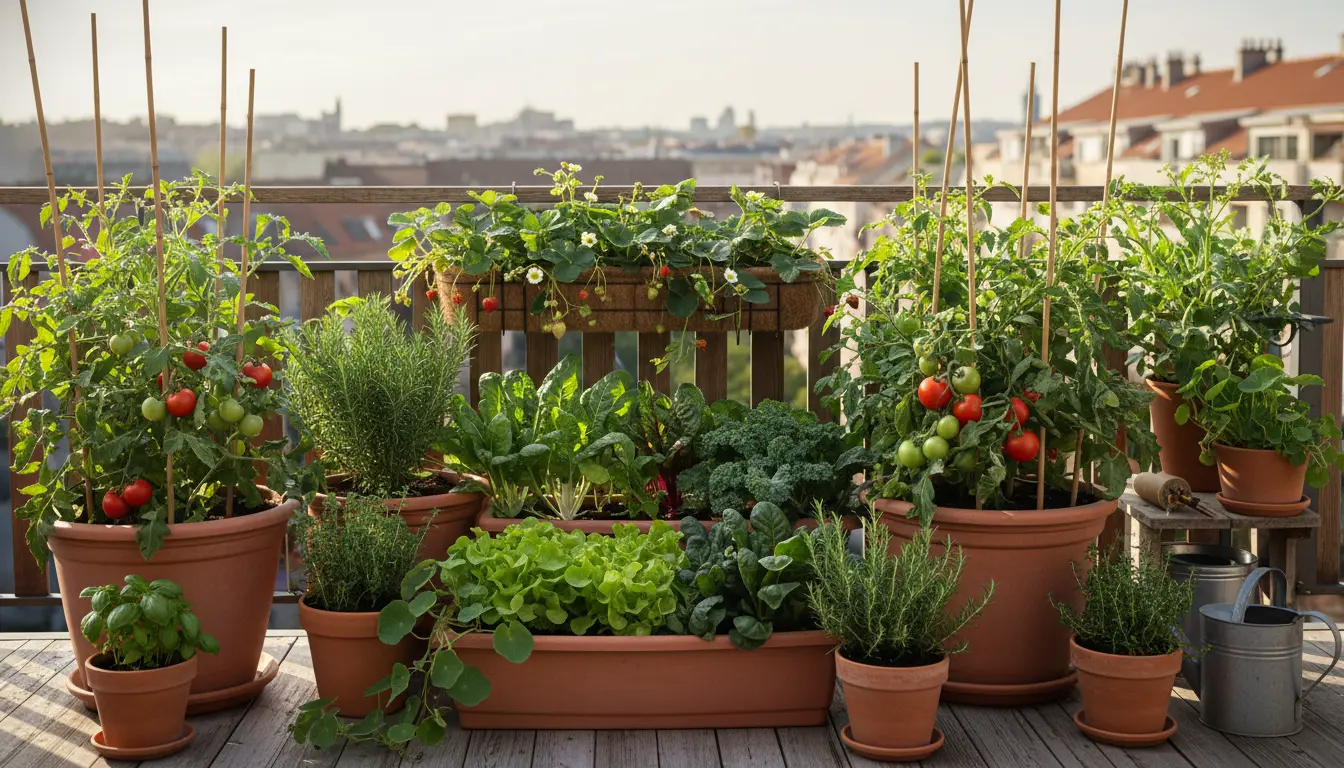
Container Vegetable Gardening Basics
Container vegetable gardening lets you grow food in small spaces like balconies, patios, or windowsills. It is practical for beginners because it reduces soil problems and makes plants more manageable.
Start by choosing the right vegetables, containers, and potting mix. Planning these basics saves time and increases yields.
Why Choose Container Vegetable Gardening
Containers are portable and limit the spread of disease or weeds. They allow better control over soil quality and drainage.
Containers are ideal for urban gardeners and renters who need a nonpermanent way to grow food.
Choosing Containers for Container Vegetable Gardening
Select containers with good drainage and enough volume for the plant type. Larger containers hold more moisture and support bigger root systems.
Material choices include plastic, terracotta, wood, and fabric grow bags. Each has pros and cons for weight, breathability, and aesthetics.
- Small herbs: 6–8 inch pots
- Leafy greens: 8–12 inch pots
- Tomatoes and peppers: 5–10 gallon containers
- Root vegetables: deep, narrow containers (at least 10–12 inches deep)
Placement and Sunlight
Most vegetables need 6–8 hours of direct sunlight. Place containers where they get consistent sun during the day.
If sunlight is limited, choose shade-tolerant crops like lettuce, spinach, and certain herbs.
Soil and Fertility for Container Vegetable Gardening
Use a high-quality potting mix labeled for containers rather than garden soil. Potting mixes are lighter and drain well.
Mix in compost or slow-release organic fertilizer to supply nutrients. Containers need regular feeding because nutrients wash out with watering.
- Basic mix: commercial potting mix + 10–20% compost
- Optional: perlite or vermiculite for extra drainage
- Fertilize: liquid feed every 2–4 weeks or slow-release granules at planting
Watering Strategies in Container Vegetable Gardening
Containers dry out faster than in-ground beds. Check moisture daily in warm weather, and water when the top inch of soil feels dry.
Water until it runs out the drainage holes to ensure even moisture. Use self-watering containers or drip irrigation to reduce daily effort.
Common Watering Mistakes
- Overwatering: soggy soil leads to root rot.
- Underwatering: causes stunted growth and blossom drop.
- Inconsistent moisture: stresses plants and lowers yields.
Best Vegetables for Container Vegetable Gardening
Pick compact or determinate varieties specifically bred for containers. They perform better and use space more efficiently.
Recommended crops:
- Tomatoes (bush/determinate types)
- Peppers and eggplants
- Leafy greens: lettuce, spinach, arugula
- Herbs: basil, parsley, chives
- Root crops: radishes, baby carrots, small beets
- Climbing plants: use cages for pole beans and compact peas
Pest and Disease Management in Container Vegetable Gardening
Containers reduce many disease risks but do not eliminate pests. Inspect plants regularly for insects and fungal issues.
Use these practical steps:
- Hand-pick large pests like caterpillars.
- Use insecticidal soap or neem oil for soft-bodied insects.
- Ensure good air circulation to prevent fungal diseases.
Rotation and Crop Choice
Rotate crops and avoid planting the same family in the same container year after year. This reduces disease buildup and nutrient depletion.
Seasonal Care and Maintenance
Replace or refresh potting mix annually for long-term containers. Top-dress with compost midseason for ongoing fertility.
Protect containers from extreme cold by moving them indoors or insulating pots if your climate has hard freezes.
Harvest and Succession Planting
Harvest leafy greens and herbs regularly to encourage new growth. Use succession planting—stagger sowing dates to maintain a steady harvest.
Container plants can be up to 10 degrees warmer in cold microclimates because pots absorb heat during the day and release it at night. This can extend the growing season by a few weeks.
Small Real-World Case Study
Case: A two-person household in a city grew vegetables on a 6-foot balcony using container vegetable gardening. They used five 10–12 inch pots for tomatoes and peppers, three long troughs for lettuce and herbs, and two deep pots for carrots.
Results: In one season they harvested enough salad greens weekly and several summer tomatoes and peppers. Key success factors were regular watering with a drip line, weekly liquid feeding, and choosing compact plant varieties.
Starter Checklist for Container Vegetable Gardening
- Choose a sunny spot and measure available space.
- Select suitable containers and ensure drainage.
- Buy a quality potting mix and compost.
- Pick container-friendly vegetable varieties.
- Set up watering: hand water, self-watering pots, or drip system.
- Schedule feeding and pest inspections every week.
Final Tips for Container Vegetable Gardening
Start small to learn watering and feeding without being overwhelmed. Keep records of planting dates and fertilization to improve next season’s plan.
Container vegetable gardening rewards consistency. With the right containers, soil, and simple maintenance, even beginners can grow productive plants in limited space.