
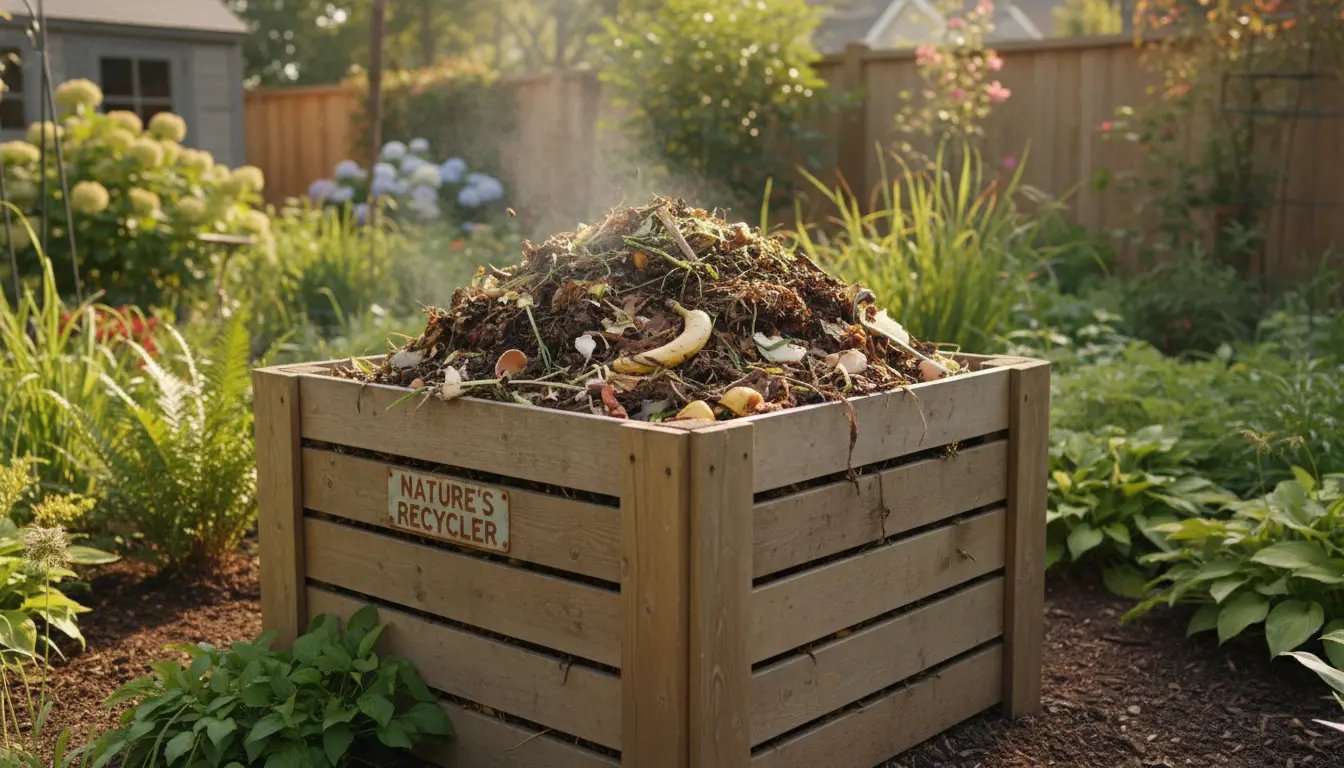
Why Start a Home Compost Bin
Starting a home compost bin turns kitchen and yard waste into valuable soil amendment. It reduces trash volume and supports healthier plants without synthetic fertilizers.
Home composting is inexpensive and works on small balconies or large yards. This guide explains practical steps to start and maintain a home compost bin successfully.
How to Start a Home Compost Bin Step by Step
Use the following steps to set up a basic home compost bin. Each step focuses on simple actions you can do with common materials.
1. Choose the Right Bin for Home Compost
Select a container that fits your space and needs. Options include tumblers, wire bins, plastic bins, or a DIY wooden crate.
- Tumbler: Faster mixing, good for small yards.
- Wire or mesh bin: Cheap and breathable.
- Plastic bin with holes: Low maintenance and tidy.
2. Pick a Location for Your Home Compost Bin
Place the bin on level ground with partial sun and good drainage. Close access to your kitchen makes adding scraps easier.
Avoid areas that flood or are directly under large trees where roots will interfere with maintenance.
3. Gather Materials: Browns and Greens
Compost needs a balance of carbon-rich “browns” and nitrogen-rich “greens.” Layering them helps with decomposition.
- Greens: vegetable peels, fruit scraps, coffee grounds, grass clippings.
- Browns: dry leaves, shredded paper, cardboard, straw.
A good rule of thumb is about three parts browns to one part greens by volume.
4. Build the Pile and Maintain It
Start with a 4–6 inch layer of browns to help drainage. Add a mix of greens and browns in alternating layers.
Turn or aerate the pile every 1–2 weeks to supply oxygen and speed up decomposition. Keep the pile moist like a wrung-out sponge.
Common Problems and How to Fix Them in Your Home Compost Bin
Recognizing issues early keeps the home compost bin effective. Here are common problems and quick fixes.
Bad Smell
Cause: Too many wet greens or lack of air. Fix: Add dry browns, turn the pile, and check drainage.
Slow Decomposition
Cause: Not enough nitrogen, too dry, or pile too small. Fix: Add more greens, water lightly, and increase pile size or insulate.
Pests and Fruit Flies
Cause: Exposed food scraps. Fix: Bury food under browns, use a closed bin, or cover openings with fine mesh.
Maintenance Tips for a Healthy Home Compost Bin
Regular, simple maintenance keeps composting efficient. Spend a few minutes each week checking the pile.
- Turn the pile every 1–2 weeks.
- Keep moisture consistent—moist but not soggy.
- Chop large pieces to speed breakdown.
- Keep a small kitchen caddy to collect scraps and avoid contamination.
Home composting can divert up to 30% of household waste from the trash. Finished compost can improve soil structure and water retention, reducing the need for watering and chemical fertilizers.
When Is Compost Ready from a Home Compost Bin?
Finished compost is dark, crumbly, and smells earthy. Small batches may be ready in 2–3 months with active turning, while passive piles can take 6–12 months.
Use finished compost as a top dressing, potting mix ingredient, or soil amendment before planting.
Small Real-World Example: Case Study of a Backyard Home Compost Bin
Marcos, a homeowner in Portland, began a 3×3 foot wire bin in his backyard. He added kitchen scraps and yard trimmings, maintaining a 3:1 brown-to-green ratio.
By turning the pile every 10 days and keeping it moist, Marcos produced usable compost in about four months. He reduced his weekly trash bag by half and used the compost to improve his vegetable beds.
Key takeaways from this case: consistent turning, balanced materials, and convenient bin placement near the kitchen make home composting sustainable.
Quick Checklist to Start Your Home Compost Bin
- Choose a bin type and a sunny, draining location.
- Collect browns and greens before you begin.
- Layer materials and keep the pile moist.
- Turn the pile regularly and monitor for problems.
- Harvest finished compost and apply to soil.
Final Tips for Successful Home Composting
Start small and improve as you go. Learn from what your pile tells you: smell, moisture, and activity are good indicators.
Composting is flexible—adapt the method to your climate, space, and the materials you have available. With basic care, a home compost bin becomes a reliable, low-cost source of garden nutrition.