
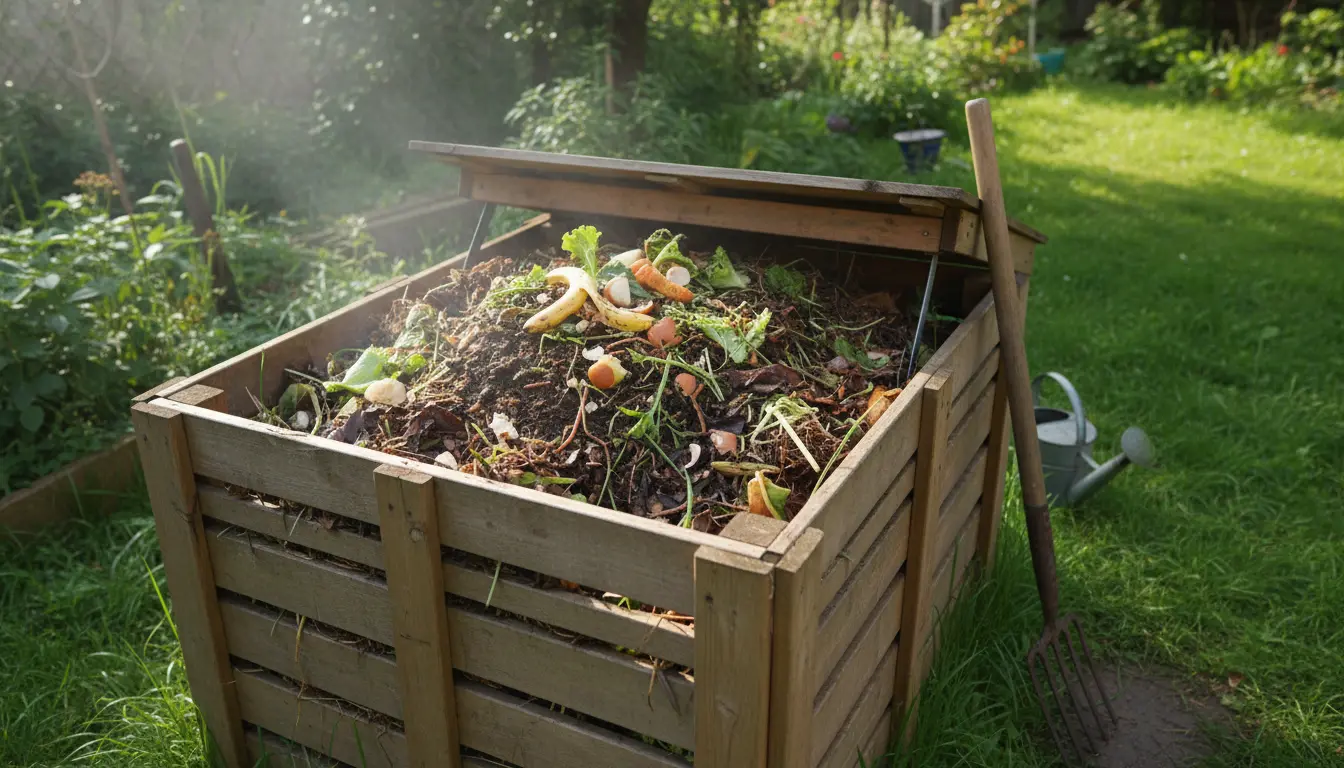
Composting at home reduces kitchen waste and creates valuable soil amendment. This guide breaks down home composting for beginners into clear steps you can follow this weekend.
What Is Home Composting for Beginners?
Home composting is the controlled breakdown of organic materials into nutrient-rich humus. It uses microbes, moisture, oxygen, and balanced materials to transform food scraps and yard waste into compost usable for plants.
Why Home Composting for Beginners Matters
Starting composting reduces landfill waste and returns nutrients to soil. For a beginner, it is an affordable way to improve garden health while cutting household trash volume.
Basic Materials: Greens and Browns
Successful compost needs a balance of nitrogen-rich “greens” and carbon-rich “browns.” Greens are moist and high in nitrogen, while browns add structure and carbon.
- Greens: vegetable scraps, coffee grounds, fresh grass clippings.
- Browns: dry leaves, shredded paper, straw, small wood chips.
- Aim for a roughly 2:1 or 3:1 ratio of browns to greens by volume for steady decomposition.
How to Start Home Composting for Beginners
Pick a method that fits your space and lifestyle. Popular options include a simple pile, a dedicated bin, or a tumbler for faster mixing.
1. Choosing a Bin for Home Composting for Beginners
Select a container based on available space and effort. Bins keep pests out and look tidy, while tumblers speed up mixing and aeration.
- Open pile: low cost, more space, needs occasional turning.
- Standard bin: good for yards, moderate maintenance.
- Tumbler: easiest turning, best for small gardens, often faster results.
2. Layering, Moisture, and Turning
Start with a layer of coarse browns to help airflow at the bottom. Alternate greens and browns as you add materials. Keep the pile as damp as a wrung-out sponge.
Turn the pile every 1–2 weeks with a pitchfork or by rotating the tumbler to add oxygen. Regular turning speeds decomposition and reduces odors.
3. Size and Location Tips
For active composting, a pile that is at least 3 feet wide and 3 feet tall retains heat well. Place the bin on bare soil to allow beneficial organisms to enter. Choose a partly shaded area to avoid drying out.
Troubleshooting Common Problems in Home Composting for Beginners
Even beginners encounter issues like bad smells, pests, or slow breakdown. Most problems have simple fixes related to balance, moisture, or aeration.
Bad Smells
Foul odors often mean too many greens or poor aeration. Add dry browns, turn the pile, and check moisture. Proper balance and oxygen typically solve smells within days.
Pests and Fruit Flies
Avoid attracting animals by burying food scraps in the pile, using a closed bin, or adding a 4–6 inch layer of browns on top. Do not compost meat or dairy in an open backyard bin.
Slow Decomposition
Slow breakdown can result from too much browns, compacting, or low moisture. Chop larger materials, add greens to boost nitrogen, and increase turning frequency.
Using Finished Compost
Compost is ready when it looks dark, crumbly, and earthy-smelling. Use finished compost to feed vegetables, improve potting mixes, or topdress lawns.
Application tips:
- Vegetable beds: mix 1–2 inches into the top 6–8 inches of soil before planting.
- Container plants: blend 20–30% compost into potting mix to improve structure and nutrients.
- Lawns and established beds: spread a thin layer as mulch and water it in.
Small Real-World Example: A Simple Case Study
Jane, a suburban homeowner, started a 65-gallon tumbler for home composting for beginners. She added kitchen scraps and shredded leaves in alternate layers and turned the tumbler twice weekly.
Within six weeks during summer, her compost had darkened and smelled earthy. She mixed it into her raised vegetable beds and saw improved soil texture and healthier tomato growth the following season.
Quick Checklist for Home Composting for Beginners
- Choose a bin or pile location on soil in partial shade.
- Collect both greens and browns; aim for more browns than greens.
- Keep moisture like a wrung-out sponge and turn regularly.
- Avoid meat, dairy, and diseased plant material.
- Harvest finished compost when it is crumbly and dark.
Composting can reduce household waste by up to 30 percent and return nutrients equivalent to a commercial fertilizer to your garden.
Home composting for beginners is both achievable and rewarding. With the right balance of materials and simple maintenance, you can turn everyday organic waste into a resource that helps your garden thrive.