
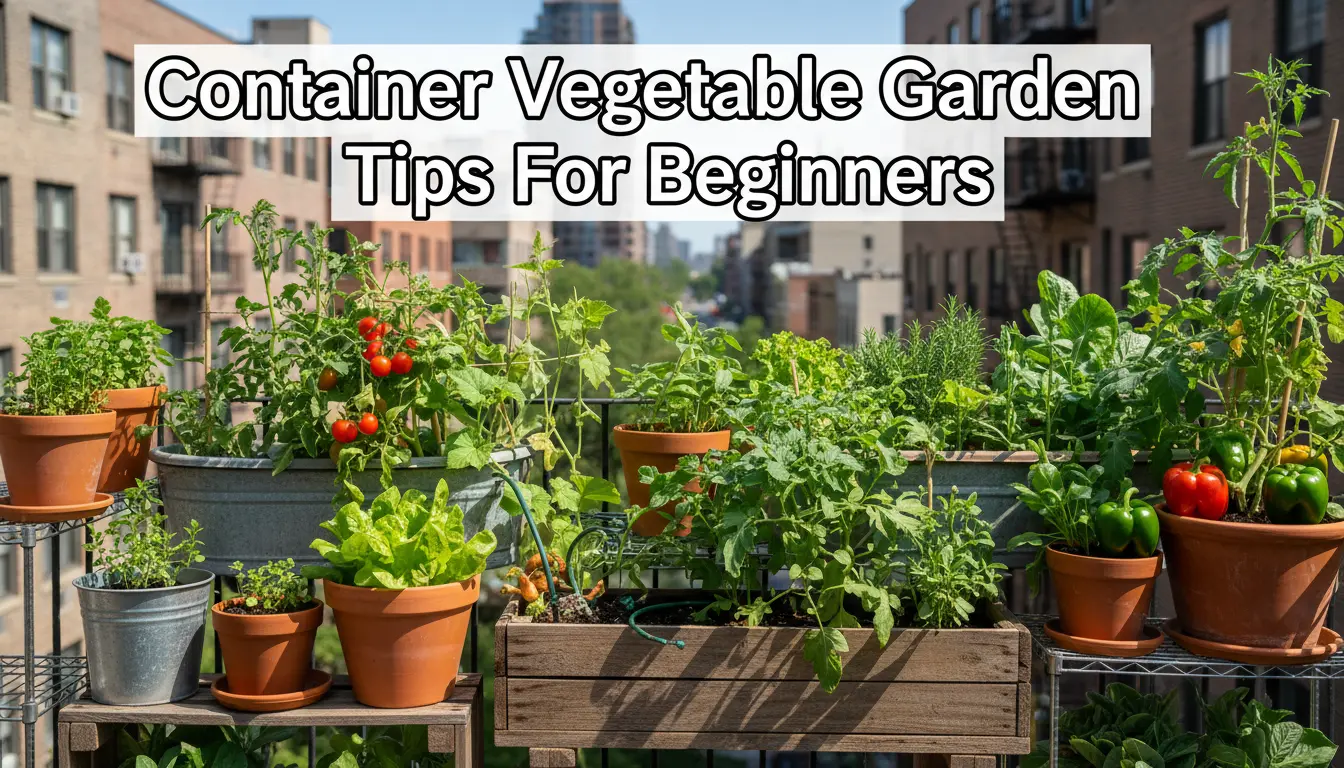
Container gardening is a practical way to grow vegetables when you have limited space. This guide explains simple, step-by-step methods for container gardening for beginners, from choosing pots to harvesting produce.
Why Choose Container Gardening for Beginners
Containers let you grow fresh vegetables on patios, balconies, or small yards. They reduce soil-borne disease risk and make gardening more accessible.
Containers also let you control soil quality and move plants for better light. This control helps beginners get consistent results faster.
Planning Your Container Garden
Good planning makes container gardening easier and more productive. Start by assessing light, available space, and how much time you can spend watering and maintaining plants.
Choose the Right Location and Light
Most vegetables need 6–8 hours of direct sunlight. Place containers where they receive consistent morning or midday sun.
If light is limited, choose leafy greens and herbs that tolerate partial shade. Tomatoes and peppers require full sun for best yields.
Pick Containers That Work
Select pots with drainage holes to prevent waterlogging. Use containers sized for the plant: small pots for herbs, 5–10 gallon containers for tomatoes or larger plants.
- Plastic pots: lightweight and retain moisture well.
- Ceramic or terracotta: attractive but dry out faster.
- Fabric grow bags: good root aeration and drainage.
Use Proper Soil and Potting Mix
Use a high-quality potting mix rather than garden soil. Potting mixes are lighter and drain well, which prevents root rot.
Look for mixes with compost, perlite or vermiculite, and a slow-release fertilizer. Avoid soils that compact easily.
Choosing Vegetables for Containers
Some vegetables are easier in containers than others. Start with compact varieties labeled “bush” or “container” when possible.
- Easy: lettuce, spinach, radishes, herbs (basil, parsley).
- Moderate: cherry tomatoes, peppers, bush beans.
- Challenging: large melons or sprawling squash (unless you provide big containers and supports).
Examples of Good Container Choices
Tomatoes: choose patio or determinate types in 5–10 gallon pots. Peppers: 3–5 gallon pots work well. Leafy greens: shallow trays or 6–8 inch pots are fine.
Planting, Watering, and Feeding
Plant at the same depth as in the seedling container. Fill the potting mix gently and firm it lightly around roots to remove air pockets.
Watering Best Practices
Containers dry faster than ground soil. Water deeply until water flows from drainage holes, then let the top inch of soil dry before watering again.
Check moisture daily in hot weather. Use self-watering pots or mulch the surface to reduce evaporation.
Feeding Your Container Vegetables
Use a balanced liquid fertilizer every 2–4 weeks or a slow-release formula at planting. Heavy feeders like tomatoes benefit from additional regular feeding.
Maintenance and Common Problems
Regular maintenance keeps plants healthy and productive. Watch for pests, remove yellowing leaves, and pinch off flowers on leggy seedlings to encourage fuller growth.
Pest and Disease Control
Inspect leaves regularly for aphids, whiteflies, or fungal spots. Use insecticidal soap, neem oil, or hand-pick pests when practical.
Rotate crops in containers by changing the potting mix each season to reduce disease buildup.
Support and Pruning
Use stakes or cages for tomatoes and tall peppers. Prune indeterminate tomato varieties to focus energy on fruit production and maintain airflow.
Tomatoes grown in containers can produce fruit in as little as 60 days for early varieties. Choosing the right potting mix and proper feeding dramatically speeds ripening.
Harvesting and Seasonal Tips
Harvest leafy greens constantly to encourage new growth. Pick tomatoes and peppers when they reach full color and firmness for best flavor.
At season end, remove spent plants and refresh potting mix. This prevents pests and prepares containers for the next planting.
Small Real-World Example
Case Study: Maria, a city renter with a sunny balcony, grew cherry tomatoes and basil in three 10-inch containers. She used a lightweight potting mix and a slow-release fertilizer at planting.
Maria watered every other day and supported the tomatoes with small stakes. By week eight she harvested continuous cherry tomatoes and used fresh basil for cooking. Her balcony produced more than she expected with minimal effort.
Quick Checklist for Container Gardening for Beginners
- Assess light: 6–8 hours for most vegetables.
- Choose containers with drainage and correct size.
- Use high-quality potting mix and add slow-release fertilizer.
- Select compact vegetable varieties for pots.
- Water deeply and regularly, adjust for weather.
- Inspect plants weekly for pests and prune as needed.
Container gardening for beginners is an achievable way to grow fresh vegetables in small spaces. With the right containers, soil, and simple care routines, most people can enjoy seasonal harvests and learn gardening basics quickly.