
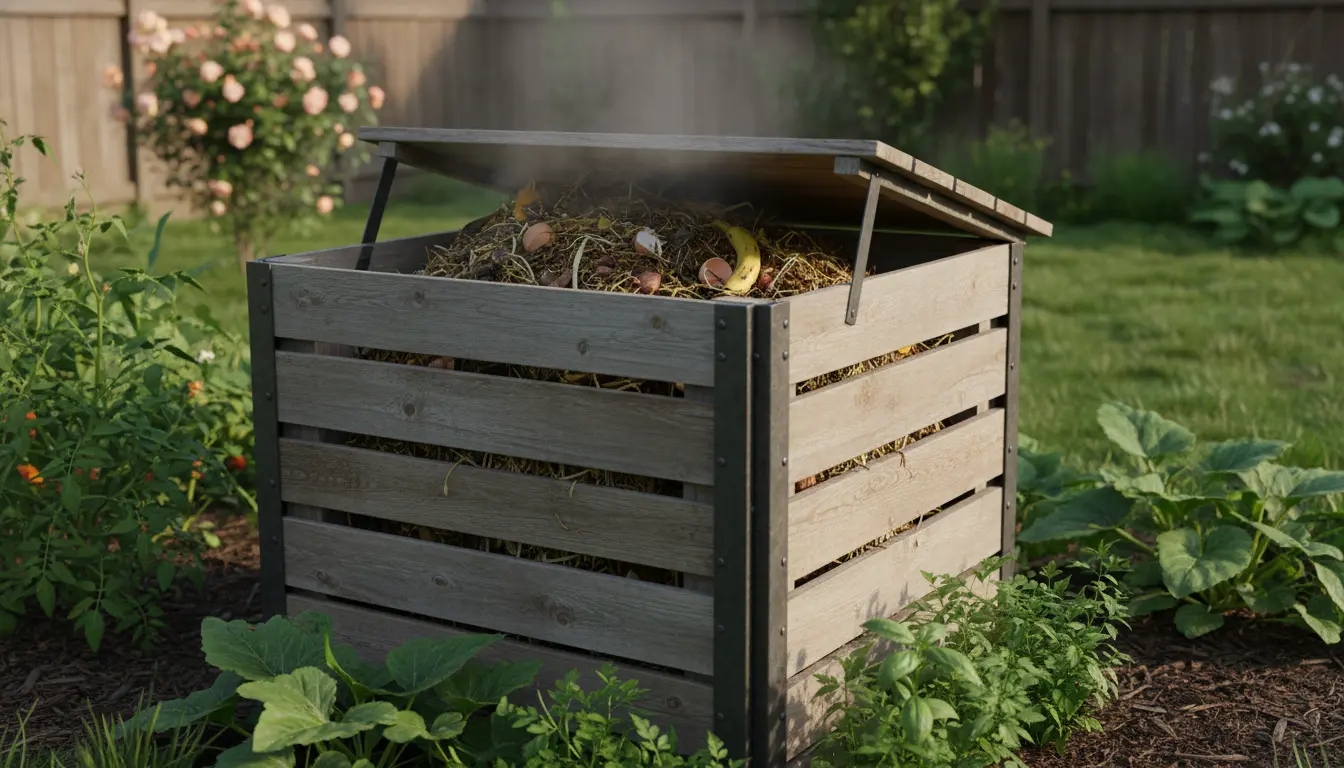
Home composting turns kitchen scraps and yard waste into a valuable soil amendment. This guide explains simple, practical steps to start and maintain home composting with minimal fuss.
What is home composting?
Home composting is the controlled decomposition of organic materials at a household scale. It produces nutrient-rich compost that improves soil structure and feeds plants.
Compost reduces waste sent to landfills and cuts methane emissions. It also saves money by replacing store-bought fertilizer and soil amendments.
How to start home composting
Starting home composting requires choosing a method, collecting materials, and following a simple routine. You do not need specialized equipment to begin.
Choose a composting method
Pick a method that fits your space and time. Common options include a compost bin, a tumbler, or a simple pile. Each method works if you balance materials and moisture.
Choose a compost bin for home composting
For small yards, a closed bin or tumbler keeps pests out and looks tidy. For larger spaces, an open pile or three-bin system speeds processing.
- Plastic bin: affordable, low maintenance.
- Tumbler: faster mixing, easier turning.
- Open pile: low cost, needs more space and attention.
Materials to use in home composting
Compost needs a mix of carbon rich (brown) and nitrogen rich (green) materials. Balance is the key to efficient decomposition.
Examples of brown and green materials
- Brown: dry leaves, shredded paper, cardboard, straw.
- Green: vegetable scraps, coffee grounds, fresh grass clippings.
A common ratio is roughly 3 parts brown to 1 part green by volume. Adjust if the pile smells or is too dry.
Step-by-step home composting process
Follow these steps to keep your compost healthy and productive. Each step takes a few minutes weekly.
- Location: Place the bin on soil in a shady or semi-shady spot to keep moisture stable.
- Layering: Start with coarse browns, then add greens. Alternate layers to avoid compacting.
- Moisture: Aim for damp sponge consistency. Add water in dry weather or more browns if too wet.
- Turning: Aerate weekly or biweekly by turning the pile. Tumblers simplify this step.
- Harvesting: Finished compost is dark, crumbly, and smells earthy. Screen and use in garden beds or pots.
Troubleshooting home composting problems
Even simple compost systems can encounter issues. Troubleshooting focuses on smell, pests, and slow decomposition.
Common problems and fixes
- Bad odor: Add more brown materials and turn the pile to add air.
- Pests: Avoid adding meat, dairy, or oily foods. Use a closed bin if rodents appear.
- Slow breakdown: Chop materials smaller, add greens or nitrogen source, and turn more often.
- Dry pile: Water lightly and cover to retain moisture.
Using finished compost
Apply finished compost as a soil conditioner, mulch, or potting mix ingredient. Use a thin layer as mulch or mix 10-30% compost into garden soil.
Compost improves water retention, supports beneficial microbes, and supplies slow-release nutrients for plants.
Home composting can divert up to 30 to 50 percent of household waste from the trash in many homes. That reduces landfill use and creates free garden soil.
Small case study: A practical example
Maria in Austin started home composting with a 50 gallon tumbler three years ago. She kept a small countertop caddy for kitchen scraps and added dry leaves from her yard.
Within six months she produced enough compost to top-dress her vegetable beds and reduce her grocery seedling purchases. Maria reports less kitchen waste and healthier tomato plants after two seasons.
Tips to make home composting easier
- Keep a small container with a lid at the sink to collect scraps and reduce trips outside.
- Chop or blend kitchen scraps to speed decomposition.
- Save leaves and shredded paper in fall to use as browns year-round.
- Use a thermometer or simple smell check to monitor progress instead of complicated metrics.
Conclusion: Start simple and improve
Home composting is flexible and forgiving. Begin with a basic system and adjust materials, moisture, and turning as you learn what works for your home.
Even small efforts reduce waste and provide rich soil for plants. With a little routine, home composting becomes an easy, rewarding habit.