
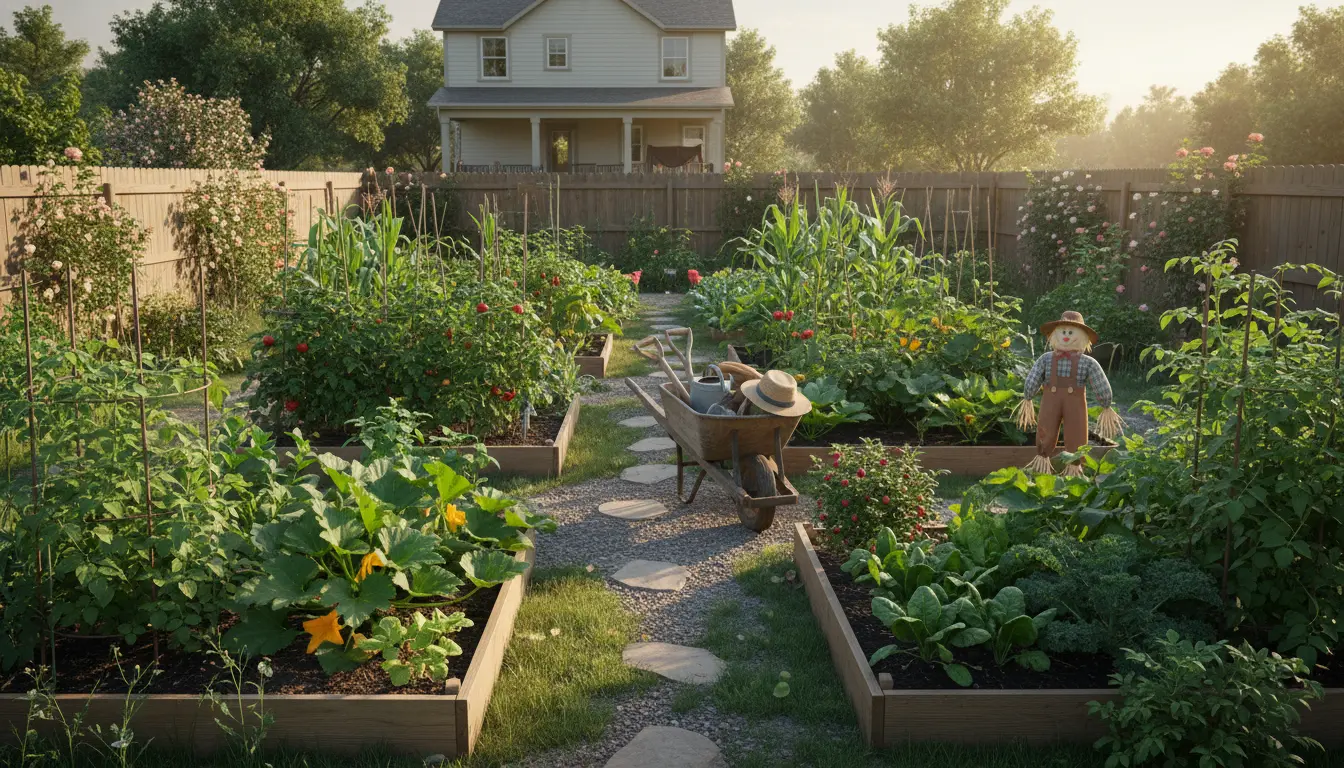
Starting a vegetable garden can be simple, even in a small yard or container. This guide breaks down the key steps to start a vegetable garden with practical instructions you can apply immediately.
Plan Before You Plant: How to Start a Vegetable Garden
Good planning saves time and effort. Decide what you want to grow, how much space you have, and how much time you can commit each week.
Short checklist to start a vegetable garden:
- List preferred vegetables and varieties.
- Measure available space and sunlight.
- Decide between raised beds, in-ground rows, or containers.
- Set a realistic schedule for planting and maintenance.
Choose Location and Soil to Start a Vegetable Garden
Location is the most important factor. Most vegetables need at least 6–8 hours of direct sunlight daily.
Soil matters even more than space. Test soil for pH and texture, then improve it with organic matter.
Soil Preparation
Follow these steps to prepare soil:
- Remove weeds and debris.
- Work in 2–4 inches of compost or well-rotted manure.
- Loosen compacted soil to a depth of 8–12 inches.
- Adjust pH if necessary: most vegetables prefer pH 6.0–7.0.
Plant Selection and Timing When You Start a Vegetable Garden
Choose crops suited to your climate and the season. Start with easy, fast-growing vegetables if you are a beginner.
Beginner-friendly vegetables include:
- Leafy greens (lettuce, spinach)
- Radishes and carrots
- Bush beans and peas
- Cherry tomatoes and herbs (basil, parsley)
Seed vs. Transplant
Seeds are cheaper but take longer. Transplants (starter plants) give you a head start for summer crops like tomatoes and peppers.
Check your last frost date and plan seed starting or transplanting times around it.
Planting, Watering, and Maintenance for a Successful Garden
Planting depth and spacing matter. Follow seed packet or plant tag instructions for best results.
Water consistently. Aim for deep, infrequent watering: about 1–1.5 inches per week depending on weather.
- Water in the morning to reduce disease risk.
- Use mulch to retain moisture and suppress weeds.
- Thin seedlings early so remaining plants have room.
Fertilizing and Feeding
Use a balanced organic fertilizer at planting and side-dress with compost during the season. Avoid over-fertilizing leafy crops if you want more fruit production.
Pest Control and Harvesting in Your Vegetable Garden
Monitor plants weekly for pests and disease. Early detection keeps problems small and manageable.
Non-chemical controls work well for many home gardens:
- Handpick larger pests like caterpillars and beetles.
- Use row covers for young seedlings to prevent insect damage.
- Encourage beneficial insects with diverse plantings and flowers.
Harvest vegetables at peak ripeness. Regular harvesting often encourages continued production for crops like beans and zucchini.
Planting a mix of herbs and flowers near vegetables can attract pollinators and beneficial insects, reducing pest problems and improving yields.
Small Example: City Balcony Case Study
Maria had a 6×4 foot balcony and wanted fresh greens and tomatoes. She used containers and a small vertical trellis to maximize space.
Her plan included:
- Three 5-gallon containers for cherry tomatoes.
- Two shallow troughs for lettuce and spinach.
- Herb pots for basil and parsley to attract pollinators.
Within eight weeks, she had regular salads and continued harvests all season. Key wins were consistent watering, morning sun, and weekly compost tea feedings.
Common Problems When You Start a Vegetable Garden and How to Fix Them
Expect a few setbacks; most problems have simple solutions.
- Yellow leaves: Check for overwatering or nutrient deficiency.
- Poor fruit set: Ensure enough pollination and warm nighttime temperatures for crops like tomatoes and peppers.
- Slow growth: Add compost and check soil pH and drainage.
Tips to Keep You Going
- Start small and expand after your first season.
- Keep a garden journal to track planting dates and outcomes.
- Join a local gardening group or online forum for advice specific to your area.
Starting a vegetable garden is a practical way to grow fresh food and learn seasonal skills. With planning, the right location, and consistent care, even small spaces can produce a worthwhile harvest. Follow these steps, adapt to your local climate, and enjoy the process of growing your own food.