
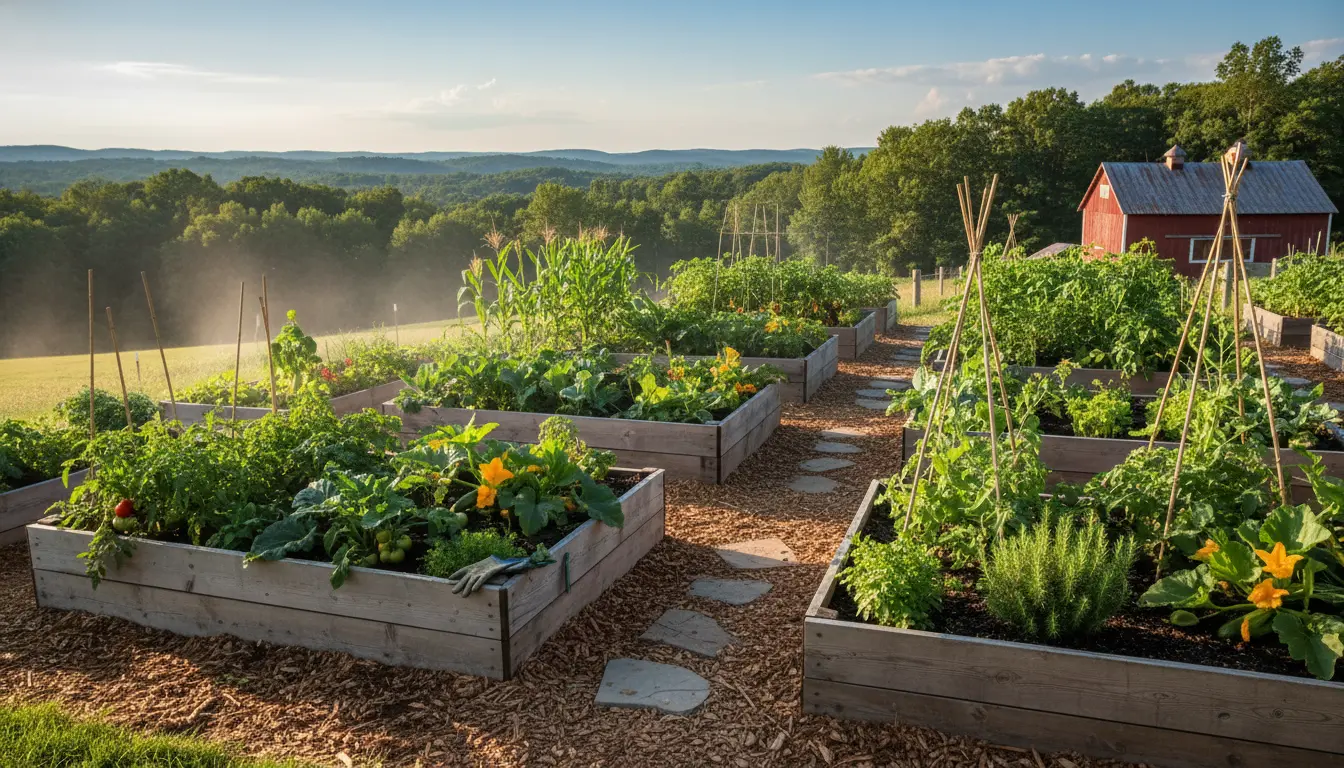
Starting a vegetable garden is a practical way to grow fresh food, save money, and enjoy outdoor activity. This guide shows clear, actionable steps you can follow whether you have a small balcony or a backyard plot.
How to Start a Vegetable Garden: Choose a Location
Pick a site with at least six hours of direct sunlight for most vegetables. Sunlight is the main factor that affects plant growth and yields.
Consider access to water, soil slope, and proximity to pests like rodents. A flat spot near a water source and away from dense shade works best for new gardeners.
Sunlight and Wind
Observe sunlight patterns for a few days. Morning sun is ideal because it dries dew and reduces disease risk. Protect plants from strong afternoon winds with a fence or hedge if needed.
Space Options
Decide between in-ground beds, raised beds, or containers. Raised beds warm faster in spring and drain well, while containers are ideal for patios and balconies.
How to Start a Vegetable Garden: Prepare Soil and Beds
Good soil is the foundation of a successful vegetable garden. Aim for loose, well-draining soil rich in organic matter.
Start by testing soil texture and pH. Many vegetables prefer a slightly acidic to neutral pH (6.0 to 7.0).
Soil Improvement Steps
- Add 2–4 inches of compost to the topsoil and mix in.
- In heavy clay, add coarse sand and organic matter to improve drainage.
- Use a soil test kit and follow recommendations for lime or sulfur to adjust pH.
For raised beds, fill with a mix of topsoil, compost, and coir or peat to retain moisture. Typical mix: 40% topsoil, 40% compost, 20% aeration material.
How to Start a Vegetable Garden: Choose Plants
Select vegetables that match your climate, season, and experience level. Start with easy crops if you are new to gardening.
- Easy beginners crops: lettuce, radishes, green beans, tomatoes, herbs.
- Cool-season crops: spinach, peas, broccoli (plant in spring or fall).
- Warm-season crops: tomatoes, peppers, cucumbers (plant after last frost).
Companion Planting and Rotation
Group compatible plants together and avoid planting the same family in the same spot each year. Rotation reduces disease and nutrient depletion.
Example companions: tomatoes with basil, carrots with onions. Avoid planting potatoes near tomatoes.
How to Start a Vegetable Garden: Planting and Care
Follow seed packet or plant label instructions for spacing and depth. Proper spacing improves air flow and reduces disease.
Watering, mulching, and pest control are ongoing tasks. Establish routines early to keep plants healthy.
Watering and Mulch
Water deeply and less frequently to encourage strong roots. Aim for about 1 inch of water per week, adjusting for rainfall.
Apply mulch to conserve moisture, suppress weeds, and regulate soil temperature. Use straw, shredded leaves, or bark mulch.
Fertilizing and Pruning
Apply a balanced organic fertilizer at planting and side-dress heavy feeders like corn and tomatoes mid-season. Avoid over-fertilizing leafy greens if you want flavorful leaves.
Prune indeterminate tomatoes to maintain airflow and direct energy into fruit production. Remove diseased foliage promptly.
How to Start a Vegetable Garden: Pest and Disease Management
Inspect plants regularly for signs of pests or disease. Early detection makes control much easier.
- Hand-pick larger pests like caterpillars and slugs in the morning.
- Use row covers to protect seedlings from insects and birds.
- Apply organic controls such as neem oil or insecticidal soap only when needed.
Rotate crops, improve soil health, and plant resistant varieties to reduce long-term problems. Healthy plants resist pests and disease better than stressed ones.
Harvesting and Season Extension
Harvest vegetables at peak maturity for best flavor and continued production. Frequent harvesting often encourages more production in crops like beans and zucchini.
To extend the season, use cold frames, row covers, or small hoop tunnels. These protections add several weeks to the growing season in spring and fall.
Small Case Study: Sarah’s First Raised Bed
Sarah started a 10×4 foot raised bed in spring on a sunny side yard. She filled it with a 40/40/20 mix of topsoil, compost, and coir, and planted tomatoes, lettuce, and bush beans.
By mid-summer she harvested weekly salads and a steady supply of beans. Using drip irrigation and mulch saved time and reduced weeds. Her simple plan produced enough vegetables for her family of three.
Quick Checklist: How to Start a Vegetable Garden
- Choose a sunny location with good water access.
- Test and improve soil; add compost.
- Select easy, climate-appropriate varieties.
- Plant with correct spacing and water deeply.
- Mulch, monitor pests, and rotate crops yearly.
Starting a vegetable garden takes planning but delivers practical rewards. Follow the steps above, start small, and learn from each season. Over time you will refine planting choices, soil care, and harvest planning for better results every year.