
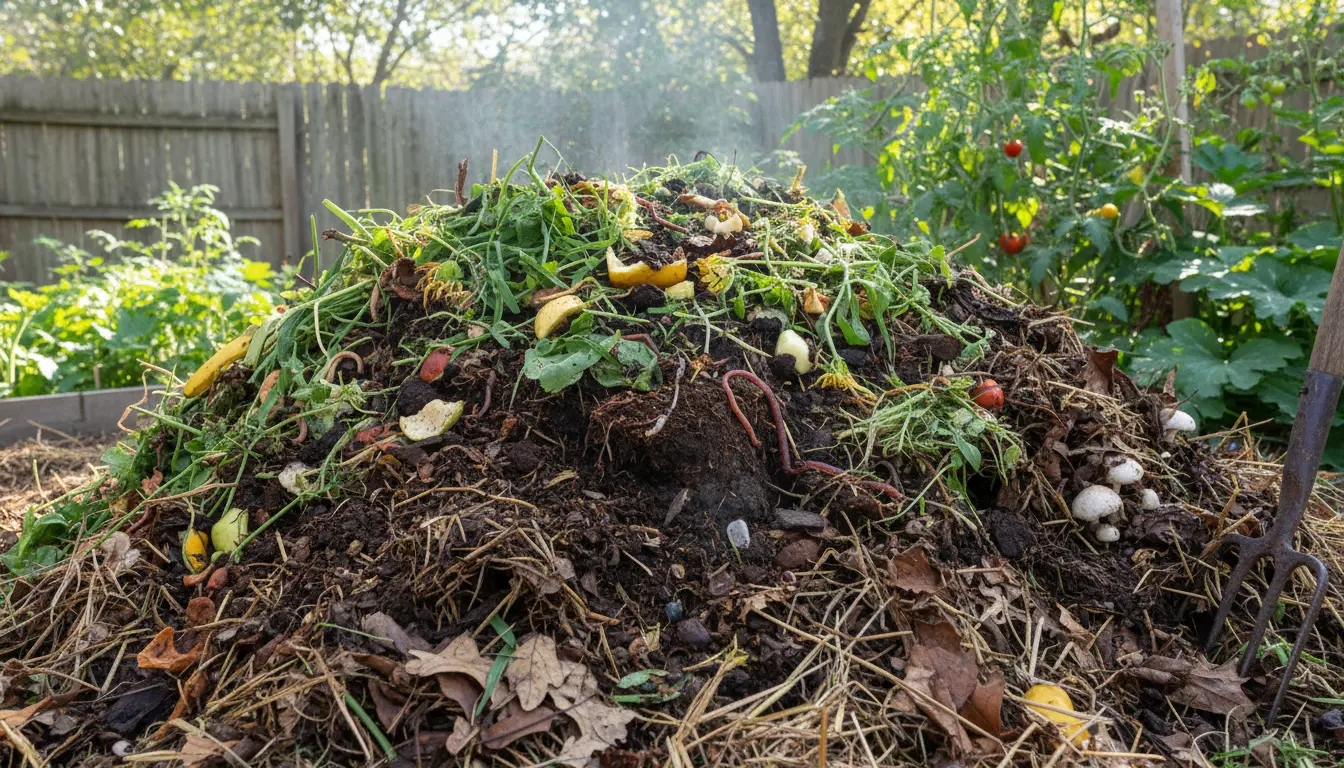
Home Composting Basics
Home composting turns kitchen scraps and yard waste into nutrient-rich soil amendment. It reduces household waste and improves garden health when done correctly.
This guide explains practical steps to start and maintain a compost bin at home, with clear actions you can take in your backyard or on a balcony.
Choosing a Home Composting Method
Start by selecting a method that fits your space and routine. Common options include a basic compost pile, a bin or tumbler, and vermicomposting for small indoor setups.
Consider these factors when choosing:
- Available space (backyard, patio, balcony).
- Amount of organic waste generated weekly.
- Time available for turning and maintenance.
- Local climate—cold climates may require insulated bins or more active management.
Compost Bin vs Tumbler vs Worm Bin
A compost bin is simple and affordable for larger yards. Tumblers speed up mixing and aeration. Worm bins (vermicomposting) are ideal indoors or for small volumes and produce fast, high-quality compost.
Home Composting Materials: Greens and Browns
Composting relies on a balance of nitrogen-rich “greens” and carbon-rich “browns.” Understanding which materials fall into each category is essential.
- Greens: vegetable scraps, fruit peels, coffee grounds, fresh grass clippings.
- Browns: dry leaves, shredded paper, cardboard, straw, small wood chips.
A good rule is roughly 2–3 parts browns to 1 part greens by volume for most systems. Adjust if the pile smells or stays too dry.
How to Start a Compost Pile
- Choose a level, well-drained spot with some shade.
- Place a 2–4 inch layer of coarse browns for base drainage.
- Add alternating layers of greens and browns, keeping layer thickness to about 4–6 inches.
- Moisten each layer so the pile feels like a wrung-out sponge.
- Cover with a lid or a layer of browns to reduce pests and moisture loss.
Turning and Aeration for Faster Composting
Turning introduces oxygen that helps microbes break down materials faster. For a static pile, turning every 2–4 weeks is sufficient. Tumblers typically need turning every few days to a week.
If you use a worm bin, do not turn frequently—worms and microbes will do the work without aggressive mixing.
Maintaining Your Home Compost: Moisture, Temperature, and Troubleshooting
Monitor three key compost conditions: moisture, temperature, and particle size. Proper balance prevents odors and speeds decomposition.
- Moisture: Keep the pile damp but not waterlogged. Add browns if too wet and water if too dry.
- Temperature: Active piles heat to 120–160°F (50–70°C). If temperature drops, add greens and turn to reheat.
- Particle size: Chop large pieces to increase surface area and speed breakdown.
Common Problems and Fixes
- Bad odors: Too many greens or poor aeration. Add browns and turn the pile.
- Pests: Avoid meat, dairy, and oily foods; bury food scraps and use a closed bin.
- Slow decomposition: Increase moisture, add nitrogen (greens), and turn more often.
Using Finished Compost
Compost is ready when it is dark, crumbly, and smell of earth. This usually takes 3–12 months depending on method and management.
Use finished compost in these ways:
- Top-dress lawns or mix into garden beds (1–3 inches).
- Blend with potting soil for container plants (25–30% compost).
- Use as a seed-starting amendment in small quantities.
Small Real-World Example
Case study: A two-person household in a suburban home started a 3-bin compost system. They collected kitchen scraps in a covered counter container and added them to the active bin twice weekly. By balancing browns and greens and turning weekly, they produced usable compost in about six months.
Results after one year:
- Reduced trash volume by 40 percent.
- Compost yield covered two raised beds, improving plant growth and reducing fertilizer needs.
Quick Tips for Home Composting Success
- Keep a small countertop caddy for scraps to encourage consistent composting.
- Shred or chop materials when possible for faster breakdown.
- Save a handful of finished compost to inoculate a new pile and speed decomposition.
- Use a thermometer for hot composting to monitor active microbial activity.
Conclusion: Start Small and Learn
Home composting is a manageable, low-cost way to reduce waste and enhance soil health. Begin with a simple method, observe how your pile behaves, and adjust materials and turning frequency as you gain experience.
With a few straightforward practices, you can produce useful compost and contribute to a more sustainable household routine.