
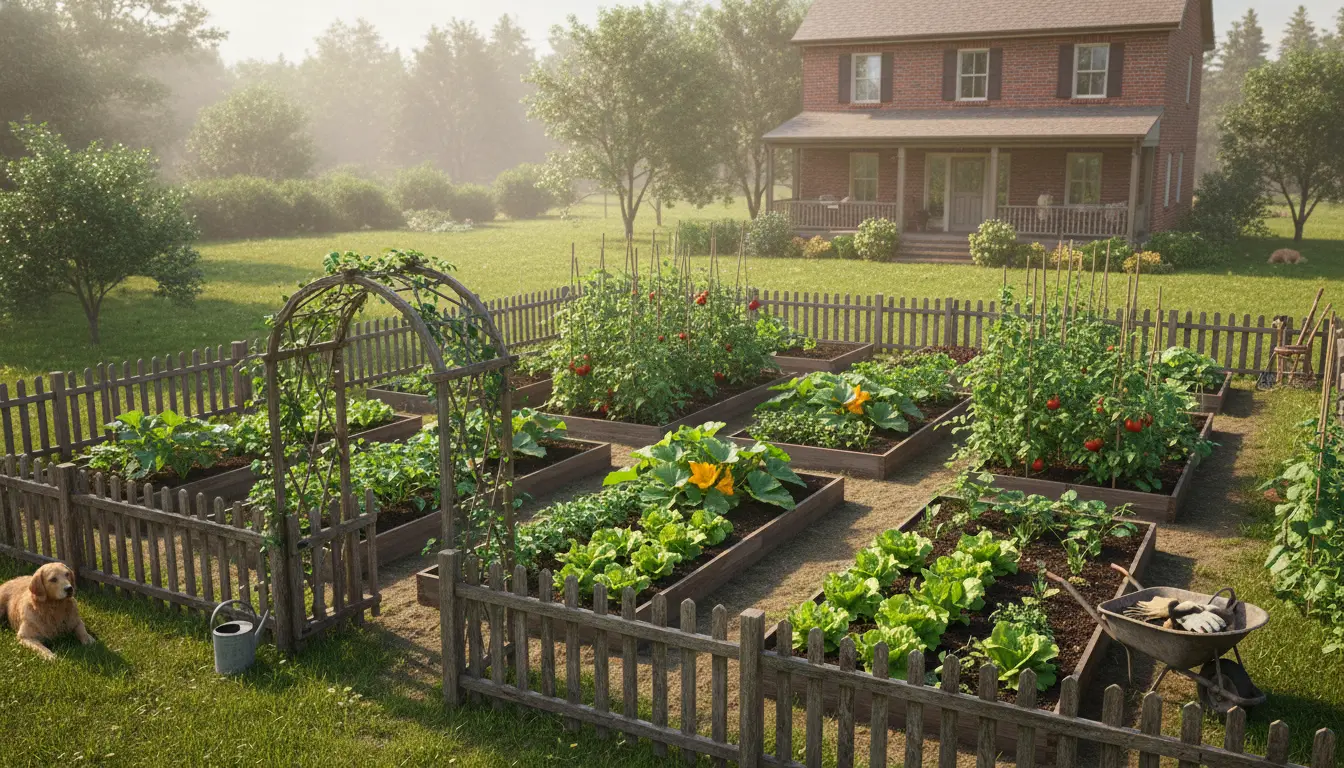
Starting a vegetable garden is a manageable project that rewards planning and simple care. This guide shows clear steps you can follow to start a vegetable garden at home, whether you have a small balcony or a backyard plot.
How to Start a Vegetable Garden: Plan Before You Plant
Decide what you want to grow and how much time you can commit. Focus on a few easy crops for your first season.
- Choose fast-growing, low-maintenance vegetables like lettuce, radishes, cherry tomatoes, and beans.
- Decide between containers, raised beds, or in-ground rows based on space and soil quality.
- Check your local frost dates and growing season length to pick the right varieties.
Choose a Site to Start a Vegetable Garden
Good light and access make the biggest difference. When you start a vegetable garden, aim for the sunniest spot available.
Vegetables generally need 6–8 hours of direct sunlight. Consider proximity to water and how easy it will be to tend the beds.
Soil and Drainage When You Start a Vegetable Garden
Poor soil is the most common limiting factor. Test your soil or evaluate it by touch and drainage.
- Do a basic soil test for pH and nutrients with a home kit or local extension service.
- Improve heavy clay with compost and coarse sand; lighten sandy soil with organic matter.
- Use raised beds if drainage or soil contamination is a concern.
How to Start a Vegetable Garden: Prepare Beds and Plant
Preparation makes planting straightforward. Build beds, amend soil, and mark rows before seeds or seedlings go in.
- Clear the area of weeds and grass. Solarize a patch with clear plastic if weeds are severe.
- Mix aged compost into the top 6–8 inches of soil at a rate of 1–2 inches of compost spread across the bed.
- Plan spacing using seed packet directions or plant labels; overcrowding reduces yield and increases disease risk.
Planting Tips When You Start a Vegetable Garden
Follow seed packet timing and depth guidance. Transplants can be started indoors and hardened off before moving outside.
- Sow cool-season crops (peas, lettuce, spinach) early in the season.
- Plant warm-season crops (tomatoes, peppers, cucumbers) after the last frost.
- Use succession planting for continuous harvests: sow small amounts every 2–3 weeks.
How to Start a Vegetable Garden: Care and Maintenance
Routine care keeps plants productive. Prioritize consistent watering, light fertilizing, and basic pest checks.
Watering and Fertilizing When You Start a Vegetable Garden
Most vegetables need about 1 inch of water per week. Water deeply and less often to encourage strong root systems.
- Use drip irrigation or soaker hoses for efficiency and to keep foliage dry.
- Apply a balanced organic fertilizer once or twice during the season, following package directions.
Pest and Disease Control When You Start a Vegetable Garden
Monitor plants regularly. Early action prevents small problems from becoming major losses.
- Hand-pick larger pests like caterpillars and beetles.
- Use row covers to protect young plants from insects and birds.
- Rotate crops each season to reduce soil-borne diseases and pest buildup.
Legumes such as beans and peas add nitrogen to the soil through a natural process with root bacteria. Planting them as part of a rotation can reduce your need for synthetic fertilizers.
How to Start a Vegetable Garden: Harvesting and Ongoing Learning
Harvest on time for best flavor and to encourage continued production. Keep notes on what varieties did well and when you seeded or transplanted.
- Pick leafy greens when they are young and tender.
- Harvest tomatoes and peppers as they reach full color and firm texture.
- Store notes on spacing, yield, and pest issues for next season.
Basic Composting and Soil Care
Compost returns nutrients and improves soil structure. Start a simple bin for kitchen scraps and yard waste to support next year’s garden.
Mulch beds with straw or leaves to retain moisture and suppress weeds.
Real-World Example: A First-Season Raised Bed Case Study
Sarah built a 4×4 ft raised bed in her sunny backyard in May. She mixed three wheelbarrows of compost with the existing topsoil, planted seedlings of cherry tomatoes, bush beans, and lettuce, and installed a soaker hose.
By July she was harvesting weekly salads and had a steady supply of beans. Minimal pest damage occurred with weekly checks and occasional hand removal of caterpillars. Her costs were under $120 and time investment averaged 30 minutes, three times a week.
Lessons learned: start small, improve soil first, and schedule short regular care sessions.
Next Steps to Keep Improving Your Vegetable Garden
After your first season, review notes, save seeds from reliable plants, and plan crop rotation. Expand beds only when you can maintain them without overwhelming time or budget.
Starting a vegetable garden is a process of small improvements. With attention to light, soil, planting timing, and simple maintenance you can grow a productive garden that fits your space and schedule.
Ready to begin? Choose one small bed or two containers, pick three easy crops, and schedule a planting weekend to start a vegetable garden this season.