
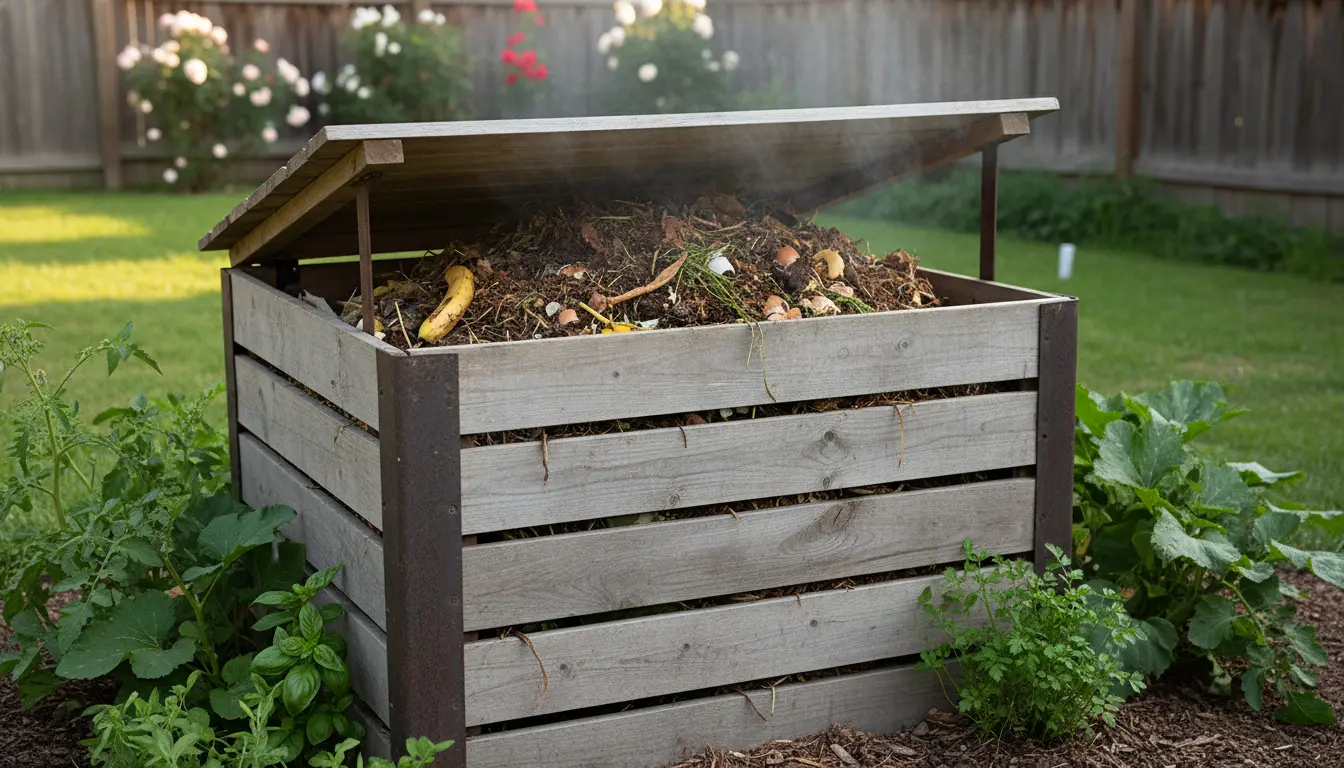
Why Home Composting Matters
Home composting turns kitchen and yard waste into a valuable soil amendment. It reduces landfill waste and improves garden soil structure and fertility.
Composting is simple once you know the basics and commit to a regular routine. This guide gives practical steps for beginners to get consistent results.
Home Composting Basics
Compost is created by microorganisms that break down organic material into humus. The process needs food (carbon and nitrogen), moisture, air, and time.
Balancing these elements speeds decomposition and prevents odors or pests. Aim for a mix of brown (carbon) and green (nitrogen) materials.
What to Compost and What to Avoid
Knowing what to add prevents problems. Use common kitchen and yard items, but avoid materials that attract animals or introduce disease.
- Easy to compost: vegetable scraps, fruit peels, coffee grounds, tea bags, leaves, grass clippings, shredded paper.
- Avoid: meat, dairy, bones, oils, diseased plants, pet feces, large woody branches (unless chipped).
- Small amounts of citrus or onion are fine if balanced with browns and well-mixed.
Choosing a Compost Bin for Home Composting
Select a bin that fits your space and how often you want to turn the pile. Options include tumblers, stationary bins, and simple open piles.
Tumblers are convenient for small households and speed up turning. Stationary bins and piles work well for larger volumes and yard waste.
Bin Types and Pros/Cons
- Tumbler: easy to rotate, faster decomposition, limited volume.
- Plastic bin: affordable, discreet, can hold more material but needs manual turning.
- Open pile: best for large yards, lowest cost, needs space and more management.
How to Start and Maintain Compost
Start with a base layer of coarse material for air flow. Then alternate green and brown layers. Moisture and turning are the two actions that keep compost active.
- Location: Choose a shaded, level spot with good drainage and easy access.
- Base layer: Add twigs or straw 2–3 inches deep to help airflow.
- Layering: Add 2 parts brown (dry leaves, shredded paper) to 1 part green (kitchen scraps, fresh grass).
- Moisture: Keep the pile damp like a wrung-out sponge; water occasionally in dry weather.
- Turning: Turn every 1–2 weeks with a pitchfork or rotate tumbler to add air and mix materials.
- Patience: Active piles can finish in 2–4 months; slower piles may take 6–12 months.
Simple Weekly Routine
Follow a short weekly checklist to keep compost healthy. Regular small tasks beat sporadic large interventions.
- Add kitchen scraps and a handful of browns each time you add greens.
- Check moisture and add water or dry material as needed.
- Turn or rotate the pile at least once a week for active composting, or every 2–3 weeks for slower systems.
Compost can raise soil microbial activity and increase water retention by up to 20 percent, helping plants survive droughts.
Troubleshooting Common Problems in Home Composting
Problems are usually easy to fix if you identify the cause. Check balance, moisture, and aeration before changing methods.
- Bad smell: Usually too wet or too many greens. Add browns and turn the pile to introduce air.
- Slow decomposition: Insufficient nitrogen, moisture, or surface area. Chop materials and add fresh greens or manure.
- Pests or rodents: Avoid meat and oily foods, use a closed bin, and bury kitchen scraps in the center of the pile.
- Too dry: Add water and greens; cover the pile to retain moisture.
When to Use Finished Compost
Finished compost is dark, crumbly, and smells earthy. It should no longer show recognizable food pieces or leaves.
Use compost as a soil topper, mix into potting mixes, or blend into garden beds at a rate of 1–3 inches on top or 10–20 percent by volume in soil mixes.
Small Case Study: Neighborhood Starter Bin
Maria in a small suburban yard started a 200-liter plastic bin with kitchen scraps and dry leaves. She balanced layers and turned weekly.
After four months of consistent turning and occasional water, she harvested dark crumbly compost that improved her vegetable bed yield the following season.
Quick Checklist for Home Composting Success
- Pick a bin that fits your space and volume needs.
- Use a 2:1 ratio of browns to greens for steady progress.
- Keep the pile moist and aerated; turn weekly for faster results.
- Avoid meat, dairy, and pet waste to prevent pests.
- Test finished compost before broad application in sensitive crops.
Home composting is a low-cost, high-impact way to reduce waste and nourish your garden. Start small, follow a simple routine, and adjust based on what your pile tells you.