
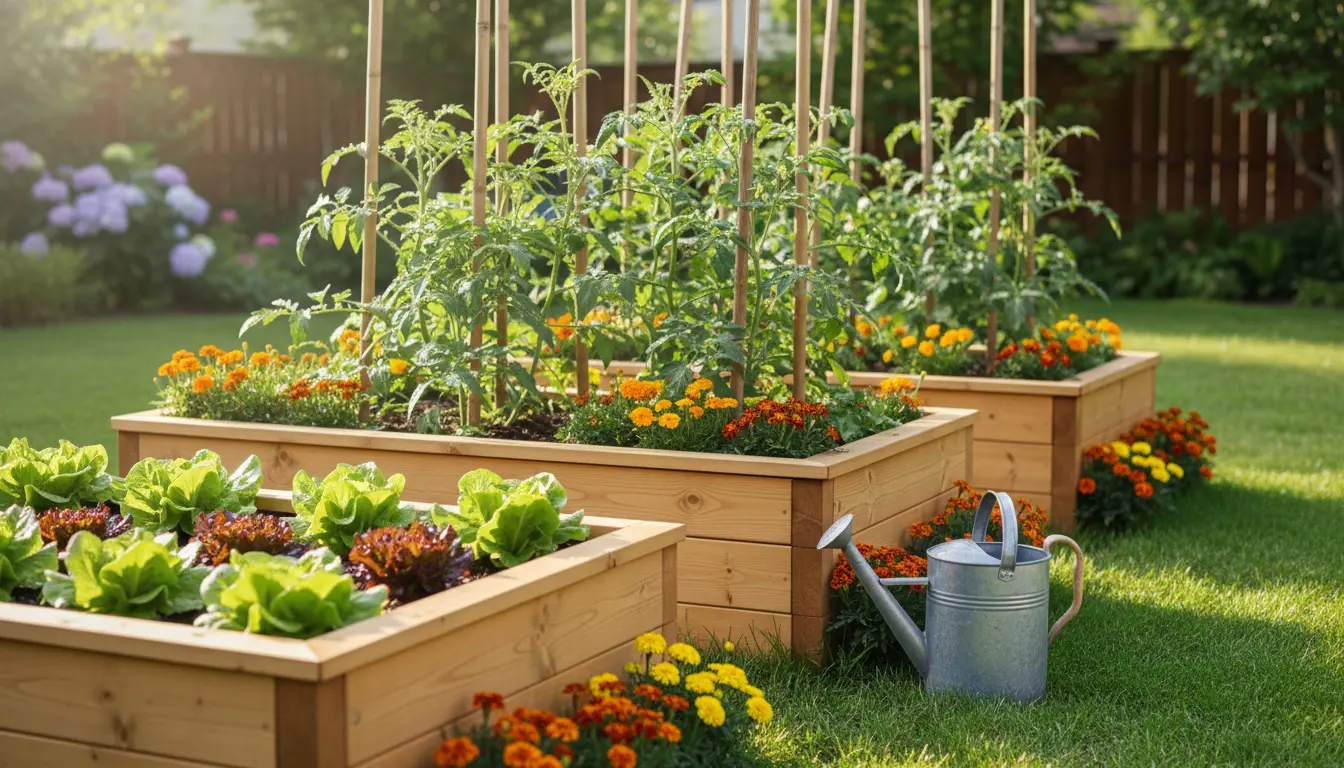
Getting Ready: Why Start a Vegetable Garden
Starting a vegetable garden gives you fresh produce, saves money, and connects you to the seasons. This guide explains how to start a vegetable garden step by step using simple, practical instructions.
Step 1: Choose a Site for Your Vegetable Garden
Location matters. Pick a spot that gets at least six hours of direct sunlight daily and is close to a water source.
Consider drainage and access. Avoid low spots that collect water and places that are hard to reach for regular care.
Key site checklist
- 6+ hours of sun for most vegetables
- Good drainage and level ground
- Easy water access within 25 feet
- Protected from strong wind or shade from buildings
Step 2: Decide Garden Type and Size
Choose between in-ground beds, raised beds, or containers. Beginners often prefer raised beds for better soil control and easier weeding.
Start small to learn faster. A 4×8 foot bed is an ideal first plot for a family of two to three.
Common layouts
- Single raised bed (4×8 ft) — manageable and productive
- Container clusters — good for patios and balconies
- In-ground rows — better for large yards, more work
Step 3: Prepare the Soil
Soil quality determines plant health. Good garden soil is loose, drains well, and is rich in organic matter.
Test your soil or use a basic home test kit to check pH and nutrient levels. Most vegetables prefer a pH of 6.0–7.0.
Soil improvement steps
- Remove grass and weeds. Use a spade or sheet mulching if preferred.
- Add 2–4 inches of compost and mix into the top 6–8 inches of soil.
- Adjust pH if needed with lime (raise) or sulfur (lower).
- Consider a soil test lab for specific fertilizer recommendations.
Step 4: Choose Plants and Plan a Planting Calendar
Pick vegetables that match your climate and season. Start with easy crops like lettuce, radishes, cherry tomatoes, and bush beans.
Use a simple planting calendar keyed to your last frost date. Plant cool-season crops before frost and warm-season crops after it.
Beginner plant suggestions
- Cool-season: lettuce, spinach, peas, radishes
- Warm-season: tomatoes, peppers, cucumbers, squash
- Herbs: basil, parsley, chives
Step 5: Planting Techniques
Follow seed packet instructions for depth and spacing. Overcrowding reduces yields and increases disease risk.
Stagger plantings for continuous harvest. For lettuce, plant small amounts every 2–3 weeks.
Basic planting tips
- Direct sow root crops and salad greens where they will grow.
- Start tomatoes and peppers from transplants after the last frost.
- Water new seeds and transplants gently to avoid displacement.
Step 6: Watering and Mulching
Consistent moisture is crucial. Aim for 1–1.5 inches of water per week, delivered deeply rather than frequently.
Mulch with straw, shredded leaves, or wood chips to retain moisture and suppress weeds. Maintain a 2–3 inch mulch layer, keeping it away from plant stems.
Step 7: Basic Maintenance and Pest Control
Monitor plants weekly for pests and disease. Hand-pick larger pests and use non-toxic options like insecticidal soap for minor outbreaks.
Practice crop rotation to reduce soil-borne diseases. Clean up dead foliage at season end to prevent overwintering pests.
Simple integrated pest strategies
- Encourage beneficial insects with diverse plantings
- Use row covers early in the season to block pests
- Pull weeds promptly to reduce habitat for pests
Small Case Study: A First-Year Raised Bed
Maria started one 4×8 raised bed in spring. She planted lettuce, bush beans, three tomato plants, and a row of carrots.
By midsummer she harvested regular lettuce, several pounds of green beans, and tomatoes enough for weekly salads. Her upfront investment was under $150, mainly for lumber, soil, and compost.
Harvesting and Season Extension
Harvest vegetables when ripe for best flavor and to encourage more production. Pick regularly—many plants produce more if harvested often.
Extend the season with row covers, cold frames, or by planting late-season crops like kale and chard that tolerate light frost.
Many common vegetables need only 6 hours of sunlight to produce well. Leafy greens and root crops are often more shade-tolerant than fruiting vegetables.
Quick Troubleshooting and Tips
If seedlings are yellowing, check for overwatering and nutrient deficiency. If flowers drop on tomatoes or peppers, they may need more consistent watering and warmth.
Keep a garden journal with planting dates, varieties, and notes. Small records help you improve each season.
Final Checklist Before You Start
- Confirm a sunny, well-drained site
- Decide on bed type and size
- Improve soil with compost and test pH
- Choose easy beginner crops and set a planting schedule
- Plan consistent watering and mulching
Following these steps will help you start a vegetable garden with confidence. Begin small, observe closely, and adjust as you learn—the rewards of homegrown produce increase quickly with a little practice.