
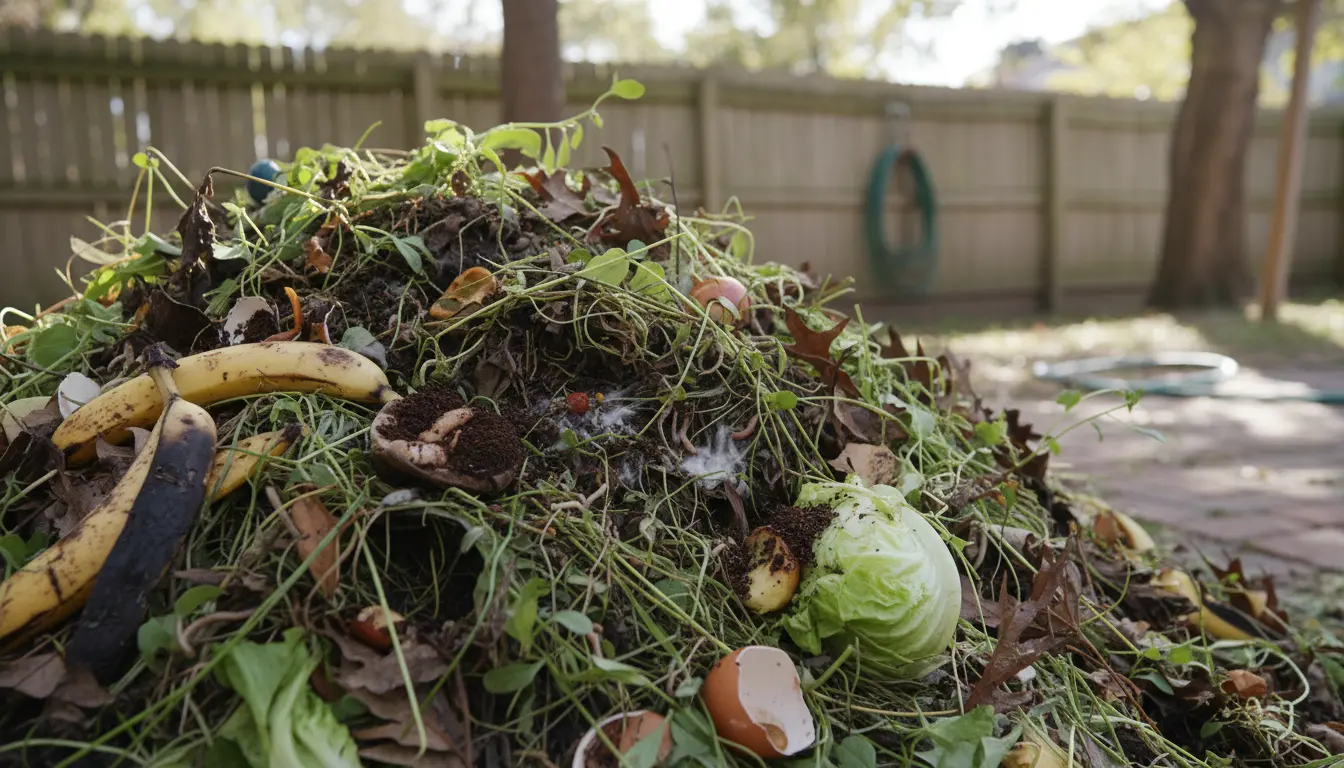
Composting turns kitchen scraps and yard waste into nutrient-rich soil you can use in containers, beds, or lawn patches. This guide gives clear, practical steps to start composting at home and keep it odor-free and efficient.
Home Composting for Beginners: Why Start Composting
Composting reduces household waste, lowers methane from landfills, and improves soil structure. It also saves money on fertilizers and boosts plant health naturally.
For beginners, composting is accessible with basic tools and simple routines. You don’t need a large yard or specialized gear to get started.
How to Start Home Composting: Step-by-Step
Follow these steps to set up a reliable home composting system. Each step keeps the process simple and predictable for new composters.
1. Choose a Location and Container
Select a level, well-drained spot, ideally near the kitchen or a garden bed. Good airflow and modest shade help maintain moisture and temperature.
Container options:
- Open pile: Best for yards with space and frequent turning.
- Compost bin: Enclosed, tidy, and helps retain heat and moisture.
- Tumbler: Easier to turn, faster results, suitable for small spaces.
2. Balance Greens and Browns
Compost needs carbon-rich materials (browns) and nitrogen-rich materials (greens). Balance them for active decomposition.
- Greens: Vegetable scraps, coffee grounds, grass clippings.
- Browns: Dry leaves, shredded paper, cardboard, wood chips.
A good starting ratio is about 3 parts browns to 1 part greens by volume. Adjust based on smell and moisture.
3. Layering and Adding Materials
Start with a base of coarse browns to promote airflow. Add alternating layers of greens and browns, chopping large pieces to speed breakdown.
Tips:
- Cover fresh greens with a layer of browns to reduce flies and odors.
- Keep pieces small; kitchen scraps can be chopped or blended.
4. Maintain Moisture and Aeration
Compost should feel like a wrung-out sponge. Add water during dry spells or more browns if it’s too wet.
Turn the pile every 1–2 weeks to introduce oxygen and distribute heat. Tumblers make this easier, but a pitchfork works well for open piles.
5. When Is Compost Ready?
Finished compost is dark, crumbly, and earthy-smelling. Depending on method and materials, it can take 2 months to a year.
Use finished compost as a soil amendment, top dressing, or potting mix component. Sift out larger, unfinished pieces for the next batch.
Troubleshooting for Home Composting for Beginners
New composters often face a few common issues. Simple fixes usually restore balance quickly.
- Bad smell: Add more browns and turn the pile to add oxygen.
- Too dry: Add water and some greens, then mix.
- Slow decomposition: Chop materials smaller and increase green content slightly.
- Pests: Avoid meat, dairy, and oily foods; cover food scraps and secure bins.
Food scraps and yard waste make up about 28% of household trash in many countries. Composting can divert much of this from landfills and return nutrients to the soil.
Small Real-World Example
Case study: A family of four in a small suburban home started a 200-liter compost bin. They collected kitchen scraps and yard trimmings for six months and followed a simple routine: layer, moisten, and turn every two weeks.
Result: They reduced their weekly trash by roughly 30% and produced about 80 liters of finished compost in six months. Their vegetable containers showed better growth and needed 40% less purchased fertilizer.
Tools, Materials, and Quick Checklist
Basic tools speed the process but are not required. Start simple and upgrade if needed.
- Compost bin or tumbler (or a designated pile)
- Pitchfork or turning tool
- Kitchen scrap pail with a lid
- Shredder or scissors for browns (optional)
- Water source (hose or watering can)
Quick Starter Checklist
- Pick a container and location
- Collect greens and browns
- Layer and moisten
- Turn every 1–2 weeks
- Use finished compost in pots and beds
Benefits of Home Composting for Beginners
Even small-scale composting offers measurable benefits. It reduces waste, improves soil, and supports healthier plants.
- Lower household waste volumes
- Fewer store-bought fertilizers and soil conditioners
- Improved soil water retention and structure
- Support for local soil biology and plant health
Starting composting is a practical step anyone can take to reduce waste and grow healthier plants. Use this guide to set up a simple system, adjust based on observations, and enjoy the rewards of richer soil and lower trash output.