
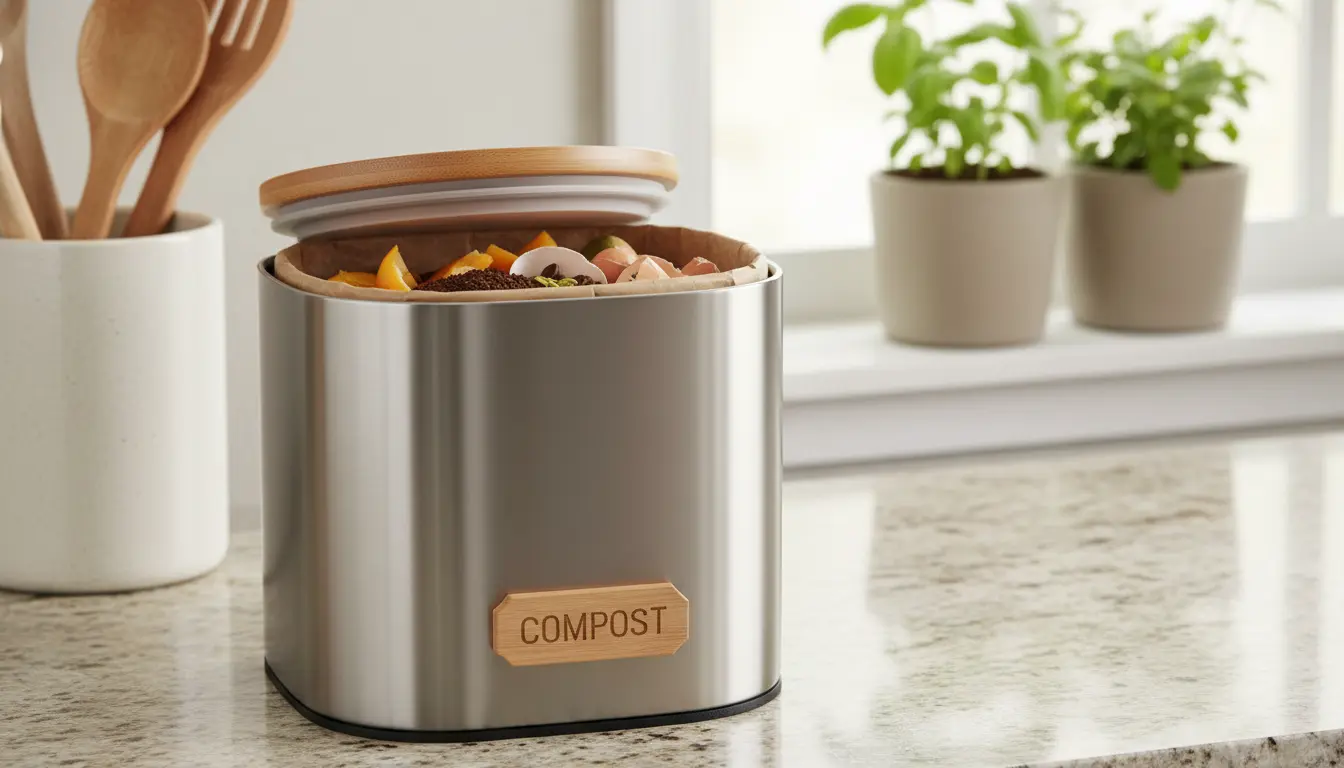
Composting at home reduces waste and creates rich soil for gardens and potted plants. This guide gives clear steps, tool choices, and troubleshooting advice for new composters.
Why Home Composting for Beginners Matters
Home composting turns kitchen and yard waste into a useful resource. It lowers household trash volume and supports healthier soil without synthetic inputs.
For beginners, small, manageable systems are easiest to maintain and learn from. You can scale up once you understand basic balance and airflow.
Choosing a System for Home Composting for Beginners
Choose a system that fits your space, time, and waste stream. Options range from simple piles to enclosed bins and bokashi setups for apartments.
Home Composting for Beginners: Common Bin Types
- Open compost pile — Best for yards with lots of yard waste and space. Low cost, needs turning.
- Closed tumblers — Enclosed, turnable units that speed decomposition and control pests.
- Bokashi — Fermentation system for food scraps including meat and dairy; ideal for apartments when combined with a small outdoor composting step.
- Vermicompost — Worm bins that produce nutrient-rich castings quickly; good for indoor spaces and small quantities.
What to Compost: Basic Rules
Compost needs a mix of carbon-rich “browns” and nitrogen-rich “greens.” Aim for a general ratio of about 3 parts browns to 1 part greens by volume.
- Greens: kitchen scraps, fresh grass clippings, vegetable peelings.
- Browns: dried leaves, shredded paper, cardboard, straw.
- Ashes (small amounts), coffee grounds, and eggshells are acceptable.
Home Composting for Beginners: Materials to Avoid

Avoid adding meat, bones, oily foods, diseased plants, or pet waste to outdoor compost unless you have a hot, well-managed system. These items attract pests and can cause odors.
Step-by-Step Home Composting for Beginners
Follow these steps to get started and maintain a healthy compost pile.
- Pick a location: For outdoor bins choose a shaded, well-drained spot. For indoor systems, place near the kitchen for convenience.
- Set up bin and base: Use a ready-made bin or a simple pallet-bordered area. Provide some coarse material at the base for airflow.
- Layer materials: Start with a layer of browns, add greens, and continue alternating. Chop large pieces to speed up breakdown.
- Maintain moisture: Compost should be as damp as a wrung-out sponge. Add water if it dries out, or add more browns if too wet.
- Turn periodically: Turning mixes oxygen in and speeds decomposition. Aim to turn every 1–2 weeks for faster compost.
- Harvest finished compost: When material is dark, crumbly, and earthy-smelling, it is ready to use in soil or potting mixes.
Troubleshooting Common Problems for Home Composting for Beginners
Many issues have simple fixes. Identify the symptom and apply the recommended adjustment.
- Bad odors: Add dry browns and turn the pile to add oxygen. Too much food waste or wetness causes smells.
- Pests: Use a closed bin or bury food scraps. Avoid meat and oily foods in open systems.
- Slow breakdown: Chop materials, increase green inputs for nitrogen, and increase turning frequency.
- Pile too dry: Add water and green materials; cover to retain moisture.

Home compost can reduce household waste by up to 30 percent and return nutrients to your soil that improve water retention and plant health.
Small Real-World Example: Apartment Compost Success
Case study: Sara, a renter in a third-floor apartment, started with a 10-liter bokashi bin and a small worm bin. She collected kitchen scraps in the bokashi bucket for two weeks, then buried the fermented material in a community garden bed.
Within three months she produced enough compost to refresh two raised beds and noticeably improved tomato yields. Her combined system eliminated most of her kitchen waste and avoided odors through controlled fermentation.
Practical Tips for Home Composting for Beginners
- Start small and build confidence; a small bin is easier to manage and less likely to fail.
- Keep a kitchen caddy for scraps to make daily collection simple and consistent.
- Shred or chop larger items to speed decomposition and reduce turning time.
- Use finished compost as a top dressing, potting mix amendment, or soil conditioner.
- Join local composting groups or community gardens to share tips and excess compost.
Final Checklist Before You Start
- Choose the right system for your space (pile, bin, tumbler, bokashi, or worms).
- Gather browns and a starter supply of greens.
- Locate a convenient spot and prepare a small turning tool or pitchfork.
- Commit to checking moisture and turning regularly for best results.
With simple tools and a little routine, home composting for beginners becomes an easy, rewarding habit. Start with a manageable system, learn from small adjustments, and enjoy the soil benefits that follow.