
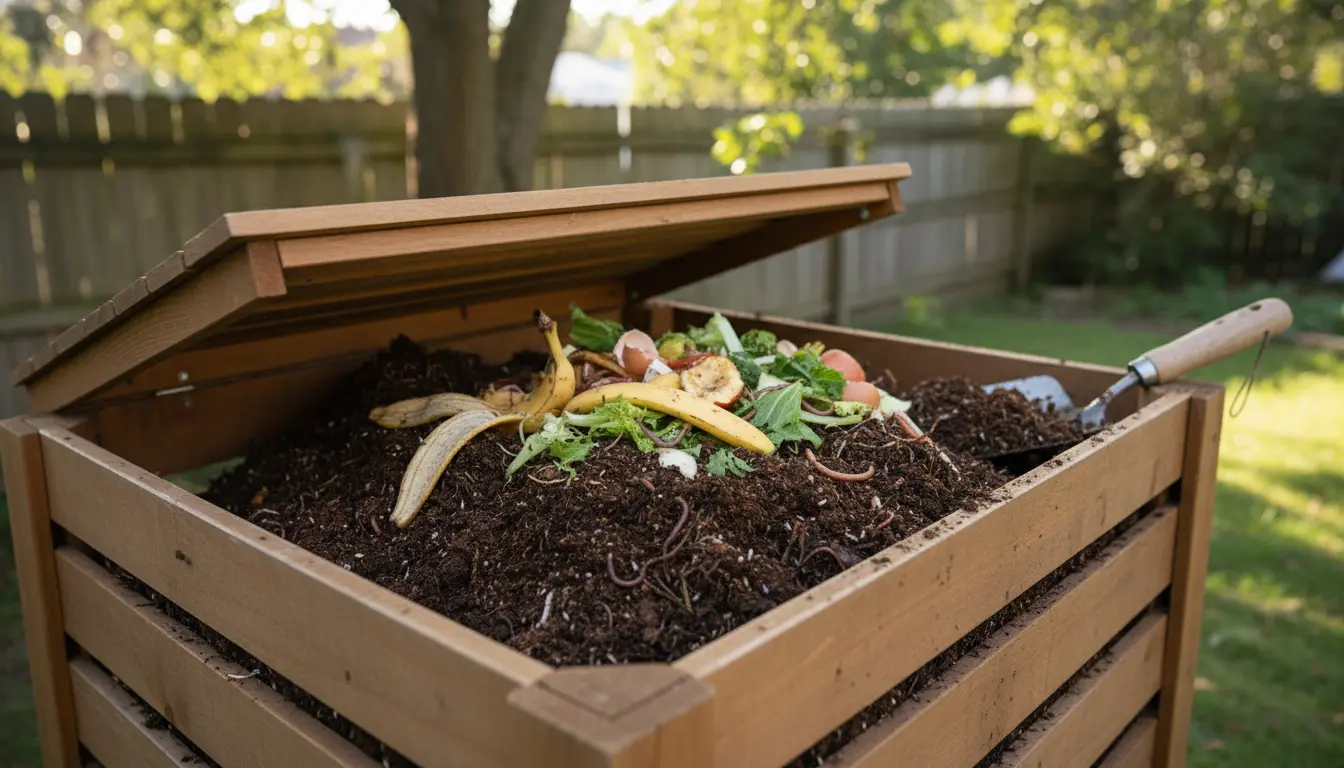
Composting at home turns kitchen scraps and yard waste into a valuable soil amendment. This guide gives clear, practical steps to start and maintain a home composting system for any living situation.
Why Home Composting Matters
Home composting reduces household waste and returns nutrients to soil. It also lowers methane emissions by keeping organic matter out of landfills.
For gardeners, compost improves soil structure, water retention, and plant health. For apartment dwellers, small systems still deliver benefits like reduced trash and indoor gardening nutrients.
Getting Started with Home Composting
Choose a method that fits your space and time. Typical options include outdoor bins, tumblers, and indoor worm bins (vermicomposting).
Decide on one and locate it where it is accessible and convenient. Ease of use increases the chance you will keep composting long term.
What You Can Compost
- Greens (nitrogen): fruit and vegetable scraps, coffee grounds, fresh grass clippings.
- Browns (carbon): dry leaves, shredded paper, cardboard, straw.
- Small amounts of garden trimmings and egg shells are fine after crushing.

Avoid meat, dairy, oily foods, and diseased plants in simple backyard systems to prevent pests and odors.
Balancing Greens and Browns
Maintain a rough mix of two parts browns to one part greens by volume. This balance supports microbial activity and reduces bad smells.
If your pile is too wet or smelly, add more browns and turn the pile. If it is dry and slow to break down, add greens or water lightly.
Simple Composting Setups
Select a setup that meets your time and space constraints. Each option has pros and cons but all can produce usable compost.
Outdoor Bins
Plastic or wooden bins are low-maintenance and keep pests out. They suit yards and larger gardens.
Compost Tumblers
Tumblers speed up decomposition through regular turning. They are cleaner and easier to mix than static piles, but hold less volume.
Vermicomposting (Worm Bins)
Worm bins work well indoors or on balconies. Red wigglers break down kitchen scraps quickly and produce nutrient-rich castings.
Maintaining Your Home Compost
Regular attention ensures steady progress. Use simple practices to keep the process active and odor-free.
- Turn or tumble the compost every 1–2 weeks to add oxygen.
- Monitor moisture: compost should be as damp as a wrung-out sponge.
- Chop large items to speed decomposition.
- Cover fresh food scraps with browns to deter pests and flies.
Troubleshooting Common Issues
If the compost smells rotten, add more browns and aerate the pile. If it is dry and slow, add water and greens.
Fruit flies around a small indoor bin can be reduced by burying scraps, using a tight lid, or adding a layer of finished compost or shredded newspaper.
About 30% of household garbage is compostable organic waste. Composting at home can cut that fraction and create a free, natural fertilizer.
How to Know When Compost Is Ready
Finished compost is dark brown, crumbly, and earthy-smelling. Most backyard systems take 2–12 months depending on methods and conditions.
Screen or sift the compost to remove larger undecomposed pieces and return them to the bin to finish breaking down.
How to Use Finished Compost
Incorporate compost into garden beds, mix with potting soil for containers, or use as a mulch layer. Use 1–3 inches on top of beds or mix 10–20% compost into potting mixes.
Compost improves long-term soil health and reduces need for synthetic fertilizers.
Small Case Study: Urban Balcony Composting
Maria, an apartment dweller, started a 20-liter worm bin on her balcony. She added coffee grounds and vegetable scraps, buried under shredded cardboard each time.
Within four months she harvested a liter of worm castings and used it to repot herbs. Her monthly trash volume dropped noticeably and her plants grew stronger.
Practical Tips and Examples
- Example: Mix a bucket of shredded leaves with half a bucket of vegetable scraps for a balanced bin.
- Tip: Keep a compost caddy on the counter to collect scraps and prevent odors.
- Example: For a backyard pile, chop branches and twigs or use them for the base to improve airflow.
Home composting is adaptable to different lifestyles and spaces. Start small, learn by doing, and adjust the mix and system to fit your needs. Over time, you’ll reduce waste and produce a valuable resource for plants.