
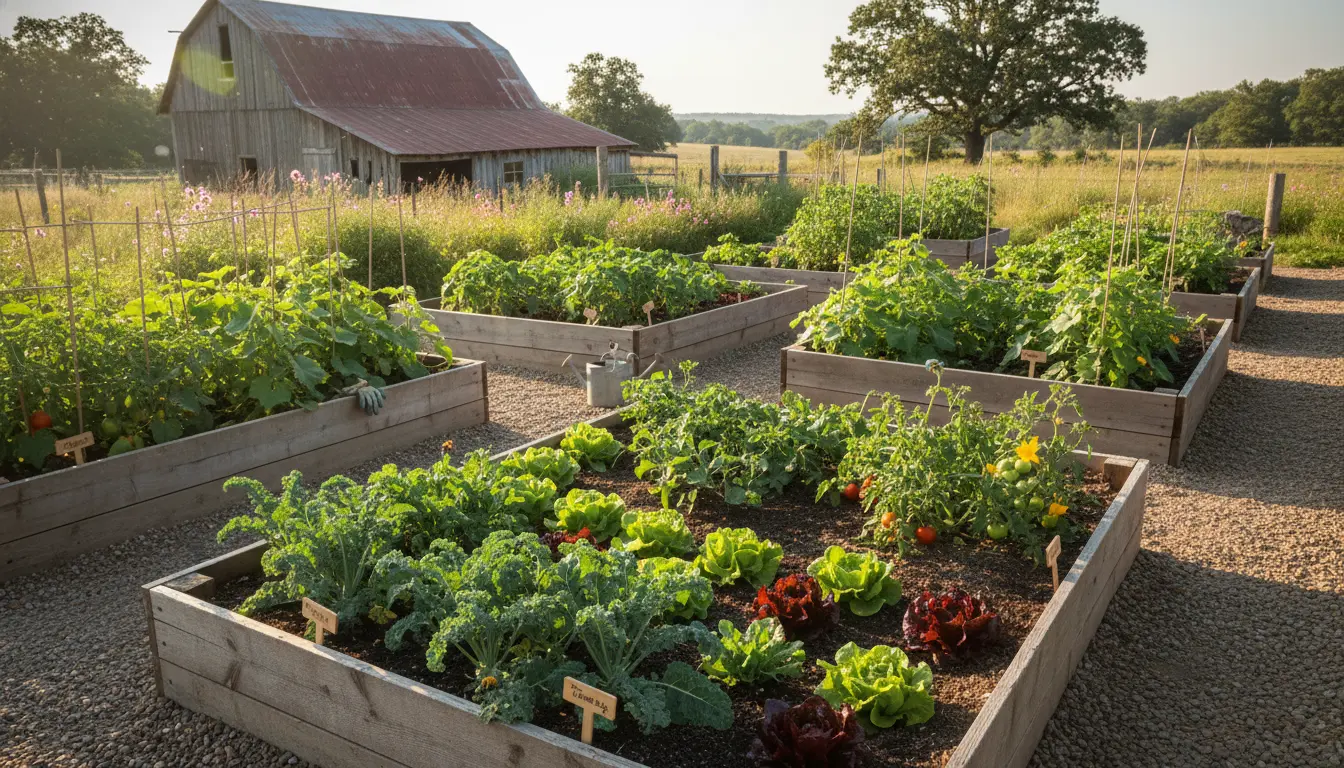
What Is a Raised Bed Vegetable Garden?
A raised bed vegetable garden is a planting area built above ground level, enclosed by a frame or barrier. It uses a contained soil mix for better drainage, warmer soil, and easier access for planting and harvest.
Benefits of a Raised Bed Garden
Raised beds concentrate resources and reduce soil compaction. They can extend the growing season and improve yields in small yards.
Common advantages include better soil control, improved drainage, easier weed management, and accessibility for gardeners with limited mobility.
Planning Your Raised Bed Vegetable Garden
Good planning prevents common mistakes. Start by choosing the right location: a sunny spot with at least 6–8 hours of direct sun for most vegetables.
Decide bed size and orientation. Popular dimensions are 4 feet wide (so you can reach the center from either side) and 8 feet long. Keep paths wide enough for a wheelbarrow.
Materials and Frame Options
Common frame materials include cedar, composite lumber, concrete blocks, and galvanized metal. Choose rot-resistant wood or inert materials to avoid soil contamination.
- Cedar or redwood: natural rot resistance
- Composite lumber: long lasting, higher initial cost
- Concrete blocks: modular and durable
- Metal: modern look, can heat up in hot climates
How to Build a Raised Bed Vegetable Garden
Follow these steps to build a basic bed. This method works for soil-level and on-surface installations.
Step 1: Mark and Prepare the Site
Outline the bed with stakes and string. Remove grass or loosen the sod where the bed will sit. For paths, lay down landscape fabric or wood chips.
Step 2: Construct the Frame
Cut lumber to size and assemble with exterior-grade screws. For an 8×4 bed, use 2×6 or 2×8 boards to get 8–12 inches of soil depth. Taller beds (12–24 inches) are better for root crops.
Step 3: Add a Base Layer (Optional)
If drainage is a concern, add a thin layer of coarse gravel. Otherwise, loosen the soil beneath the bed to improve root penetration.
Step 4: Fill With a Balanced Soil Mix
A simple, effective mix is 50% topsoil or screened garden soil, 30% compost, and 20% aeration material like coconut coir or coarse composted bark. This balances nutrients, water retention, and aeration.
- Topsoil: provides bulk and minerals
- Compost: supplies nutrients and microbes
- Coir or bark: prevents compaction and improves drainage
Planting and Crop Layout in a Raised Bed Vegetable Garden
Plan for succession planting to maximize yield. Use square-foot gardening or row spacing based on crop size.
Plant tall crops on the north side to avoid shading shorter plants. Group plants with similar water needs together.
Companion and Succession Planting
Companion planting can reduce pests and improve growth. Examples include tomatoes with basil and carrots with onions.
Succession planting means replacing a harvested crop with a new one immediately—for example, sowing lettuce after early peas finish.
Watering, Feeding, and Maintenance
Raised beds dry faster, so check moisture regularly. Aim for consistent soil moisture rather than letting the soil dry out completely.
- Use soaker hoses or drip irrigation for efficient watering.
- Mulch with straw or shredded leaves to conserve moisture and suppress weeds.
- Top-dress with compost mid-season to replenish nutrients.
Pest and Disease Management
Raised beds reduce some pest problems but don’t eliminate them. Use row covers for young seedlings and hand-pick pests when possible.
Rotate crops each season and remove diseased plant material promptly to reduce disease buildup in the soil.
Case Study: Backyard Raised Bed Success
In Portland, OR, a homeowner built four 4×8 cedar beds and filled them with a mix of screened topsoil, compost, and coir. They planted tomatoes, lettuce, carrots, and bush beans.
Within the first season they reported earlier tomato fruits and higher lettuce yields than previous in-ground beds. Key factors were improved drainage, consistent watering with drip lines, and summer mulch to retain moisture.
Common Mistakes to Avoid
- Using untreated wood tied directly to soil without a barrier in wet climates—choose rot-resistant materials.
- Filling beds with only topsoil—this compacts and drains poorly.
- Overcrowding plants—follow spacing guides for each crop.
Quick Checklist to Start Your Raised Bed Vegetable Garden
- Pick a sunny location with good access.
- Choose bed size (4×8 recommended) and material.
- Prepare the base and assemble the frame.
- Fill with a balanced soil mix and plant according to spacing guidelines.
- Install drip irrigation or soaker hoses and mulch.
- Rotate crops and replenish compost yearly.
Follow these practical steps and your raised bed vegetable garden will be productive and easier to manage than many traditional garden plots. Start small, observe, and adjust soil and watering as your first season progresses.