
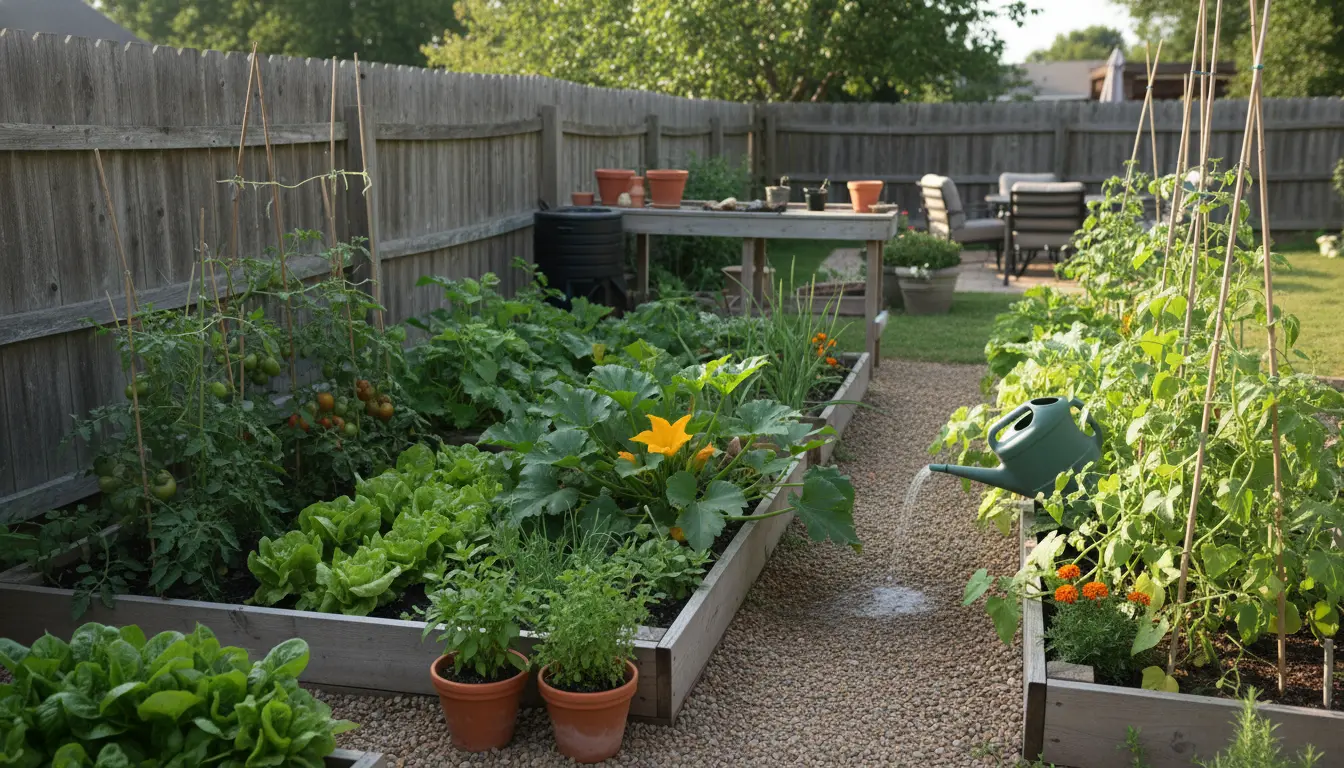
Starting a small vegetable garden is an achievable project for any homeowner or renter with outdoor space or a sunny balcony. This guide gives clear, practical steps so you can plan, plant, and maintain a productive small garden.
How to Start a Small Vegetable Garden: Plan Your Space
Choose a location with at least 6 hours of sunlight per day for most vegetables. If you lack ground space, consider containers or raised beds on a balcony or patio.
Sketch a simple layout showing bed placement, paths, and access to water. Small gardens benefit from compact, intensive planting to maximize yields.
Size and Type When You Start a Small Vegetable Garden
Start modestly: a 4×8 foot raised bed or a few large containers is enough for beginners. Choose between in-ground beds, raised beds, and containers based on soil quality and mobility needs.
- Raised beds: better drainage and soil control.
- Containers: flexible for renters and patios.
- In-ground: larger potential area but needs soil improvement.
Soil and Nutrients for a Small Vegetable Garden
Good soil is the foundation. Test your soil or assume it needs organic matter added if you haven’t gardened before.
Mix compost and quality topsoil in raised beds or add 2–3 inches of compost to in-ground beds each season.
Soil Mix Example
For raised beds, aim for a mix of about 40% topsoil, 40% compost, and 20% aeration material (coarse sand or coconut coir). This creates a loamy, well-draining medium ideal for vegetables.
Choose Vegetables for a Small Garden
Pick vegetables that match your climate, available sunlight, and how much time you can commit. Start with easy, high-yield crops.
- Fast and forgiving: lettuce, radishes, spinach.
- High yield: tomatoes, peppers, bush beans.
- Space-savvy: vertical peas, pole beans, cucumbers on trellises.
Succession Planting in a Small Vegetable Garden
Use succession planting to get continuous harvests. Plant a new set of fast crops every 2–3 weeks in empty spots to avoid gaps in production.
Planting and Spacing Tips
Follow seed packet or plant tag spacing recommendations but feel free to slightly tighten rows in a small garden. Leave enough room for air flow to reduce disease.
Group plants with similar water needs together to make irrigation easier and reduce stress.
Companion Planting Examples
- Tomatoes with basil and marigolds to deter pests.
- Carrots planted near onions to reduce carrot flies.
Watering and Maintenance
Set up a simple watering routine. Early morning watering is best to reduce evaporation and disease risk. Aim for consistent moisture rather than shallow daily watering.
Mulch around plants to conserve moisture, suppress weeds, and moderate soil temperature. Use straw, shredded leaves, or bark chips.
Pest and Disease Management
Monitor plants weekly for pests and signs of disease. Remove affected leaves promptly and use physical barriers like row covers for delicate seedlings.
Encourage beneficial insects by planting small flowers or herbs near your vegetables.
Harvesting from a Small Vegetable Garden
Harvest frequently to encourage continued production, especially with leafy greens and beans. Pick tomatoes when they have full color but still firm for best flavor.
Record what you harvest and when. This helps plan next season and improves yields year over year.
Many common vegetables can be grown in pots: cherry tomatoes, lettuce, spinach, peppers, and even small varieties of carrots and beets thrive in containers with good soil and care.
Tools and Supplies for a Small Vegetable Garden
Keep basic tools on hand: a hand trowel, pruning shears, gloves, a watering can or hose with a gentle nozzle, and a soil thermometer if you like precise timing.
- Essential: trowel, gloves, watering can.
- Nice to have: raised bed materials, compost, trellis panels.
Simple Seasonal Calendar
Plan by season: prepare beds and soil in spring, plant main crops after last frost, maintain through summer, and sow cool-season crops for fall harvests.
In colder zones, start seeds indoors 6–8 weeks before last frost to get a head start.
Case Study: Small Garden, Big Returns
Sarah, a city apartment renter, started a 4×8 raised bed on her small balcony. She filled it with a compost-rich mix and planted tomatoes, bush beans, lettuce, and basil.
In the first season she harvested enough salad greens for two people through summer and 30+ pounds of cherry tomatoes. Her small, consistent efforts reduced her grocery lettuce purchases and provided fresh herbs.
Key takeaways: choose compact varieties, use vertical supports for tomatoes, and water consistently.
Final Checklist to Start a Small Vegetable Garden
- Pick a sunny location or containers with 6+ hours sun.
- Decide bed type: raised bed, in-ground, or containers.
- Prepare or buy good soil with ample compost.
- Select easy, high-yield vegetables suited to your climate.
- Set up watering, mulch, and simple pest controls.
- Plan for succession planting and record harvests.
Starting a small vegetable garden is mostly about consistent, simple care and realistic expectations. Begin small, learn from each season, and expand as your confidence and needs grow.