
Home Composting for Beginners: Getting Started
Composting at home turns kitchen scraps and yard waste into valuable soil. This guide explains simple, practical steps to start home composting for beginners and maintain a healthy pile.
Why compost at home?
Compost reduces landfill waste, improves garden soil, and saves money on fertilizers. For many beginners it is an easy way to close the loop on organic waste and support plant health.
Choose a Compost System for Home Composting for Beginners
Select a system that fits your space and time. Common options include a tumbler, a stationary bin, or a simple open pile.
- Tumbler: Good for small yards and faster turning.
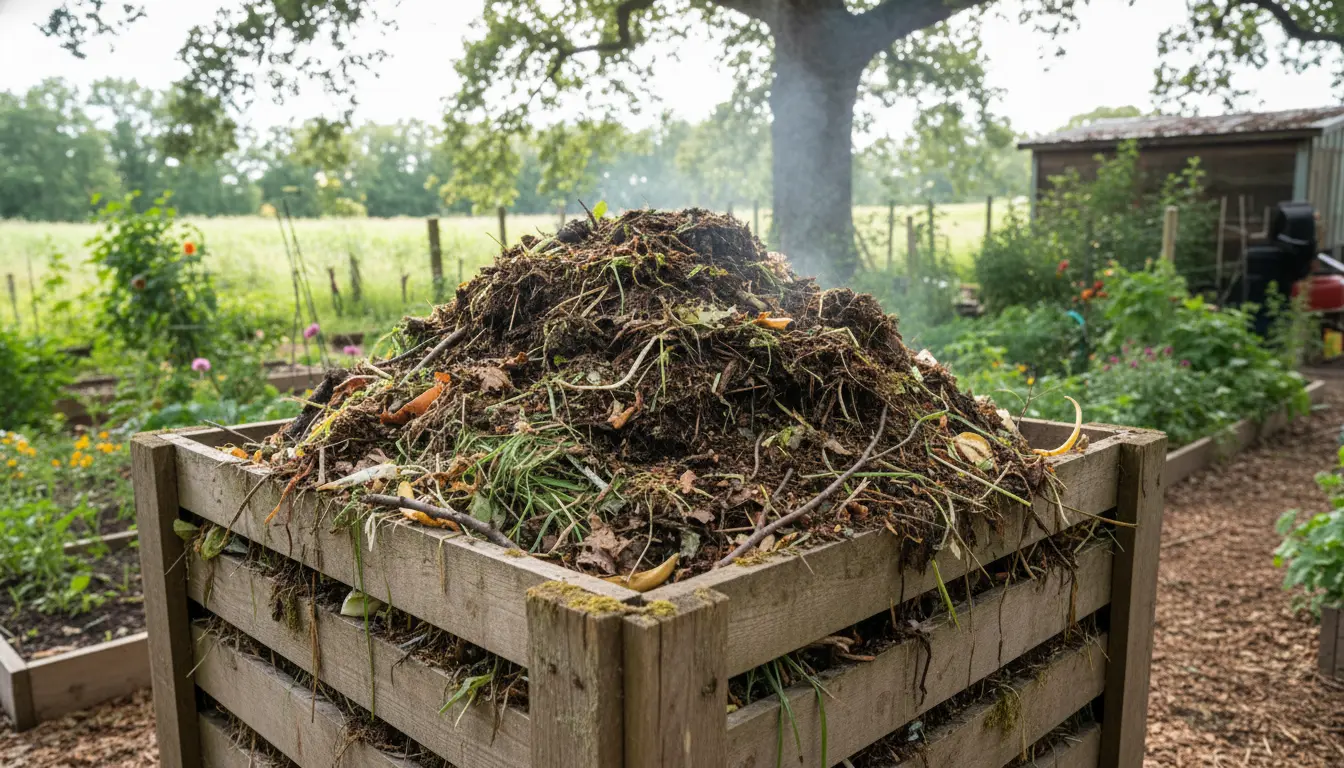
- Stationary bin: Low maintenance, blends well with gardens.
- Open pile: Cheapest, works if you have space and don’t mind the look.
Placement and size
Place the bin in partial sun with good drainage. A 3×3 foot volume is ideal for steady heat and decomposition. Smaller piles may take longer to break down.
Materials and Balance for Home Composting for Beginners
Compost needs a balance of carbon-rich “browns” and nitrogen-rich “greens.” Keep the pile mixed so microbes can work effectively.
- Greens (nitrogen): vegetable scraps, fruit peels, coffee grounds, fresh grass clippings.
- Browns (carbon): dry leaves, shredded cardboard, straw, paper towels.
Aiming for roughly 2–3 parts browns to 1 part greens helps avoid odors and keeps the pile active.
What not to compost
Avoid meat, dairy, oily foods, diseased plants, and pet waste unless you have a hot compost system designed to handle them. These items attract pests and slow the process.
Build and Maintain Your Compost
Layer materials and keep the pile moist like a wrung-out sponge. Too dry and decomposition slows; too wet and it smells.
Turning and aeration
Turn the pile every 1–2 weeks for faster composting. For tumblers, rotate as instructed. For stationary bins, use a pitchfork to mix the interior.
Monitoring temperature
An active compost pile reaches 120–150°F (50–66°C). This kills weed seeds and speeds decomposition. For beginners, watching heat for the first few weeks is a good indicator the process is working.
Troubleshooting Common Issues in Home Composting for Beginners
Problems are usually easy to fix once you know the cause. Here are common issues and remedies.
- Smelly compost: Add more browns and turn the pile to add air.
- Pests: Bury food scraps with brown material and avoid meat/dairy.
- Slow decomposition: Chop materials finer, adjust moisture, and increase turning.
- Pile too dry: Add water slowly and mix to distribute moisture.
Using Finished Compost
Finished compost is dark, crumbly, and smells earthy. It usually takes 3–12 months depending on conditions.
- Use as a soil amendment: mix 1–3 inches into garden beds.
- Make potting mixes: combine compost with coarse sand or perlite.
- Top-dress lawns: spread a thin layer and let it work into the soil.
Practical Tips for Home Composting for Beginners
Small changes make composting easier and more reliable. Start simple and improve your system over time.
- Keep a countertop compost container with a tight lid to collect scraps.
- Chop or shred larger items to speed breakdown.
- Use a compost thermometer for best results, but it is optional.
- Rotate between two bins if you want continuous finished compost.
Composting reduces methane emissions from landfills while producing nutrient-rich soil that can improve carbon storage in your garden.
Real-World Example: A Small Urban Case Study
Maria, a renter with a small balcony, started composting in a 20-gallon tumbler. She collected kitchen scraps and mixed them with shredded paper and dry leaves.
Within four months she had enough compost to top-dress her container tomatoes, which produced larger fruit and healthier foliage. She also cut her household waste by nearly 30%.
Simple Checklist to Start Home Composting for Beginners
- Choose a bin type (tumbler, stationary, open pile).
- Gather browns and greens and aim for a 2–3:1 browns to greens ratio.
- Keep pile moist and turn it every 1–2 weeks.
- Monitor for odors and pests; adjust materials if needed.
- Use finished compost to enrich soil after 3–12 months.
Final Notes on Home Composting for Beginners
Composting is practical, low-cost, and adaptable to many living situations. Start with small, manageable steps and refine your approach as you learn.
With basic care—balancing materials, maintaining moisture, and turning—any beginner can produce healthy compost and reduce household waste.