
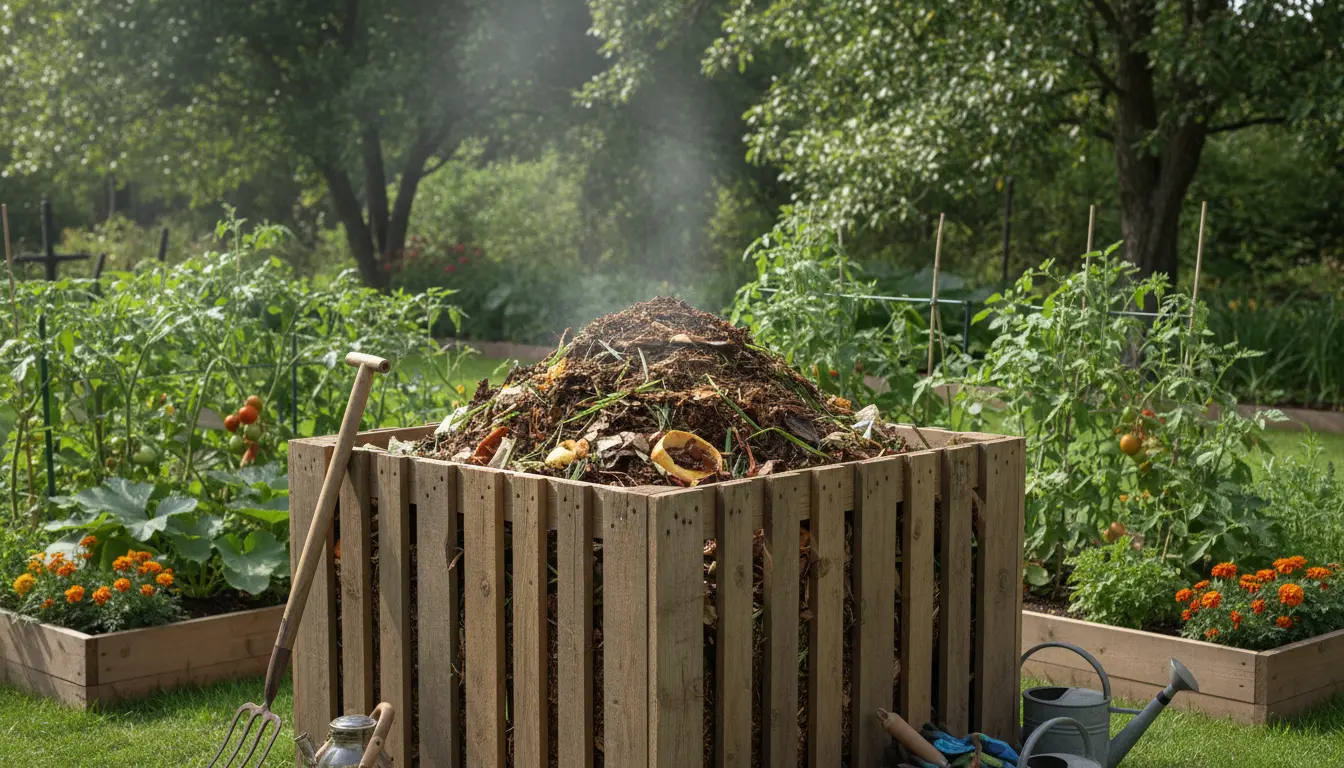
Why Home Composting Matters
Home composting turns kitchen and garden waste into a useful soil amendment. It reduces household trash, saves money on fertilizers, and improves soil health for plants.
Composting is suitable for many living situations, from suburban yards to small urban balconies. With basic tools and regular care, anyone can make nutrient-rich compost.
How to Start Home Composting
Starting home composting is a practical process that follows a few clear steps. Follow this guide to pick the right system, gather materials, and maintain the pile for steady decomposition.
Choose a Compost System for Home Composting
Select a system that fits your space and daily routine. Common options include open piles, tumblers, and stationary bins.
- Open pile: Low cost, needs space and occasional turning.
- Compost bin: Contains material and looks tidy; choose a wire or plastic bin.
- Tumbler: Easy to turn, faster decomposition, good for small yards.
- Indoor options: Bokashi or worm bins for apartments and balconies.
Materials to Compost
Balance ‘green’ nitrogen-rich materials and ‘brown’ carbon-rich materials. A roughly 2:1 brown-to-green volume ratio works well for many home systems.
- Green: fruit and vegetable scraps, coffee grounds, fresh grass clippings.
- Brown: dried leaves, shredded paper, straw, cardboard pieces.
- Avoid: meat, dairy, oily foods, diseased plants, and pet waste from carnivores.
Basic Home Composting Steps
Follow these simple steps to keep your compost active and odor-free.
- Layer materials: Start with coarse browns at the bottom for airflow, then add alternating green and brown layers.
- Moisture: Keep the pile as damp as a wrung-out sponge. Add water or dry materials to correct wetness.
- Turn: Every 1–2 weeks for faster composting, or less often if using a slow pile.
- Monitor: Check temperature and smell. A hot pile (120–160°F) breaks down faster; a bad odor signals too much wet green material or poor aeration.
- Harvest: Finished compost is dark, crumbly, and earthy-smelling. Use it in soil mixes, pots, or as a top dressing for beds.
Composting can reduce household waste volume by up to 30 percent and cut methane emissions from landfills when done at home.
Troubleshooting Home Composting
Common issues are easy to fix once you know what to look for. Troubleshooting keeps composting from becoming a chore.
Bad Odors
Foul smells mean anaerobic conditions. Add dry browns and turn the pile to reintroduce air. Reduce fresh food scraps until balance returns.
Slow Decomposition
If materials are not breaking down, try increasing surface area by shredding or chopping. Ensure adequate moisture and a mix of greens and browns.
Pests
To deter rodents and flies, bury food scraps within the pile, use a closed bin, or add a layer of brown material after each food addition. Avoid meat and oily foods entirely.
Small Real-World Example: Urban Apartment Composting
Maria lives in a third-floor apartment and wanted to reduce waste and improve her balcony plants. She chose a worm (vermicompost) bin because it fits small spaces and handles kitchen scraps silently.
She started with shredded cardboard, added a handful of garden soil, and introduced red worms. Maria fed the system small vegetable peelings and coffee grounds. Within three months, she harvested dark, rich worm castings and used them in half of her balcony pots.
Results: Maria cut kitchen trash by nearly half and saw quicker growth in her tomato and herb plants. The system required 15 minutes of weekly care and fit neatly on her balcony shelf.
Practical Tips for Successful Home Composting
- Keep a small counter container with a tight lid for daily scraps to reduce trips outside.
- Shred larger items like cardboard or tough stems to speed decomposition.
- Record what you add and how often you turn the pile to learn your system’s rhythm.
- Use finished compost sparingly at first; mix it into potting soil or topdress beds in spring.
Final Checklist for New Home Composters
- Choose the right compost system for your space and lifestyle.
- Collect a mix of greens and browns and avoid banned items.
- Keep moisture balanced and turn regularly for aeration.
- Monitor temperature, smell, and progress; adjust as needed.
Home composting is a low-cost, high-impact way to reduce waste and build healthy soil. Start small, learn your system, and expand as you become more comfortable with the process.