
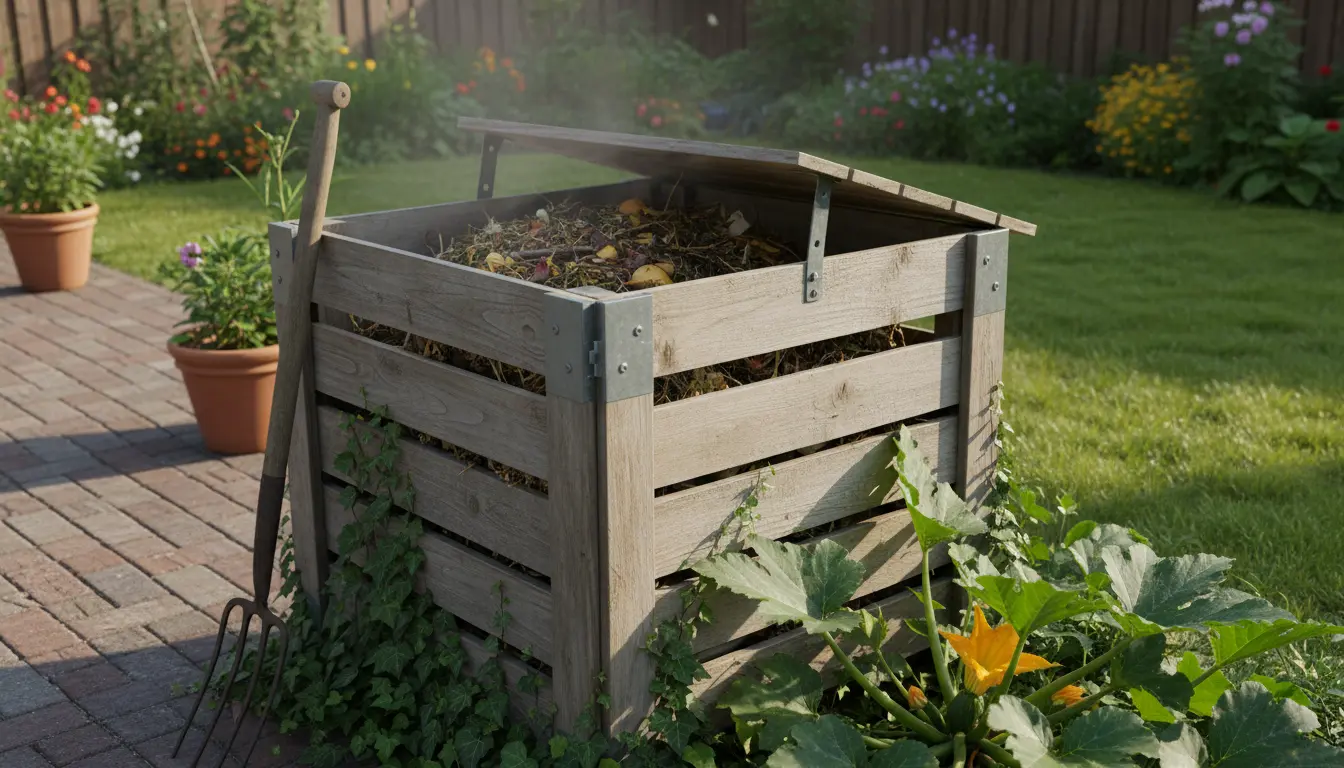
Composting at home reduces kitchen waste and creates rich soil for gardens. This guide shows practical steps to start a home compost bin, choose the right container, and maintain healthy compost.
Why Start a Home Compost Bin?
A home compost bin keeps organic waste out of landfills and returns nutrients to the soil. It lowers trash volume and supports healthier plants without chemical fertilizers.
Compost can be used in containers, raised beds, and lawns. Even small bins provide benefits for apartment balconies or small yards.
Choosing the Right Home Compost Bin
Select a bin based on space, maintenance time, and composting speed. The right home compost bin improves airflow, retains heat, and keeps pests away.
Common Types of Home Compost Bins
- Tumbler: Fast turning and enclosed to deter pests; good for small yards.
- Stationary plastic or wooden bin: Simple and inexpensive, suitable for larger piles and gardens.
- Worm (vermicompost) bin: Ideal for apartments; uses worms to break down kitchen scraps.
- Bokashi bucket: Fermentation method for small indoor spaces; requires a soil finish step.
Size and Placement for a Home Compost Bin
Choose a bin at least 3 feet wide and deep for efficient heat retention if possible. For balconies, pick compact worm bins or tumblers under 20 gallons.
Place the home compost bin in partial shade on soil or a stable surface with drainage. Easy access encourages consistent use and turning.
Step-by-Step: How to Start a Home Compost Bin
Follow these clear steps to start a home compost bin and build a working pile quickly. Each step keeps the process simple and repeatable.
-
Gather the right materials.
Collect brown materials (dry leaves, cardboard, paper) and green materials (vegetable scraps, coffee grounds, grass clippings). Balance is key.
-
Layer your pile.
Start with a layer of coarse browns for airflow, then alternate greens and browns. Aim for roughly 3 parts brown to 1 part green by volume.
-
Moisture and aeration.
Keep the compost moist like a wrung-out sponge. Turn or tumble the bin every 1–2 weeks to add oxygen and speed decomposition.
-
Monitor temperature.
Active piles warm to 40–60°C (104–140°F). If it cools, add greens and mix to reheat. Cold piles still compost but more slowly.
-
Harvest finished compost.
When material is dark, crumbly, and earthy-smelling, it is ready. Sift out larger bits and return them to the bin for further breakdown.
What to Add and What to Avoid in Your Home Compost Bin
- Safe greens: fruit and vegetable scraps, coffee grounds, tea leaves, fresh grass clippings.
- Safe browns: dry leaves, straw, shredded cardboard, paper, wood chips.
- Avoid: meat, dairy, oils, diseased plants, pet waste, and large bones to prevent pests and odors.
Maintaining Your Home Compost Bin
Regular maintenance keeps a home compost bin active and odor-free. Simple checks take only a few minutes each week.
Turn or tumble the bin weekly for hot composting. For vermicompost, follow worm-feeding intervals and avoid overfeeding.
Troubleshooting Common Issues
- Bad smell: Add more brown materials and turn the pile to increase airflow.
- Too dry: Add water and greens to rehydrate the pile.
- Pests: Bury food scraps, use a secure bin, and avoid meat or oily foods.
- Slow breakdown: Chop materials smaller and maintain the right moisture and brown/green balance.
Composting can divert up to 30% of household waste from the trash. A well-maintained bin produces usable compost in 2–6 months.
Harvesting and Using Compost from Your Home Compost Bin
Finished compost is dark, crumbly, and smells like forest soil. Use it as a soil amendment, mulch, or potting mix component.
Apply a 1–2 inch layer of compost around plants or mix 10–30% compost into potting mixes for seedlings and containers.
Real-World Case Study: Small Space Success
Maria, an apartment gardener, started a 10-gallon worm bin on her balcony. She fed it coffee grounds and vegetable peels and harvested worm castings every three months.
After six months, her container tomatoes produced fuller fruit and she cut grocery waste by half. The compact home compost bin fit her space and routine.
Starting a home compost bin is achievable for anyone with a small patch of outdoor space or a balcony. Choose a bin that fits your lifestyle, keep the brown-to-green balance, and check moisture and aeration weekly.
With consistent care, your home compost bin will turn kitchen scraps into valuable soil material that supports healthier plants and reduces household waste.