
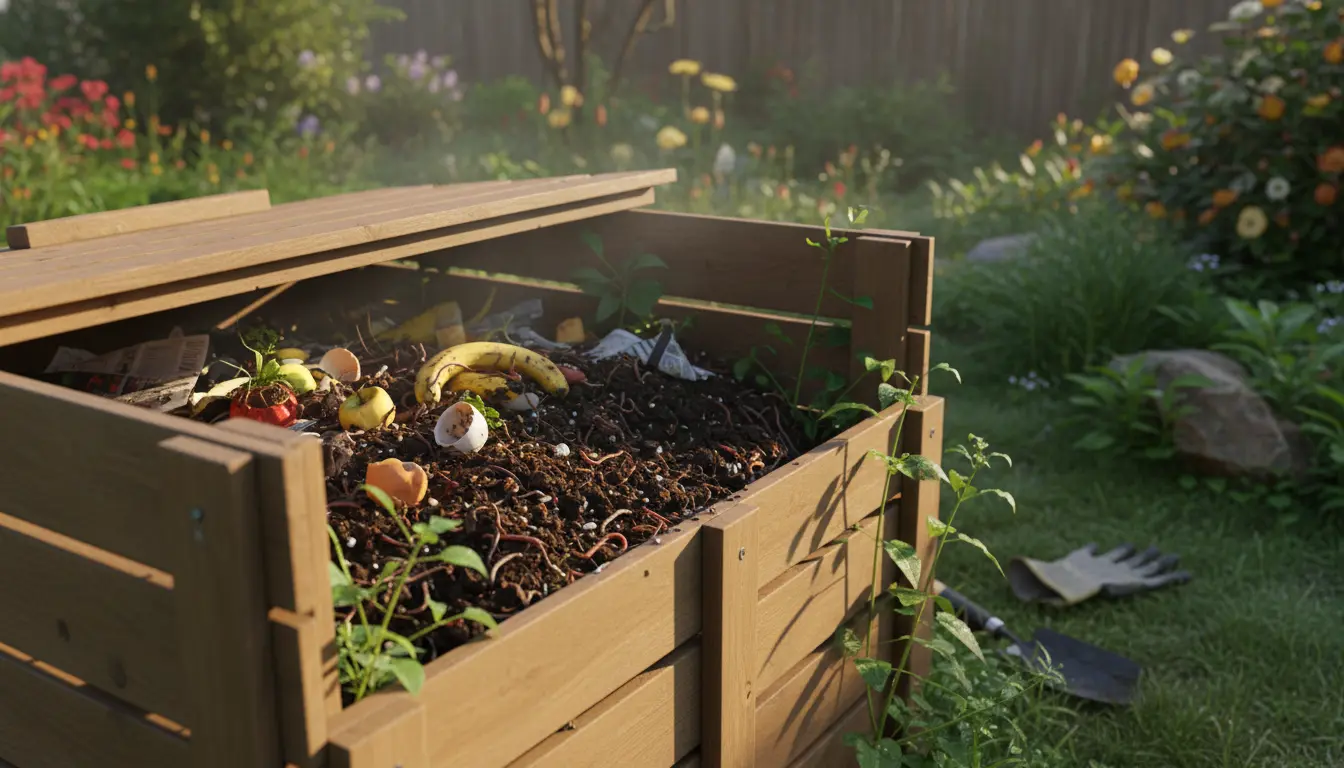
Why Home Composting for Beginners Matters
Composting turns kitchen scraps and yard waste into a nutrient-rich soil amendment. It reduces landfill waste and improves garden soil structure, moisture retention, and plant health.
This guide explains simple, practical steps for home composting for beginners, whether you have a backyard, balcony, or small indoor setup.
Basic Principles of Home Composting for Beginners
Compost is produced by microbes breaking down organic material. To keep them active, balance three things: carbon, nitrogen, and moisture.
- Carbon (browns): dry leaves, straw, shredded paper. Adds structure.
- Nitrogen (greens): vegetable scraps, coffee grounds, fresh grass clippings. Fuels microbes.
- Moisture and aeration: like a wrung-out sponge and occasional turning.
Where to Start
Choose a container or pile. Backyard tumblers, stationary bins, or simple open piles work. For apartments, use a small indoor worm bin (vermicompost) or a sealed bokashi system.
Location should be level, shaded or semi-shaded, and near convenient access for adding scraps.
Step-by-Step Setup for Home Composting for Beginners
Follow these steps to build a balanced compost system.
- Pick a bin or spot. A 3×3 foot space or a 50–100 liter bin works well for beginners.
- Lay a base of coarse browns (twigs, straw) to aid drainage and airflow.
- Add alternating layers: a handful of greens, then a layer of browns. Aim for roughly 1 part greens to 3 parts browns by volume.
- Moisten each layer so it feels like a wrung-out sponge.
- Turn the pile every 1–2 weeks to add oxygen, or spin a tumbler weekly.
What to Add and What to Avoid
Good items to add: fruit and vegetable scraps, coffee grounds, tea bags, crushed eggshells, yard trimmings, shredded paper.
Avoid meat, dairy, oily foods, diseased plants, and pet waste in open compost. These attract pests and slow decomposition.
Compost can heat to 130°F (55°C) during active breakdown. That temperature helps kill weed seeds and pathogens in properly managed systems.
Maintenance Tips for Home Composting for Beginners
Consistent, light maintenance keeps compost effective and odor-free. Watch moisture, oxygen, and balance.
- Moisture: If it smells sour, it may be too wet. Add dry browns and turn. If dry, add water and greens.
- Oxygen: Turn or aerate to prevent anaerobic conditions that cause odors.
- Temperature: A hot pile speeds composting. Smaller bins may compost slower but still work well.
How Long Will It Take?
Compost ready time depends on method. Hot composting takes 2–3 months with active management. Cold composting can take 6–12 months. Vermicompost can produce usable material in 2–4 months.
Troubleshooting Common Problems in Home Composting for Beginners
Here are quick fixes for common issues.
- Bad odor: Add more brown material and turn the pile to increase air flow.
- Slow breakdown: Chop materials smaller, add nitrogen-rich greens, and maintain moisture.
- Pests: Bury food scraps under browns, use closed bins, or try bokashi for indoor systems.
Using Finished Compost
Finished compost is dark, crumbly, and earthy smelling. Use it to top-dress lawns, mix into potting soil, or enrich garden beds.
Application tips:
- Vegetable beds: Mix 1–3 inches into topsoil before planting.
- Potted plants: Replace up to 25% of potting mix with compost.
- Lawn: Spread a thin layer as a topdressing in spring or fall.
Small Real-World Example: Sarah’s Balcony Compost
Sarah lives in a two-bedroom apartment with a small balcony. She started a 20-liter worm bin. Weekday food scraps go in a countertop bucket, then to the bin twice weekly.
After three months she harvested dark, crumbly vermicompost and mixed 20% into her potting mix. Her tomato seedlings showed stronger growth and less need for extra fertilizer.
Simple Tools and Supplies for Home Composting for Beginners
You don’t need expensive gear. A few simple items will help:
- Compost bin or tumbler
- Pitchfork or turning tool
- Kitchen scrap container with tight lid
- Garden thermometer (optional)
Quick Checklist to Start Today
- Choose a bin type: open pile, bin, tumbler, or worm bin.
- Collect brown materials (leaves, paper) and green scraps (kitchen waste).
- Layer materials, moisten, and maintain by turning.
- Monitor smell and moisture; adjust as needed.
Final Notes on Home Composting for Beginners
Composting is flexible. Start small, learn from your system, and scale up as you get comfortable. Even modest composting reduces waste and benefits your plants.
Follow the basic balance of browns, greens, moisture, and oxygen, and you will quickly build confidence and successful compost for your home garden.