
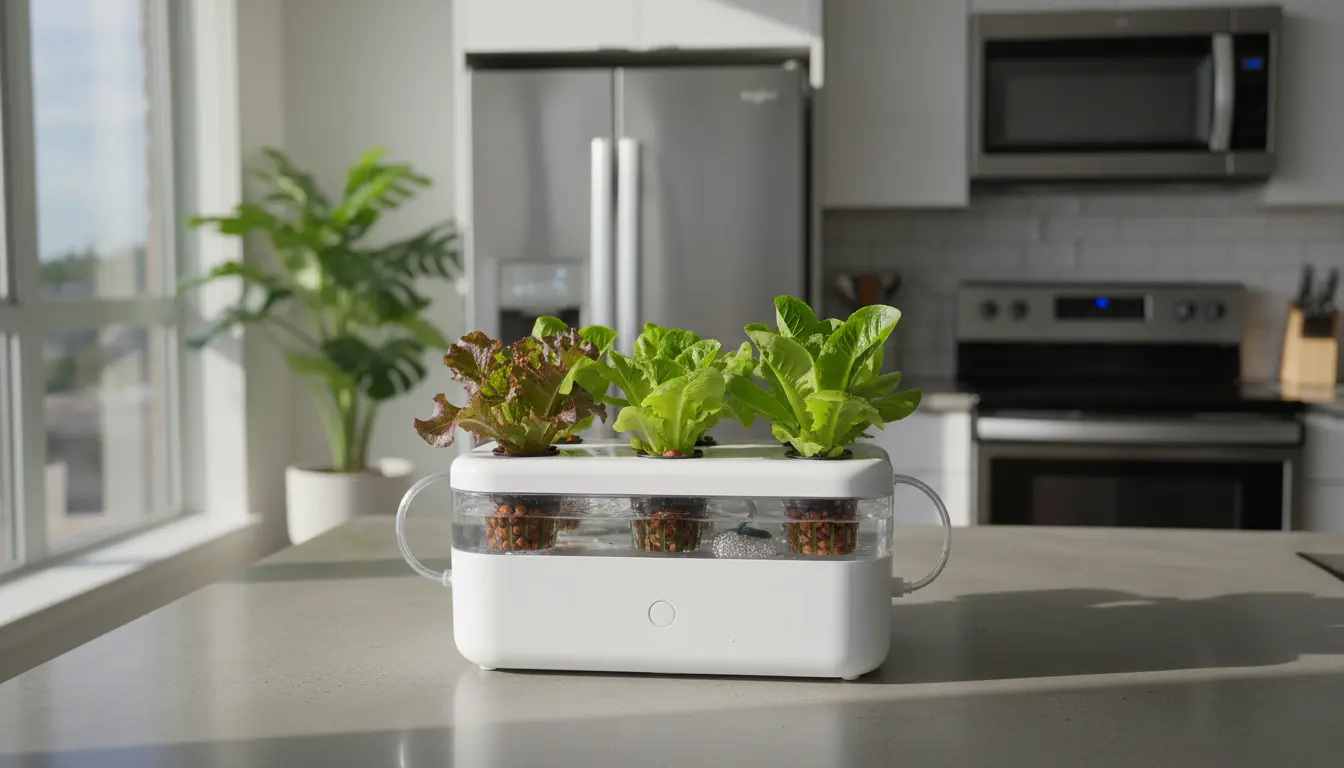
Why Choose Indoor Hydroponic Gardening
Indoor hydroponic gardening uses water, nutrients, and a growing medium instead of traditional soil. It gives faster growth, better space efficiency, and predictable yields.
This method is ideal for apartments, small kitchens, or anyone wanting year-round fresh greens without a backyard.
Basic Components of Indoor Hydroponic Gardening
A simple hydroponic setup has five core parts. Understanding each helps you avoid common mistakes.
- Reservoir: holds nutrient solution and water.
- Grow tray or pots: where plants are anchored.
- Growing medium: rockwool, coco coir, or clay pebbles.
- Air pump and water pump: keep oxygen and circulation in the system.
- Lighting: full-spectrum LED or fluorescent lights for indoor growth.
Choose a System That Matches Your Space
For beginners, start with a simple system that is easy to maintain and affordable. Popular entry-level options include:
- NFT (Nutrient Film Technique) – good for leafy greens and low root volume plants.
- Deep Water Culture (DWC) – plants sit in oxygenated nutrient solution, very simple to build.
- Wick system – passive, low-maintenance, suitable for herbs and small plants.
Setting Up Your First Indoor Hydroponic System
Follow these steps to get a reliable first setup that delivers consistent results.
- Select a location with stable temperature and access to electricity.
- Assemble the reservoir, grow tray, and pumps according to the system type.
- Install LED grow lights about 12–18 inches above young seedlings and adjust as they grow.
- Mix a commercial hydroponic nutrient solution to the manufacturer’s recommended strength.
- Monitor temperature and pH daily during the first two weeks.
Water, Nutrients, and pH Management
Good water management is the backbone of hydroponics. Keep water clean and nutrient levels consistent.
Key targets:
- EC/TDS: follow nutrient brand instructions—generally lower for seedlings and higher for mature plants.
- pH: maintain 5.5–6.5 for most vegetables and herbs.
- Temperature: 18–24°C (65–75°F) keeps roots healthy and avoids disease.
Simple Daily and Weekly Tasks
Tasks don’t have to be time-consuming but should be regular.
- Daily: check water level, pump operation, and lights.
- Every 2–3 days: measure pH and EC/TDS and adjust as needed.
- Weekly: change 20–30% of the reservoir water and clean any algae or debris.
Lighting and Plant Selection
Lighting is one of the most important factors indoors. Choose full-spectrum LEDs for energy efficiency and good light quality.
Recommended plants for beginners:
- Lettuce and mixed salad greens — fast growth and forgiving.
- Herbs like basil, mint, and cilantro — compact and high value.
- Spinach and kale — nutrient-dense and reliable under LEDs.
Troubleshooting Common Problems
Knowing common issues helps you act quickly and prevent crop loss.
- Yellow leaves: often nutrient deficiency or pH out of range.
- Slowed growth: low light levels or poor nutrient mix.
- Root rot or slimy roots: poor oxygenation or warm reservoir water—lower temperature and add air stones.
Plants in hydroponic systems can grow up to 50% faster than soil-grown plants because nutrients are readily available and root oxygen levels are higher.
Small Real-World Example
Case study: Maria, an apartment renter, set up a 4-pot DWC system on her kitchen counter. She used an 8W per pot LED panel and a small air pump.
Within six weeks she harvested continuous salad greens twice. She reported low costs, easy maintenance, and no pests compared with outdoor gardening.
Cost and Scale Considerations
Initial costs vary by system and equipment quality. A basic starter kit can range from $60 to $200. Expect higher costs for larger automated systems.
Scale up gradually. Start with a few pots, learn the maintenance routine, then expand as you gain confidence.
Actionable Checklist to Start Today
- Pick a compact system type (DWC or wick for beginners).
- Buy a reliable pH meter and EC/TDS meter.
- Select full-spectrum LED lighting suitable for your space.
- Start with easy crops: lettuce, basil, and spinach.
- Commit to short daily checks and weekly water changes.
Final Tips for Long-Term Success
Keep records of pH, nutrient strength, and water temperature. Small notes help you tune the system for better yields.
Join local or online hydroponic communities to learn from others’ experiences and troubleshoot specific issues faster.