
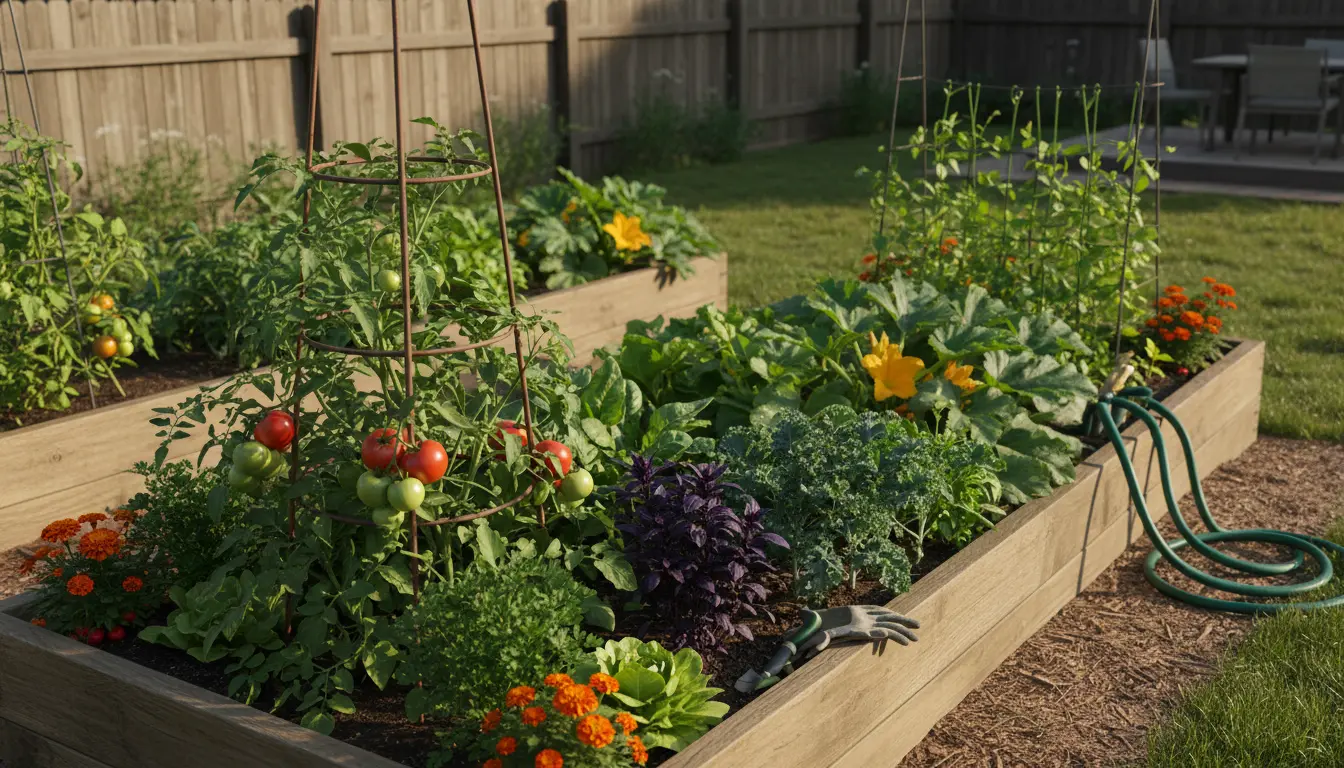
Why Start an Organic Vegetable Garden
Starting an organic vegetable garden gives you control over what you grow and how it is grown. You reduce exposure to synthetic pesticides and can enjoy fresher, tastier produce.
This guide shows clear, practical steps to plan, plant, and maintain an organic vegetable garden that fits small yards, containers, or larger plots.
Plan Your Organic Vegetable Garden
Good planning prevents common mistakes. Choose a sunny spot with at least six hours of direct sun and access to water.
Decide on the garden type: raised beds, in-ground rows, or containers. Map the space and list vegetables you and your family eat most.
Choose Crops for an Organic Vegetable Garden
Select easy, resilient crops to start: tomatoes, lettuce, radishes, beans, and herbs. These are forgiving and provide quick rewards for new gardeners.
Mix fast growers with longer-season plants so you always have something to harvest. Consider companion planting to maximize space and reduce pests.
Prepare Soil for an Organic Vegetable Garden
Soil health is the foundation of any organic vegetable garden. Test the soil pH and basic nutrient levels with an inexpensive kit.
Work in lots of organic matter: compost, aged manure, or leaf mold. Aim for loose, crumbly soil that drains well yet holds moisture.
Build Soil With Organic Amendments
Common organic amendments include compost, worm castings, and rock phosphate. Use amendments based on test results and plant needs.
- Add 2–4 inches of compost and mix into the top 6–8 inches of soil.
- Use mulch such as straw or shredded leaves to conserve moisture and suppress weeds.
- Rotate crops yearly to avoid nutrient depletion and disease buildup.
Planting Schedule for an Organic Vegetable Garden
Plan planting by the local frost dates. Use seed packets and local extension calendars to decide sow and transplant dates.
Succession planting keeps your garden productive: sow a new row of lettuce every two weeks to maintain continuous harvests.
Spacing and Companion Planting
Follow recommended spacing to reduce disease and competition for nutrients. Companion plants like basil near tomatoes can improve growth and flavor.
Avoid planting heavy feeders in the same spot year after year. Use legumes to fix nitrogen and enrich the soil naturally.
Pest and Disease Management in an Organic Vegetable Garden
Organic pest control relies on prevention, monitoring, and non-chemical tactics. Start with healthy soil and strong plants — they resist pests better.
Use physical barriers, hand-picking, traps, and beneficial insects to manage common pests. Only use approved organic sprays as a last resort.
Practical Organic Pest Controls
- Floating row covers to protect seedlings from insects.
- Neem oil or insecticidal soap for soft-bodied pests like aphids.
- Introduce or attract predators: ladybugs, lacewings, and parasitic wasps.
Watering and Maintenance
Water deeply and infrequently to encourage strong root systems. Early morning irrigation reduces evaporation and disease risk.
Drip irrigation or soaker hoses are efficient and keep foliage dry, which helps prevent fungal diseases.
Routine Tasks for Garden Health
- Weed weekly to reduce competition and hiding places for pests.
- Deadhead and prune plants to improve air circulation.
- Top up mulch each season and refresh compost as needed.
Harvesting and Storing Produce
Harvest vegetables at peak ripeness for best flavor and nutrition. Frequent harvesting often encourages more production.
Store crops appropriately: cool and dry for root vegetables, chilled for leafy greens, and room temperature for tomatoes until ripe.
Small Case Study: Backyard Organic Vegetable Garden
Sarah, a homeowner in Oregon, converted a 10×10 foot sunny patch into raised beds. She used a mix of homemade compost and local garden soil.
She planted tomatoes, kale, beans, and herbs, using row covers in spring and companion planting to reduce pests. In her second year, soil tests showed improved organic matter and higher yields.
Key results: lower grocery bills, better tasting produce, and reduced yard waste by composting kitchen scraps.
Bees and other pollinators can increase vegetable yields by up to 30 percent. Planting a small patch of flowers near your organic vegetable garden helps attract beneficial pollinators.
Simple Startup Checklist for an Organic Vegetable Garden
- Select location with 6+ hours of sun and water access.
- Test soil and add organic matter as needed.
- Choose easy crops and plan succession planting.
- Install mulch and efficient irrigation like drip lines.
- Monitor pests weekly and use organic control methods.
Final Tips for Success
Start small and expand as you gain confidence. Keeping records of planting dates, varieties, and yields helps improve performance year to year.
Learn from local gardeners and extension services — local experience matters for climates and pests. With basic care and organic practices, you can build a productive vegetable garden that supports health and sustainability.