
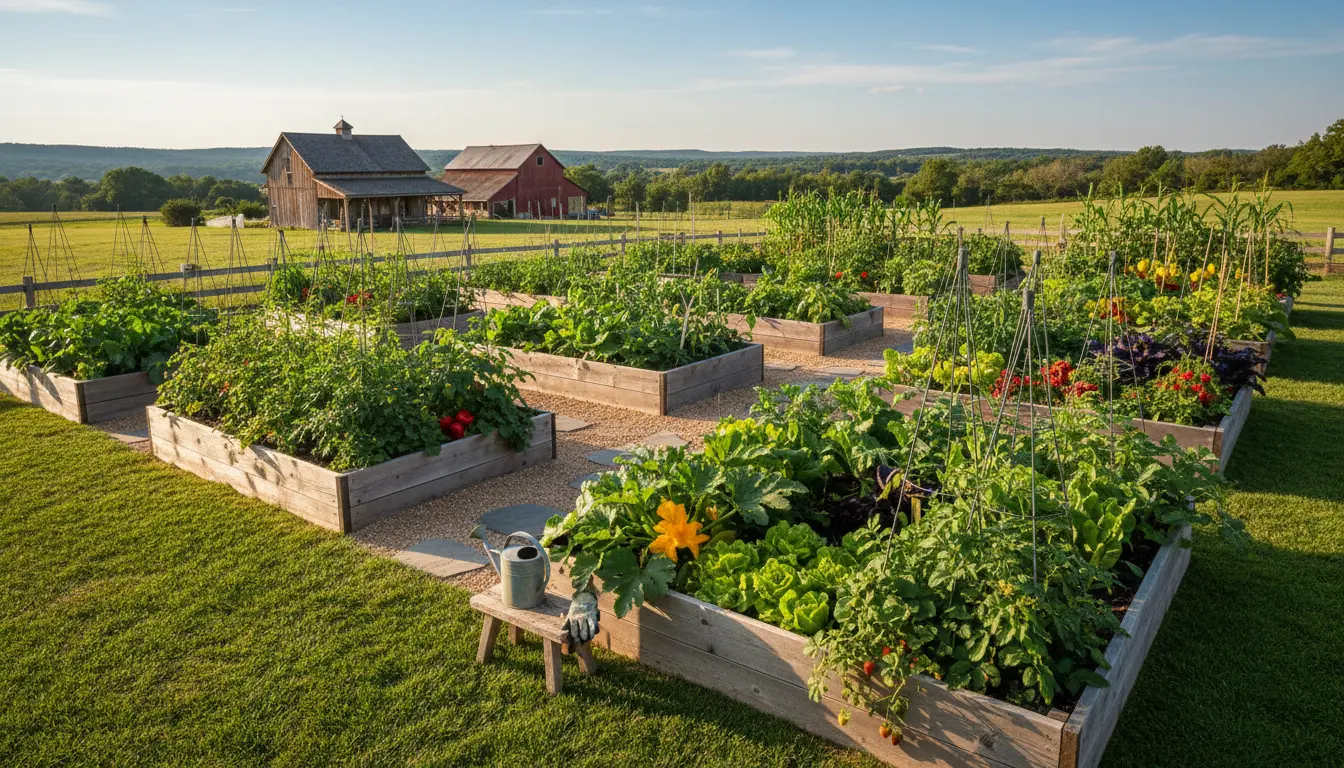
Why start a small vegetable garden
A small vegetable garden is a low-cost way to grow fresh food and learn gardening basics. It suits balconies, small yards, and raised beds.
This guide explains planning, soil, planting, and maintenance so you can get reliable results with limited space.
Plan your small vegetable garden
Start by choosing a sunny site. Most vegetables need 6–8 hours of direct sunlight each day.
Decide on the growing format: in-ground, raised beds, or containers. Each option affects soil depth, water needs, and plant selection.
Measure and map the space
Sketch a simple layout with measurements. Include paths for access, a watering point, and areas for tall crops.
Plan for crop rotation and companion planting from the start to reduce pest and disease issues.
Prepare soil for a small vegetable garden
Good soil is the foundation. Test soil pH and fertility with a basic kit or lab test.
Most vegetables prefer slightly acidic to neutral soil (pH 6.0–7.0). Amend heavy clay or sandy soils with organic matter.
- Mix in 2–4 inches of compost
- For raised beds, use a mix of topsoil, compost, and a loose amendment like peat or coconut coir
- Use well-draining soil for containers
Soil fertility and mulching
Apply a balanced slow-release fertilizer or organic amendments before planting. Avoid over-fertilizing leafy greens with too much nitrogen if you want balanced growth.
Mulch reduces weeds and conserves moisture. Use straw, shredded leaves, or bark chips around plants.
Choose vegetables for a small vegetable garden
Select crops that match your space and skill level. Prioritize high-yield, space-efficient plants.
- Easy starters: lettuce, radishes, bush beans, cherry tomatoes
- Space-savers: vertical peas, pole beans, cucumbers on a trellis
- Quick harvests: salad greens and herbs for continuous pickings
Succession planting
Stagger plantings every 2–3 weeks for continuous harvests. Replace early crops with warm-season vegetables as the season progresses.
Planting and layout tips for a small vegetable garden
Use square-foot gardening or narrow rows to maximize space. Group plants with similar water needs together.
Allow taller plants to face north so they do not shade shorter crops.
- Mark rows or squares on your layout
- Plant seeds to the depth recommended on the packet
- Thin seedlings to the recommended spacing after germination
Watering and maintenance
Consistent moisture is critical. Water deeply once or twice a week rather than shallow daily watering.
Install a soaker hose or drip irrigation to save water and reduce leaf wetness that can cause disease.
Pest and disease management
Inspect plants weekly for pests. Handpick large pests, use row covers for seedlings, and encourage beneficial insects.
Rotate crops annually and remove diseased plant debris to limit recurring problems.
Season extension and succession in a small vegetable garden
Use simple season-extension tools like row covers, cloches, or cold frames to start early and extend harvests into fall.
Start seedlings indoors 4–8 weeks before last frost to gain a head start and transplant when conditions are right.
Harvesting and storage
Harvest vegetables at peak maturity for best flavor and productivity. Pick leafy greens regularly to encourage new growth.
Store produce properly: cool greens quickly, keep root crops in a cool dark place, and refrigerate delicate items.
One 4×4 foot raised bed can grow enough salad greens for 2 people during the main growing season when planted and harvested in succession.
Quick troubleshooting for a small vegetable garden
Yellow leaves often indicate nutrient deficiencies or overwatering. Check soil moisture and adjust feeding schedules.
Stunted growth can be due to compacted soil, so aerate and add organic matter if roots are restricted.
Common fixes
- Too much shade: move containers or prune overhanging branches
- Pest outbreaks: introduce beneficial insects or use insecticidal soap for soft-bodied pests
- Poor germination: check seed age and soil temperature
Small case study: A 10×4 Raised Bed Success
Maria converted a 10×4-foot unused lawn strip into a single raised bed. She filled it with a 50/50 mix of compost and topsoil and planted tomatoes, bush beans, spinach, and herbs in spring.
She used a simple drip line for irrigation and staggered plantings of spinach and lettuce. By midsummer she harvested weekly salads and preserved tomatoes for winter.
Lessons learned: frequent harvesting kept yields high, and vertical trellising doubled the effective space for cucumbers and beans.
Checklist to start your small vegetable garden
- Choose a sunny spot and measure the area
- Test soil and add compost
- Pick 4–6 beginner-friendly crops
- Create a simple watering plan (drip or soaker hose)
- Schedule weekly checks for pests and growth
Starting a small vegetable garden is manageable with basic planning and steady care. Use the steps above to create a productive mini-garden that fits your space and schedule.