
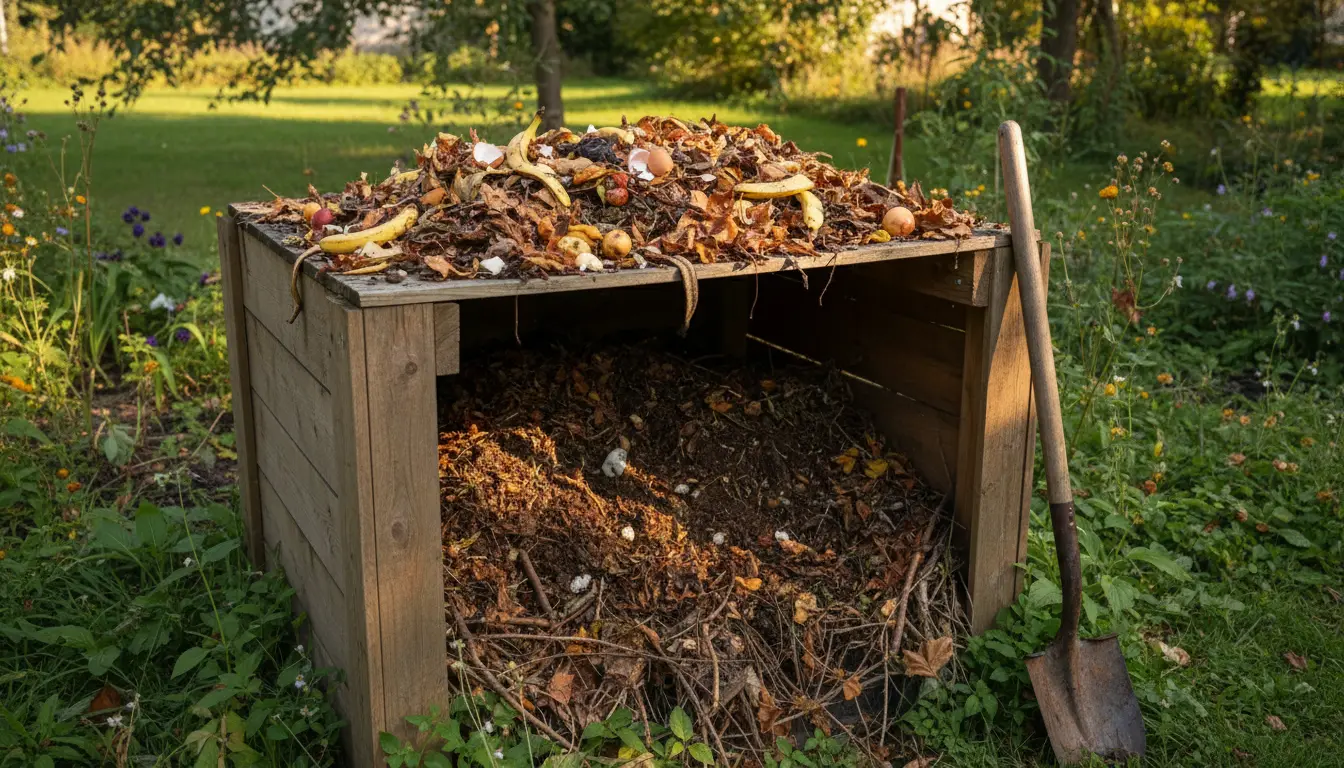
Home Composting for Beginners: Getting Started
Home composting turns kitchen and yard waste into nutrient-rich soil. This guide gives clear, practical steps for beginners to start and maintain a compost bin at home.
Follow simple rules on materials, balance, and turning to avoid odors and speed up decomposition.
Choose a Compost System
Select a system that fits your space and needs. Options include a stationary bin, tumblers, worm bins (vermicomposters), or a simple pile.
Consider these points when choosing:
- Available space: balcony, backyard, or garage
- Volume of waste: small households can use a worm bin or small tumbler
- Time and effort: tumblers need regular turning; passive bins require less frequent work
What to Compost
Successful composting depends on mixing carbon-rich “browns” and nitrogen-rich “greens.” Aim for a roughly 25–30:1 carbon-to-nitrogen ratio by volume.
Common materials to include:
- Greens: fruit and vegetable scraps, coffee grounds, fresh grass clippings
- Browns: dry leaves, shredded paper, cardboard, straw
- Small amounts of garden waste: dead plants, non-diseased prunings
Materials to avoid: meat, dairy, oily foods, diseased plants, pet waste, and anything treated with pesticides.
How to Set Up Your Bin
Place the bin on bare soil if possible to allow organisms to move in. If on concrete, add a layer of moist bedding to help microbes establish.
Start with a layer of coarse browns to aid airflow, then add alternating layers of greens and browns. Aim for layers 2–4 inches thick.
How to Maintain Your Compost
Maintain three factors: air, moisture, and particle size. Turning introduces oxygen; moisture should be like a wrung-out sponge.
- Turn or mix the pile every 1–2 weeks for fast composting.
- Water lightly during dry periods; avoid waterlogging.
- Shred or chop large items to speed decomposition.
Troubleshooting Common Problems
Bad odors usually mean too much green or poor airflow. Add browns and turn the pile to reintroduce oxygen.
Slow decomposition can stem from large particles, cold temperatures, or an imbalanced mix. Chop materials, insulate the bin, and check moisture.
Compost can reach temperatures of 131F (55C) in a hot system, which helps kill weed seeds and pathogens. Turning and proper layering promote these thermophilic conditions.
Using Finished Compost
Finished compost is dark, crumbly, and smells earthy. It typically takes 2 months to 2 years depending on the method.
Use finished compost as a soil amendment, top dressing, or mix into potting soil to improve structure and nutrient content.
Home Composting for Beginners: Step-by-Step Checklist
- Choose bin type and location.
- Collect kitchen and yard waste in a covered container.
- Layer browns and greens; keep a balanced mix.
- Maintain moisture and turn regularly.
- Monitor for pests, smells, and temperature.
- Harvest finished compost and apply to garden beds.
Small Case Study: A Neighborhood Family
Sarah, a family of three, started with a 50-gallon tumbler in her backyard. They saved kitchen scraps in a counter caddy and added shredded leaves from the yard.
Within six months they produced about 12 gallons of finished compost. They used it to top up vegetable beds, improving soil moisture retention and reducing store-bought fertilizer use.
Practical Tips for Busy Households
If you lack time, use a slow composting method and add finished compost less frequently. A worm bin works well indoors and processes smaller volumes fast.
Collecting food scraps in a freezer-safe container reduces pests and odors until you transfer them to the bin.
Local Regulations and Community Options
Check local rules for backyard composting; some areas restrict certain materials. Community gardens often welcome compost donations if you produce excess.
Municipal composting programs can handle food waste not suitable for home systems, like meat and dairy.
Final Advice for Home Composting for Beginners
Start small and learn by doing. Composting is forgiving: small adjustments to aeration, moisture, and materials will improve results over time.
Track what you add and how the pile behaves. With a little routine, home composting becomes an easy way to reduce waste and enrich your soil.